






Definition and Meaning
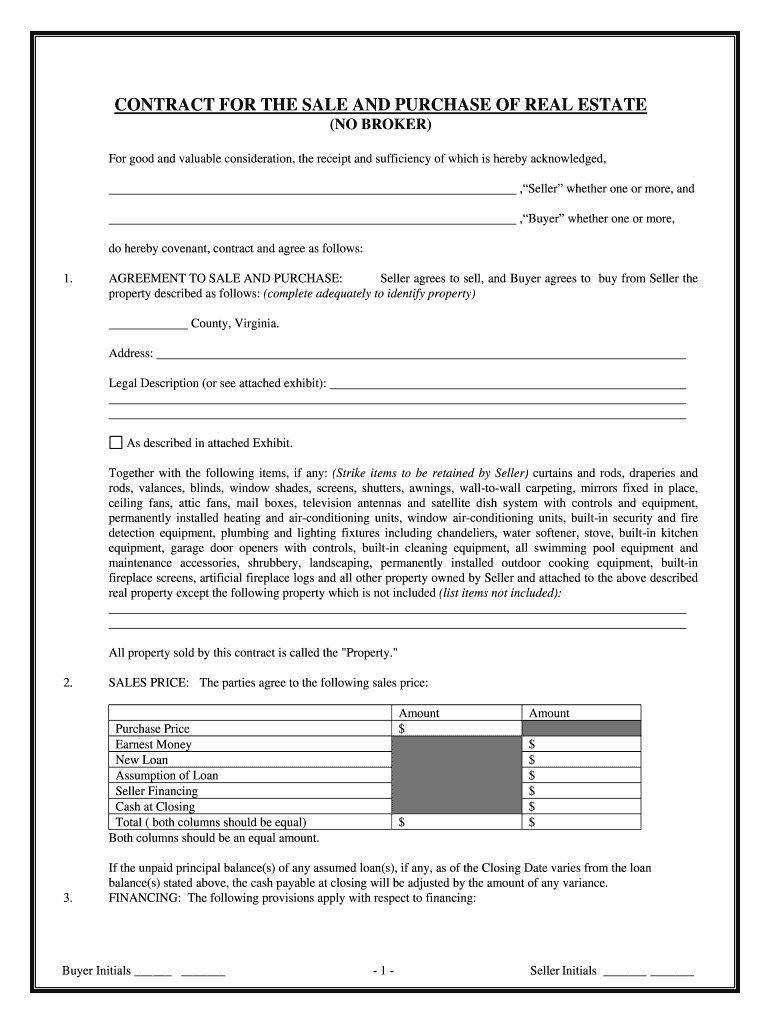
The Virginia real estate contract is a legally binding agreement between a buyer and a seller that outlines the terms and conditions for the sale and purchase of real estate located within the state of Virginia. This contract establishes the responsibilities of both parties and clarifies the steps involved in transferring property ownership. It typically includes elements such as sales price, financing options, earnest money deposit, property condition disclosures, and closing procedures. The contract ensures both parties agree on all aspects of the sale, reducing the risk of misunderstandings and disputes.
Key Elements of the Virginia Real Estate Contract
A Virginia real estate contract contains several crucial elements necessary for a successful property transaction:
- Sales Price and Payment Terms: The agreed-upon price for the property and the terms of payment, including deposit amounts and any financing arrangements.
- Earnest Money Deposit: The initial sum of money that the buyer commits to demonstrate their serious intent to purchase the property. This is usually held in escrow until closing.
- Property Condition Disclosures: Statements about the current state of the property, which the seller must provide to inform the buyer of any potential issues or defects.
- Contingencies and Inspections: Conditions that must be met for the contract to remain valid, including property inspections or financing approvals.
- Title Transfer: The process and requirements for legally transferring ownership of the property from seller to buyer.
- Closing Procedures: The steps to finalize the sale, including signing documents, transferring funds, and officially recording the property transfer.
Steps to Complete the Virginia Real Estate Contract
Completing a Virginia real estate contract involves several steps:
- Negotiation and Agreement: Both parties must agree on the terms, including the sales price, financing, and any contingencies.
- Drafting the Contract: The initial contract is drafted, detailing all agreed terms.
- Review and Modifications: Both parties review the contract, making any necessary changes before accepting the terms.
- Signing the Contract: Once agreed upon, both parties sign the document, making it legally binding.
- Due Diligence: During this period, buyers may conduct inspections or secure financing as specified by the contingencies.
- Closing: Final paperwork is completed, funds are transferred, and the title is officially transferred to the buyer.
Important Terms Related to Virginia Real Estate Contract
Several key terms can impact the Virginia real estate contract, including:
- Contingency: Conditions that must be satisfied for the contract to remain valid, such as obtaining financing or passing a home inspection.
- Escrow: A third-party account where earnest money is held until closing.
- Title Insurance: A policy that protects both the buyer and lender against issues with the property's title.
- Amendment: Changes made to the contract after it has been signed, usually agreed upon by both parties.
- Default Consequences: Penalties or remedies specified in the contract for failing to meet obligations.
Legal Use of the Virginia Real Estate Contract
The Virginia real estate contract must comply with state laws and regulations to be enforceable. This includes adhering to disclosure requirements and ensuring that all parties have the legal capacity to enter into contracts. The contract is not contingent on the involvement of brokers, but both parties must fully understand and acknowledge the terms. Legal assistance is often advisable to help navigate or contest any issues that may arise.
State-Specific Rules for the Virginia Real Estate Contract
Virginia imposes particular rules and regulations governing real estate transactions:
- Seller Disclosure Report: Sellers must provide buyers with a standardized disclosure report, detailing known property issues.
- Home Inspection: Virginia allows buyers time for home inspections, during which they can negotiate repairs or price adjustments.
- Lead-Based Paint Disclosure: For properties built before 1978, sellers must disclose known lead paint hazards.
- Right of Rescission: Specific conditions under which buyers may legally back out of the sale without penalties.
Examples of Using the Virginia Real Estate Contract
Consider the scenario where a family is buying their first home in Richmond, Virginia. They negotiate with the seller to include contingencies for a satisfactory home inspection and securing financing. The contract outlines these details, alongside a $10,000 earnest money deposit held in escrow. Later, the inspection reveals minor plumbing issues, prompting a renegotiation of terms, which is accomplished through a contract amendment before closing.
How to Obtain the Virginia Real Estate Contract
Obtaining a Virginia real estate contract can be done through several avenues:
- Real Estate Agents: They typically provide standardized forms tailored to the state regulations.
- Online Platforms: Reputable legal document services offer downloadable templates of Virginia real estate contracts.
- Real Estate Attorneys: Legal professionals can draft a contract customized to your specific transaction needs.
- Title Companies: Often provide contracts as part of their closing services.
These options ensure that the contract is appropriately personalized and legally sound, following Virginia state laws and standards.