






Definition and Meaning
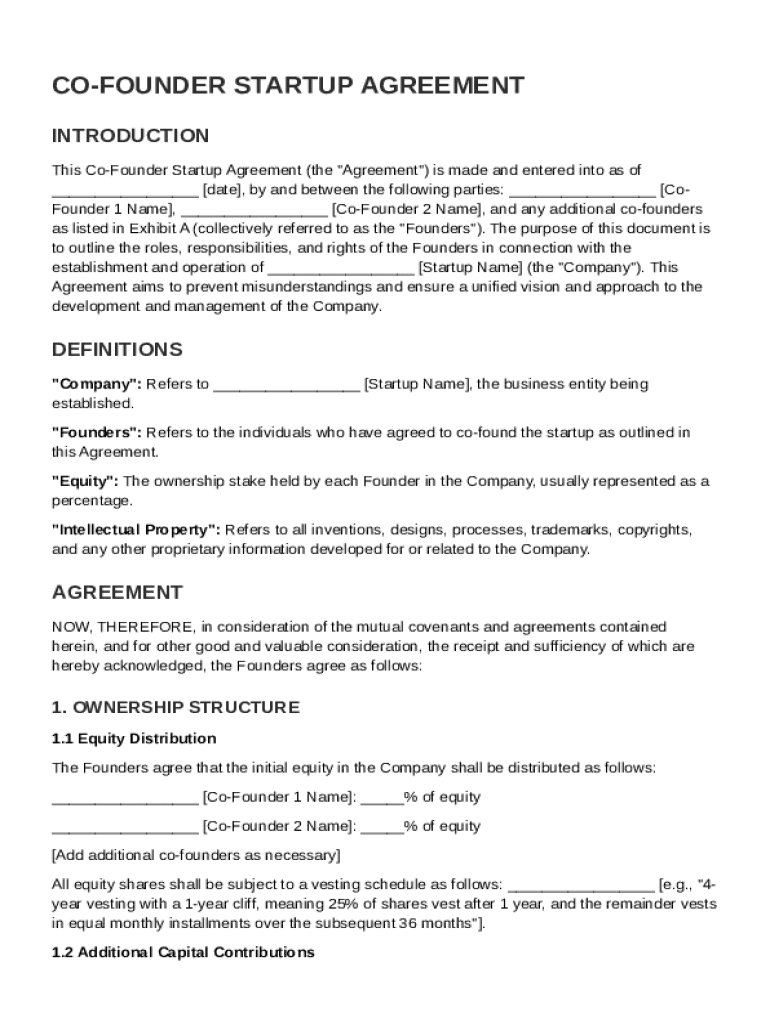
The Co-Founder Startup Agreement Template serves as a foundational legal document that outlines the responsibilities, roles, and rights of co-founders in a startup. Its primary purpose is to establish clear guidelines on equity distribution, decision-making authority, confidentiality, and intellectual property ownership. By doing so, it helps prevent misunderstandings among founders and fosters a unified vision for the startup's growth. This template is particularly crucial during the initial phase of a startup to lay down the legal and operational groundwork.
How to Use the Co-Founder Startup Agreement Template
Utilizing the Co-Founder Startup Agreement Template involves several structured steps to ensure all key aspects of the partnership are documented:
- Evaluate and discuss with your co-founders: Begin by discussing the terms with your co-founders, ensuring everyone has a shared understanding of what the agreement includes.
- Customize the template: Tailor the template to reflect the specific roles, equity percentages, and responsibilities agreed upon during discussions.
- Seek legal advice: Before finalizing, consult with a legal professional to ensure the agreement adheres to legal standards and effectively protects the interests of all parties involved.
- Review and sign: Once customized, review the document as a team and execute it with signatures from all co-founders, which legally binds the content outlined.
Key Elements of the Co-Founder Startup Agreement Template
The standard template for a Co-Founder Startup Agreement typically includes:
- Equity Distribution: Clearly defines how ownership is divided among co-founders based on contributions and future involvement.
- Decision-Making Authority: Outlines the process for making strategic decisions, including voting rights and veto powers.
- Intellectual Property Ownership: Specifies ownership of IP created individually or collaboratively by any of the co-founders.
- Confidentiality and Non-Compete Clauses: Protects the startup from unauthorized use or disclosure of proprietary information.
- Dispute Resolution: Establishes a method for resolving conflicts, which can include mediation or arbitration procedures.
- Exit Strategy Provisions: Describes procedures and consequences if a co-founder decides to leave the startup.
Important Terms Related to the Co-Founder Startup Agreement Template
Understanding certain legal and business terms is critical when dealing with the Co-Founder Startup Agreement Template:
- Vesting Schedule: Often refers to a timeline for equity access to prevent founders from leaving with a significant stake immediately.
- Non-Disclosure Agreement (NDA): A part of the confidentiality clause to ensure sensitive business information remains protected.
- Dilution Protection: Ensures existing equity ownership is not unfairly reduced with future round funding injections or new stock issues.
- Cliff Period: A specified period before any co-founder gains access to their vested equity, serving as a commitment measure.
Steps to Complete the Co-Founder Startup Agreement Template
Filling out this template involves both collaborative discussions and individual preparation:
- Initial discussions: Begin by negotiating the terms and responsibilities with fellow co-founders.
- Drafting: Write down the clauses utilizing the template, ensuring all fundamental aspects are covered.
- Consultation: Get feedback from a lawyer focusing on startups to spot potential pitfalls.
- Revisions: Make necessary adjustments based on legal advice to perfect the terms of the agreement.
- Execution: Sign the completed document in the presence of a notary public to add legal significance.
Who Typically Uses the Co-Founder Startup Agreement Template
Primarily, this template is used by:
- New startups forming diverse teams: Founders of technology, service-based, and innovative startups.
- Business partners: Individuals planning to establish a new venture and want to legally document the partnership terms.
- Entrepreneurs planning equity divisions: For fair and just allocation of ownership shares from inception.
- Legal advisors and attorneys: Those assisting promising startups in setting their initial legal frameworks.


Legal Use of the Co-Founder Startup Agreement Template
The usage of this agreement template is firmly entrenched in legal practice:
- ESIGN Act Compliance: Electronic signatures appended to the template are generally binding under the ESIGN Act.
- Customizable legal document: Serves as a legally recognized document once all parties sign it.
- Amendment Procedures: Allows future modifications following the methods of change agreed upon for the evolving vision of the startup.
- Legal protection framework: Provides a comprehensive safeguard against typical legal disputes arising from disagreements among founders.
Examples of Using the Co-Founder Startup Agreement Template
Real-world scenarios highlight the template’s value:
- Tech startups: Co-founders at a tech incubator utilize this template to clarify individual contributions towards product development and business strategy.
- Retail ventures: Two partners opening a retail chain opt for this template to legally recognize their capital investment and marketing roles.
- Creative agencies: Founding members of a design agency draft this agreement to signpost each partner's creative and administrative duties.
- Scientific research startups: Scientists launching a health-tech startup rely on the template to define patent rights and IP controls amid collaborations.
State-Specific Rules for the Co-Founder Startup Agreement Template
When drafting this agreement, it is crucial to consider jurisdictional variations:
- Different legal environments: States may have varying legal prerequisites impacting the template, such as enforceability of non-compete clauses.
- State-specific equity laws: Some states may impose unique requirements around equity grants and the taxation of vested shares.
- Local business legislation: Rules may affect how IP rights are executed within startups, demanding careful adaptation to local laws.
- Type of business registration: Variations exist based on whether the startup is registered as an LLC or corporation in a specific state.