
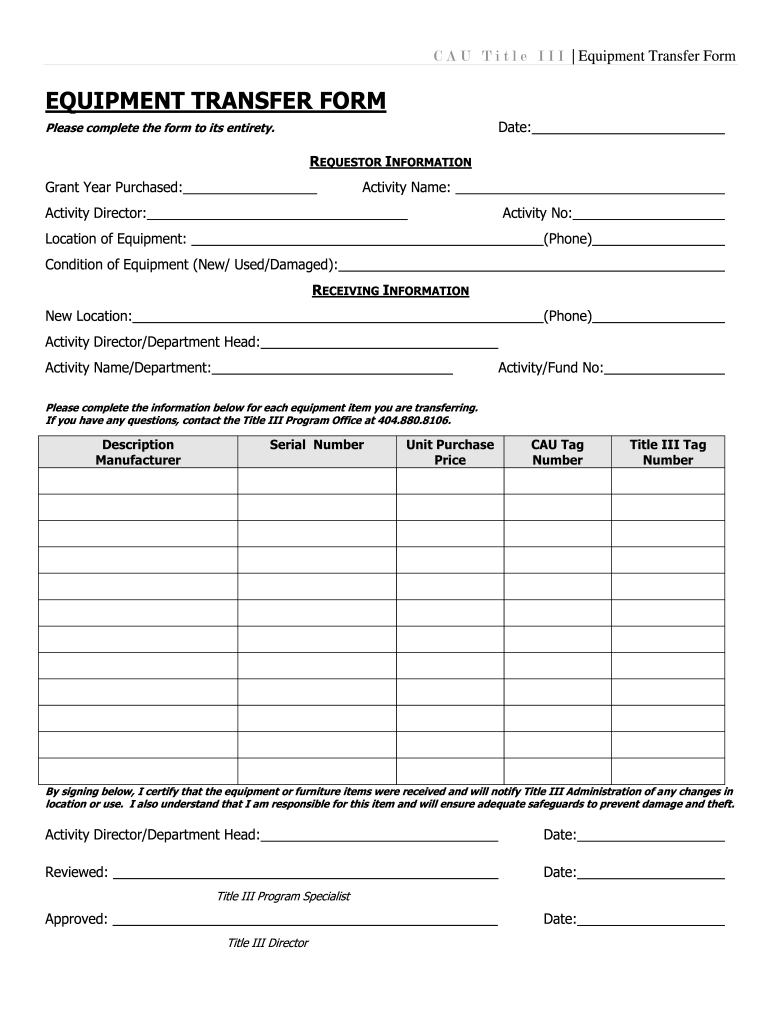







Definition and Purpose of the Equipment Transfer Form
The equipment transfer form serves as a crucial document that facilitates the movement of equipment between different departments or physical locations. It details essential information about the equipment being transferred, ensuring transparency and accountability during the transfer process. This form protects both the sender and receiver by documenting the condition of the equipment, its serial number, and any associated purchase price. By having both parties sign off on the transfer, the form allows for a clear understanding of who is responsible for the equipment at any given time. This is particularly important in industries where equipment tracking is essential for regulatory compliance or operational efficiency.
Key Elements of the Equipment Transfer Form
An equipment transfer form typically includes several key elements that ensure clarity and efficacy in the transfer process. These elements often consist of:
- Equipment Details: Specifications like the name, model, serial number, and condition of the equipment being transferred.
- Contact Information: Names and contact details of both the individual transferring the equipment and the person receiving it.
- Signatures Required: Authorizations from relevant parties, which may include an Activity Director, Title III Program Specialist, and Title III Director.
- Date of Transfer: The actual date the transfer takes place, which is crucial for record-keeping.
- Notes and Special Instructions: Any additional information or instructions relevant to the equipment or its condition.
These components ensure that everyone involved in the transfer has a clear understanding of the specifications and responsibilities around the equipment.
Steps to Complete the Equipment Transfer Form
Completing an equipment transfer form requires careful attention to detail, as inaccuracies can lead to complications or misunderstandings. The following steps outline the typical process:
-
Gather Required Information:
- Collect details of the equipment, including its serial number and condition.
- Ensure you have the contact information of all parties involved.
-
Fill Out the Form:
- Enter the equipment details accurately in the provided fields.
- Include dates for the transfer and any special instructions.
-
Review the Information:
- Double-check all entries for errors or omissions.
- Ensure that all necessary details are included before signing.
-
Obtain Signatures:
- Secure signatures from all relevant parties to validate the transfer.
- Confirm that signers understand their responsibilities regarding the equipment.
-
Distribute and File the Form:
- Provide copies to all relevant parties.
- Retain a version for your records, ensuring all parties have documentation of the transaction.
Following these steps will help streamline the process and ensure that the equipment transfer is logged accurately.
How to Obtain the Equipment Transfer Form
Obtaining an equipment transfer form can vary depending on organizational policies or specific needs. Generally, there are a few ways to access this form:
- Organizational Website: Many organizations will have the form available on their internal websites or document management systems.
- Administrative Offices: Requesting the form directly from accounts, procurement, or administration departments is common.
- Online Templates: Various websites provide templates for equipment transfer forms that you can download and modify based on your requirements.
- Professional Associations: Industry-related organizations often have standard forms that members can use for equipment transfers.
Having access to the right form is vital to ensure that equipment transfers are compliant with organizational practices and policies.
Important Terms Related to Equipment Transfer
Understanding key terminology is essential when dealing with equipment transfer forms. Important terms include:
- Asset Management: This refers to the systematic process of developing, operating, maintaining, and selling assets and includes tracking equipment transfers.
- Serial Number: A unique identifier assigned to individual pieces of equipment, essential for tracking ownership and historical data.
- Condition Report: A detailed evaluation of the equipment's state, which is critical for ensuring that all parties agree on the item's status at the time of transfer.
- Liability: The legal responsibility for loss or damage of equipment, which can shift from one party to another upon signing the transfer form.
These terms provide context and clarification, fostering a better understanding of the equipment transfer process and its implications.
Real-World Scenarios for Equipment Transfer Forms
In practice, equipment transfer forms are often used in various industries and situations. Here are a couple of scenarios:
- Internal Transfers within a Company: A company may need to transfer a computer from one department to another. The equipment transfer form documents the item, its condition, and both departments’ responsibilities, ensuring a smooth handover.
- Asset Disposal: When equipment is no longer needed and must be transferred to another entity or disposed of, completion of an equipment transfer form can help track the item's final disposition and prevent potential liabilities.
These examples highlight the significance of maintaining accurate documentation throughout the process and ensuring that both parties are on the same page regarding the transfer.




