
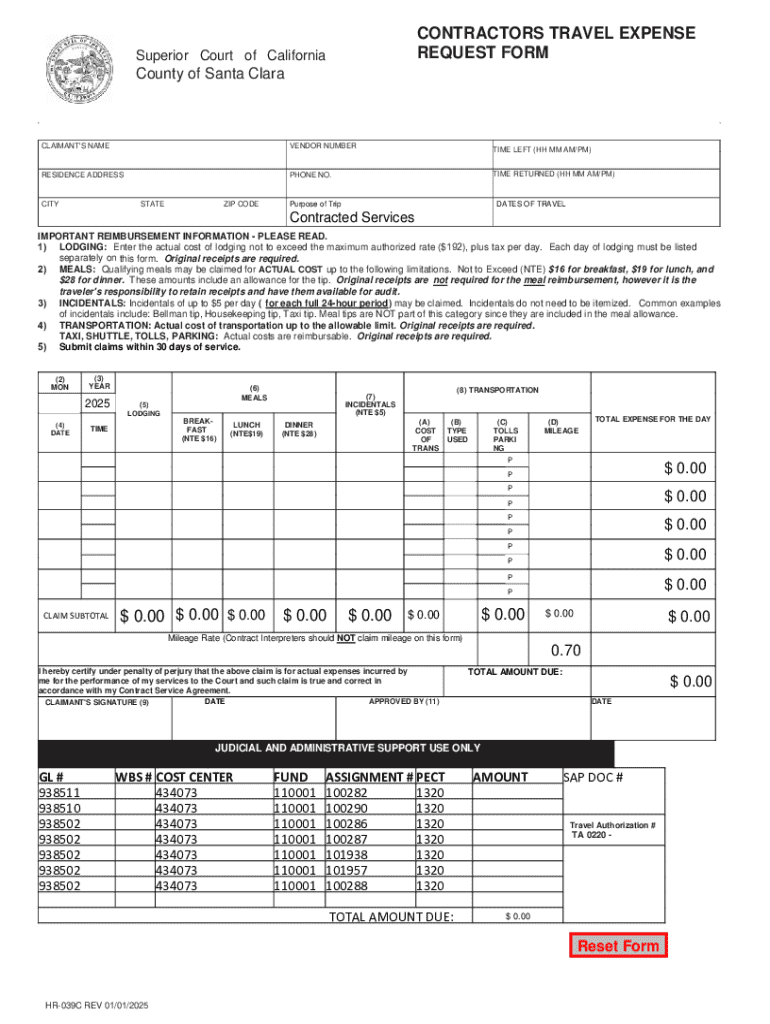







Definition & Purpose of Contractors Travel Expense Request Form
The Contractors Travel Expense Request Form serves as a standardized document to record and request reimbursement for travel-related expenses incurred by contractors. This form is vital in ensuring that contractors are reimbursed accurately and timely for expenses such as lodging, meals, transportation, and incidentals related to their work assignments. It sets clear guidelines for the types of expenses that qualify for reimbursement and ensures compliance with organizational policies and budgetary constraints. Utilizing this form helps maintain financial accountability and transparency within contractual agreements.
How to Use the Contractors Travel Expense Request Form
-
Gather Required Information: Before filling out the form, collect all necessary documentation such as receipts, travel itineraries, and any pre-approval documents for significant expenses or travel destinations.
-
Complete Personal and Assignment Details: Begin by entering your personal information, including your name, contact details, and the assignment's project or contract number. Clearly mention the assignment dates and locations related to the travel.
-
Itemize Expenses: List each expense separately with corresponding dates. Categorize them under lodging, meals, transportation, and incidentals. Ensure that each entry matches the corresponding receipt provided.
-
Attach Receipts: Attach original receipts for all listed expenses. It is crucial to ensure that these receipts are not booked via third-party platforms, as this may invalidate the reimbursement request.
-
Review and Sign: Double-check all details for accuracy and clarity. Ensure that all mandatory fields are filled. Sign the form to confirm that all information provided is true and correct.
-
Submit for Approval: Submit the completed form and supporting documents to the designated approver within your organization. Follow up to confirm receipt and approval status.
How to Obtain the Contractors Travel Expense Request Form
Contractors can obtain the Contractors Travel Expense Request Form through several channels, depending on the organization:
-
Internal Company Intranet: Many organizations host forms on an internal server or intranet accessible to employees and contractors. Check the resources or forms section.
-
Human Resources Department: Contact your HR representative or department to request a copy of the form or guidelines on completing the reimbursement process.
-
Supervisor or Project Manager: Speak with your direct supervisor or project manager, who can provide you with the form or direct you to the appropriate resource.
-
Online Company Portal: Some companies provide forms through a secure online portal. Ensure you have the required login credentials to access and download the form.
Steps to Complete the Contractors Travel Expense Request Form
-
Download or Collect the Form: Access the necessary version of the form from your preferred method outlined earlier.
-
Detail Personal Information: Fill out your name, contractor ID (if applicable), and contact details. Include the project name and code for which the expenses incurred relate to.
-
Document Travel Dates and Destinations: Clearly mention the start and end dates of travel, along with detailed destination information.
-
Expense Breakdown:
- Lodging: Provide details of the hotel or accommodation, including daily rates and total cost.
- Meals: Note meal expenses per day, ensuring they fall within daily allowances.
- Transportation: Mention the means of travel and associated costs, such as flights, car rentals, and fuel.
- Incidentals: List minor expenses, such as tolls or parking fees.
-
Add Up Total Expenses: Ensure the total reimbursement amount is clearly stated and matches the summed individual itemized expenses.
-
Submit for Review: Ensure all sections are complete and submit the form with necessary attachments for managerial or departmental review.
Key Elements of the Contractors Travel Expense Request Form
-
Personal Information Section: Clear demographic details of the contractor, including name, contact, and assignment specifics.
-
Travel Details: Includes precise dates, locations visited, and purpose of travel.
-
Expense Categories: Specific sections for lodging, meals, transportation, and incidentals, with places for itemized listing.
-
Receipt Attachment Instructions: Guidance on the submission of original receipts for each claimed expense.
-
Sign-Off Area: Section for the contractor and possibly a supervisor or project manager to sign, verifying accuracy of the information.
-
Approval Signatures: Space for authorized personnel to confirm and approve the reimbursement request.
Required Documents for the Contractors Travel Expense Request Form
-
Original Receipts: All receipts corresponding to each line item listed in the expense claim must be included. These receipts should not be from third-party booking sites.
-
Proof of Travel: Tickets, itineraries, or boarding passes that validate the trip.
-
Pre-Approval Documents: Any prior authorization needed for the travel or specific expenses, such as a signed travel request form or email approvals.
-
Itemized Expense Lists: Detailed lists that show breakdowns of costs if not evident from the receipt, e.g., restaurant receipts showing meal details.
-
Identification Proof: A copy of a contractor's identification to verify personal details if required by the organization.
Form Submission Methods (Online / Mail / In-Person)
Organizations offer multiple submission pathways for convenience and accuracy:
-
Online Submission: Emailing the completed form and attachments to a designated departmental email address or uploading it to a secure online portal.
-
Mailing: For organizations preferring hard copies, mail the form and attached receipts to the financial or administrative office.
-
In-Person: Physically submitting the document to HR or the finance department, beneficial for urgent claims requiring immediate supervision.
Digital vs. Paper Version of the Contractors Travel Expense Request Form
-
Digital Version: Allows for online editing, submission via email, and integration with expense management software. It often includes automated calculations and errors checking to streamline the process.
-
Paper Version: Still widely used in sectors where digital submission may not be feasible due to access limitations or organizational preferences for hard copy records.
-
Benefits of Digital:
- Eco-friendly with reduced use of paper.
- Quicker processing and easier tracking of submission status.
-
Benefits of Paper:
- Useful in environments where digital infrastructure is limited or unreliable.
- Provides a physical copy that some users may find easier to organize or annotate.
Overall, the type used will reflect the organization's technology infrastructure and policy preferences, with a growing trend towards digital for efficiency and sustainability.




