






Definition and Purpose of the 2024 Tax Relief Application Form
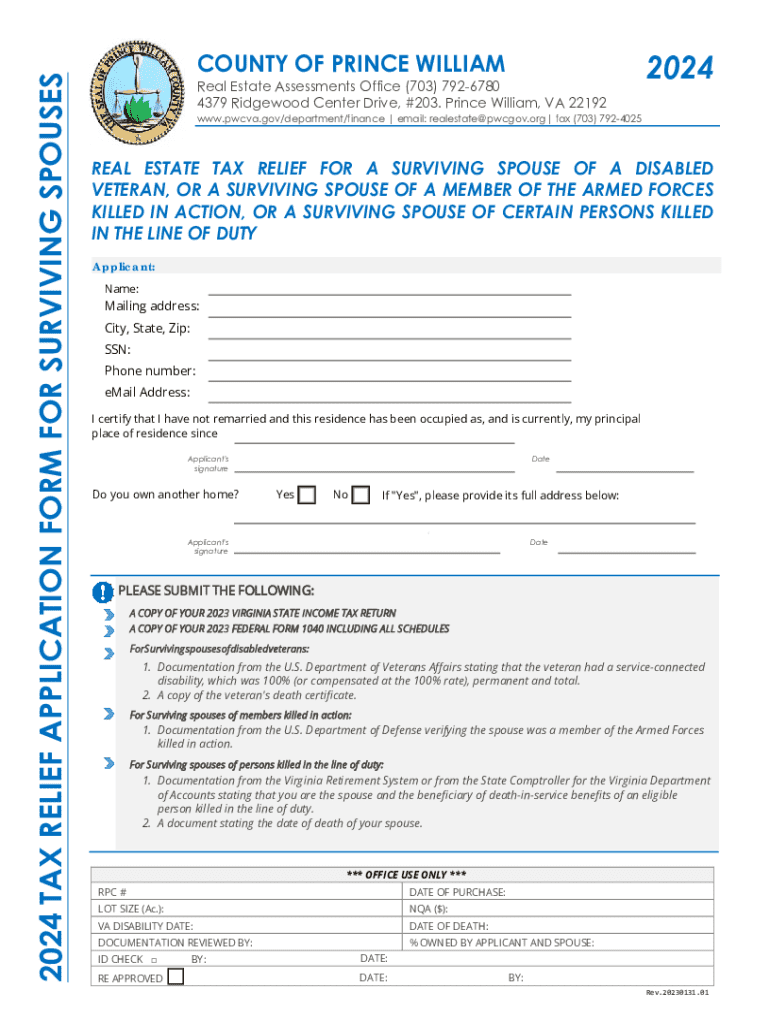
The 2024 Tax Relief Application Form is a crucial document designed to facilitate real estate tax relief for eligible individuals. These include surviving spouses of disabled veterans, members of the armed forces killed in action, and individuals killed in the line of duty. The form's primary purpose is to collect applicant information necessary to assess eligibility for tax relief benefits, ensuring that the U.S. federal regulations regarding tax aid to qualifying individuals are properly administered.
Eligibility Criteria for the 2024 Tax Relief Application Form
Eligibility for this tax relief depends on several factors. Applicants must provide proof of their marital status or familial relationship to a qualified service member. Necessary documentation includes military service records and evidence of service-connected disability benefits, if applicable. Additionally, applicants should provide personal tax returns to verify financial need and application fees. Understanding these criteria is vital for applicants to determine their qualification for assistance accurately.


Steps to Complete the 2024 Tax Relief Application Form
-
Gather Necessary Documentation: Begin by collecting all relevant documents, such as your spouse's or family member's military records, proof of service-related events, and personal identification.
-
Fill Out Personal Information: Carefully provide your personal details, including full name, address, social security number, and contact information.
-
Income and Tax Information: Accurately enter your financial details, focusing on total income, deductions, and tax return specifics from the previous year.
-
Verify Documentation Completeness: Double-check that all sections are complete and accurate. Attach required supporting documents as specified.
-
Submission: Depending on your preference, submit the completed form and documentation via mail, online, or in-person at the designated tax office.
Required Documentation for the 2024 Tax Relief Application Form
To support your application, you'll need to present various documents:
- Marriage or Relationship Certification: Proof of relationship to the service member.
- Military Service Verification: Documents such as DD Form 214 for discharged members or a statement of service for active duty.
- Proof of Death or Disability: Official records detailing the service member's incapacitation or death.
- Tax Returns: Copies of your federal and state tax returns for the relevant year to verify income.
How to Obtain the 2024 Tax Relief Application Form
The 2024 Tax Relief Application Form is available through several channels:
- Online Platforms: Download it from the official IRS website or specific state tax authority websites.
- Local Tax Offices: Visit your local tax office to obtain a paper copy, and receive guidance on filling it out correctly.
- Community Centers: Certain community outreach centers may supply forms and assist with completion.
Examples of Using the 2024 Tax Relief Application Form
A variety of scenarios illustrate the form's use:
- Surviving Spouse: A widow of a veteran killed in action seeking relief on property taxes.
- Service Member's Child: An adult child applying on behalf of reduced capacity parents.
- Veteran with Disability: Applying for property tax adjustments based on service-related disabilities.
Legal Use of the 2024 Tax Relief Application Form
Ensuring the legal use of this form involves compliance with IRS and state-specific regulations. Applicants must accurately represent their situation, as misuse or falsification can lead to penalties. Furthermore, the electronic submission of the form must adhere to cybersecurity protocols, ensuring the protection of sensitive information in line with federal guidelines.
Filing Deadlines and Important Dates
Timely submission is crucial for receiving tax benefits. Generally, applications should be completed and submitted by the filing deadline for the fiscal year. This typically aligns with federal and state tax filing deadlines. Missing the deadline could delay tax relief benefits until the next applicable period.
Using this structured approach, you can maximize the chances of a successful application, ensuring all requirements are met comprehensively and accurately.