






Definition & Meaning
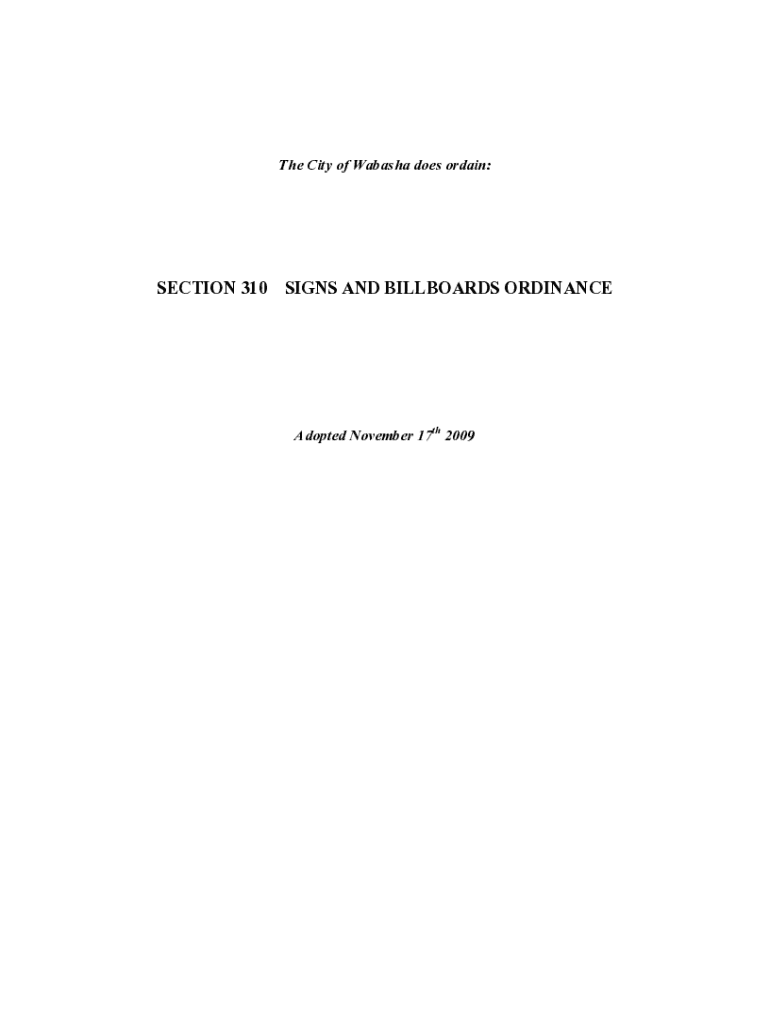
The "Signs and Billboards Ordinance" provides a framework for managing the installation, maintenance, and legality of signs and billboards in a given area. This legal document is intended to ensure that all signage adheres to community standards regarding safety, aesthetics, and functionality. The ordinance might define key terms such as "non-conforming sign," "prohibited sign," and "exempt sign," offering clear guidance on how each category is regulated. Understanding these definitions is essential for compliance and helps property owners, advertisers, and city planners navigate local laws effectively.
Key Elements of the Signs and Billboards Ordinance
Several critical components form the backbone of the ordinance; these typically include:
-
Permits and Applications: Detailed procedures on how to apply for signage permits, including what documents are necessary.
-
Enforcement: Descriptive measures for how the ordinance will be upheld and what penalties are in place for non-compliance.
-
Appeals Process: Steps for challenging permit denials or enforcement actions.
-
Exemptions and Prohibitions: Specific types of signs that are either exempt from regulation or completely prohibited.
-
Non-Conforming Signs: Guidelines for signs that do not meet current standards but were legally installed under previous regulations.
How to Use the Signs and Billboards Ordinance
Users must first familiarize themselves with the types of signs regulated by the ordinance. Here are general steps to follow:
-
Identify Your Sign Type: Determine whether your sign is a billboard, directional, informational, or another type as defined by local laws.
-
Review Requirements: Understand the specific requirements for your sign category, such as size, lighting, and location restrictions.
-
Obtain Necessary Permits: Follow the outlined procedures to apply for and obtain the relevant permits before installation.
-
Comply with Regulations: Ensure that the installed sign complies with all ordinance regulations to avoid penalties.
Steps to Complete the Signs and Billboards Ordinance
Completing a compliance process for fabrication, installation, or modification of signage involves:
-
Consulting the Ordinance: Review the document thoroughly to understand all requirements.
-
Drafting a Plan: Create proposals that include specifications, designs, and intended spaces for installation.
-
Submitting Applications: Compile required documents and submit them to the appropriate municipal department.
-
Awaiting Approval: Engage with city officials for any queries throughout the approval process.
-
Installation: Upon receiving approval, proceed with the installation consistent with the plan.
Who Typically Uses the Signs and Billboards Ordinance
The ordinance is usually employed by a variety of stakeholders:
-
Business Owners: Those who wish to advertise their businesses with billboards or premises signs.
-
Property Developers: Individuals or corporations involved in property development needing compliant signage.
-
Local Government Officials: They enforce, monitor, and review applications.
-
Legal and Urban Planners: Professionals consulting on behalf of clients for compliance advice and urban aesthetic improvements.


Legal Use of the Signs and Billboards Ordinance
The ordinance is legally binding and requires compliance to avoid fines or other penalties. It outlines how signage should be used in public and private spaces to align with zoning and safety laws. Legal uses include:
-
Public Safety: Signs should not obstruct traffic signals or pedestrian pathways.
-
Aesthetic Harmony: Ensure that signage complements the character of the neighborhood.
-
Property Value Protection: Prevent signs that might depreciate surrounding property values.
Important Terms Related to Signs and Billboards Ordinance
Understanding critical terms is vital for compliance:
-
Permit: Authorization required before erecting or altering a sign.
-
Exemption: Specific signs or conditions that are not subject to the full breadth of ordinance regulations.
-
Prohibited Sign: Signage types that are not allowed under any circumstance.
-
Non-Conforming Sign: Signs that do not comply with current regulations but are legally permissible due to pre-existing conditions.
State-Specific Rules for the Signs and Billboards Ordinance
The ordinance may vary significantly from one state to another, or even between municipalities within the same state. Therefore:
-
Research Local Variances: Check the specific municipality's modifications or additions to the ordinance for compliance.
-
Consider Regional Variations: Recognize that environmental impact or architectural styles may affect ordinances.
-
Abide by State Laws: Each state may have overarching laws that provide frameworks within which local ordinances must operate.