






Definition & Meaning
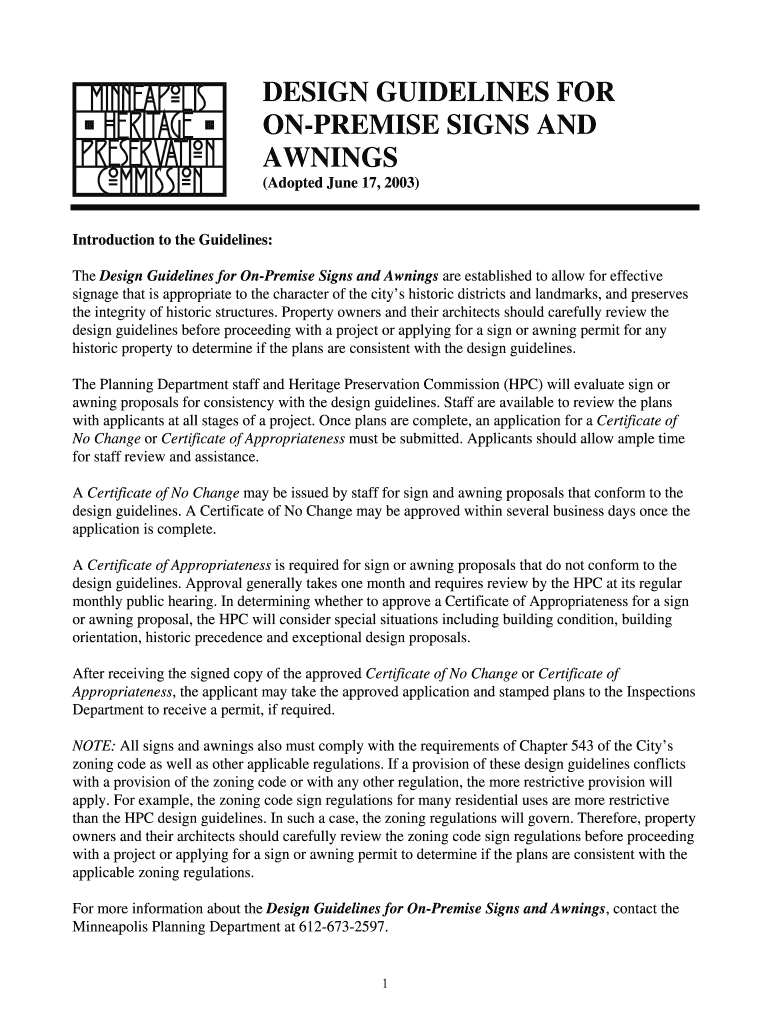
The "Design Guidelines for On-Premise Signs and Awnings - City of bb" are a set of protocols adopted to ensure that signage and awnings in designated areas, particularly historic districts, align with the architectural character and heritage of the locality. These guidelines help safeguard the visual integrity and preserve the historical significance of buildings and districts by specifying approved sign types, installation methods, and design principles such as color schemes and lighting considerations.
Historical Significance
- Adopted on June 17, 2003, these guidelines were developed to protect architectural character.
- Focused particularly on areas with historical value to preserve their uniqueness.
Compliance Framework
- The guidelines include requirements for applying for a Certificate of No Change or a Certificate of Appropriateness.
- They ensure consistency with zoning regulations and prevent the proliferation of signage that may disrupt the historic character.
Key Elements of the Guidelines
The guidelines outline specific considerations for the design, installation, and approval of on-premise signs and awnings.
Types of Signs
- Allowed sign types: such as wall-mounted, freestanding, and projecting signs.
- Prohibited sign types to preserve aesthetic integrity.
Design Specifications
- Guidelines mandate color compatibility with surrounding architecture.
- Illumination types are considered to ensure that lighting does not detract from historical character.
Installation Requirements
- Detailed installation criteria to ensure signs do not damage structural elements.
- Protocols for maintaining and updating existing signage while complying with guidelines.
Steps to Complete the Application Process
To utilize the "Design Guidelines for On-Premise Signs and Awnings - City of bb," one must follow a series of steps to ensure full compliance.
Application Preparation
-
Gather Required Documents:
- Architectural plans, photographs of existing conditions, and detailed sign designs.
-
Consult with Planning Department:
- Engage early with city planners to understand compliance with zoning regulations.
Submission Process
- Complete a sign permit application form for either new installations or modifications.
- Submit documentation for review, ensuring all elements meet the guideline criteria.
Approval and Finalization
- Await feedback from the Planning Department or historical board.
- Make necessary adjustments as per recommendations before final installation.
The Importance of Following Guidelines
Adhering to these guidelines not only fulfills legal requirements but plays a crucial role in enhancing community aesthetics and property values.
Benefits to Property Owners
- Enhances property appeal by maintaining visual harmony in the district.
- Facilitates smoother approval processes for future projects by developing a precedent of compliance.
Community Impact
- Promotes tourism by preserving historical aesthetics and ensuring buildings contribute to the overall charm of the area.
- Strengthens community identity by keeping the architectural themes consistent.
Examples of Guideline Implementation
Real-world scenarios illustrate the practical application of these guidelines.
Case Study 1: Historical District Integration
- A new business adapted their awning design to comply with guidelines, resulting in a visually appealing addition that respected the building's heritage.
Case Study 2: Success Story
- An existing restaurant revamped its outdoor signage to align with guidelines, contributing to increased foot traffic and positive community feedback.
Legal Use and Compliance
Understanding legal obligations under these guidelines is crucial for property owners and businesses.
Certificates and Permits
- Property owners should apply for either a Certificate of No Change or a Certificate of Appropriateness based on their intended modifications.
Penalty Avoidance
- Non-compliance can lead to penalties, including fines or mandatory removal and redesign of signage, causing potential financial and reputational damage.
Who Typically Uses These Guidelines
Primarily, these guidelines are crucial for stakeholders engaged in business operations and property development within historic or regulated areas.


Key Users
- Business owners looking to establish or update signage in compliance with city ordinances.
- Contractors and architects responsible for designing and installing signage elements.
Supportive Roles
- City planners and zoning officials who ensure adherence to local regulations to safeguard city aesthetics.
State-Specific and Local Rules
While the guidelines are standardized, some regulations may vary slightly based on local city ordinances or state-level mandates.
Local Differences
- Municipal variations may dictate specifics such as sign dimensions or permissible materials to better fit unique urban landscapes.
Statewide Regulations
- Certain states may impose additional requirements in historic preservation zones, providing a harmony between state and local rules.
Application Process and Approval Time
The timeline and efficiency of the permit application process can affect project planning and execution.
Efficient Timeline
- Typically, initial responses from planning departments can take a few weeks, with complete approval potentially ranging from one to three months depending on the scope of the project.
Expedited Approvals
- Earlier consultation with planning officials and thorough preparation of application documents can streamline the process significantly, avoiding delays through proactive compliance.