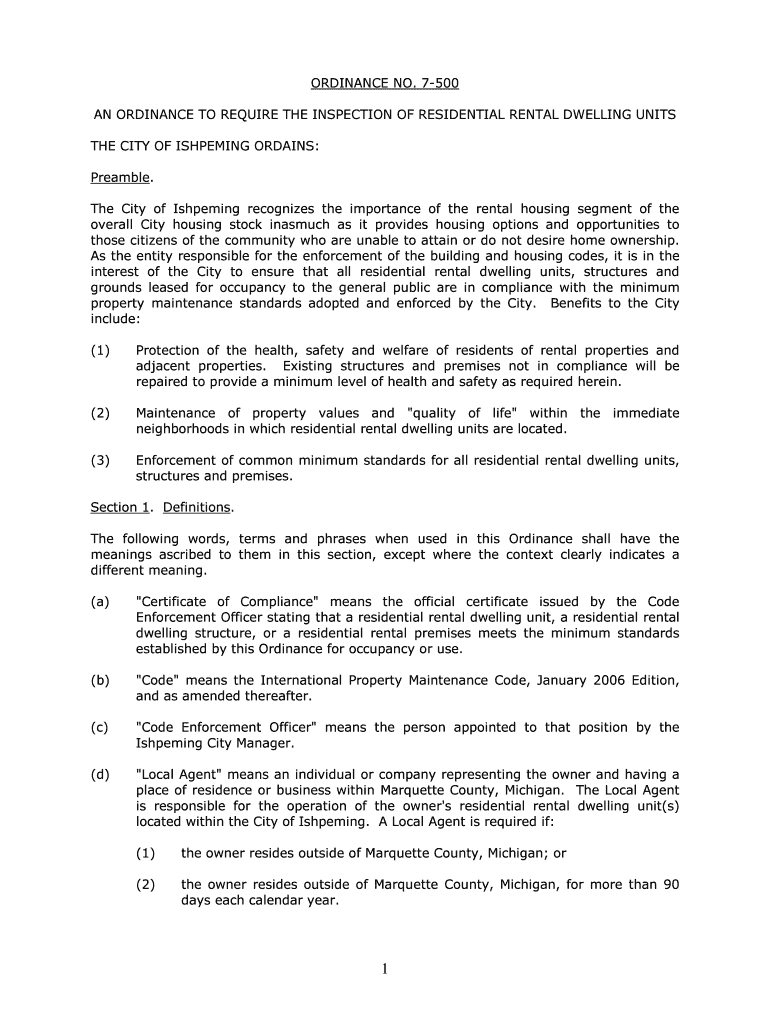







Definition and Meaning
Ordinance No. 7-500 is a municipal regulation that establishes a mandatory inspection program for residential rental properties in the City of Ishpeming. This ordinance serves to ensure compliance with minimum property maintenance standards to protect the health and safety of tenants, maintain property values, and enforce uniform standards across rental properties.
Inspection Program Overview
- Mandatory Inspections: Required for all residential rental properties to verify compliance with established maintenance standards.
- Health and Safety Focus: Ensures living conditions are safe and sanitary for residents, preventing hazards such as structural deficiencies, electrical issues, and unsanitary conditions.
- Property Value Maintenance: By enforcing consistent standards, the ordinance helps stabilize and improve property values within the community.
How to Use Ordinance No. 7-500
To fully comply with Ordinance No. 7-500, property owners and tenants must understand and participate in the inspection process. This involves several key steps:
Preparing for Inspection
- Review Maintenance Standards: Familiarize yourself with the specific property maintenance requirements outlined in the ordinance.
- Schedule Inspection: Contact the City of Ishpeming's inspection department to schedule a property inspection.
- Address Deficiencies: Rectify any known maintenance issues prior to inspection to streamline the approval process.
Inspection Day
- On-site Assessment: A city inspector will conduct a thorough walkthrough to assess compliance.
- Documentation: Inspectors will document their findings, noting any non-compliance issues that need to be addressed.
Steps to Complete the Ordinance No. 7-500
Completing the requirements of Ordinance No. 7-500 involves a series of clear steps that property owners must follow:
- Initial Registration: Register the property with the City of Ishpeming if it is being rented out.
- Inspection Scheduling: Arrange an inspection within the timeframe specified by the city.
- Compliance Review: Undergo the inspection and review the results with the inspector.
- Certificate of Compliance: Obtain this certificate upon passing the inspection, which is mandatory for legally renting the property.
Key Elements of Ordinance No. 7-500
The ordinance outlines several critical components necessary for compliance:
Inspection Procedures
- Inspection Frequency: Typically, inspections are conducted biennially unless significant issues are identified that require more frequent visits.
- Scope of Inspection: Covers structural integrity, sanitation, electrical safety, and general maintenance.
Enforcement Mechanisms
- Violation Notices: Issued for non-compliance, specifying the corrective actions needed and the timeline for resolution.
- Penalties: Failure to comply may result in fines or loss of rental privileges until the property meets the required standards.
Legal Use and Compliance
Compliance with Ordinance No. 7-500 is not only essential for legal operation but also serves a broader role in community welfare:
- Legal Renting: Ensures properties meet legal requirements before being rented.
- Tenant Rights: Protects tenants by guaranteeing safe and habitable living conditions.
Important Terms Related to Ordinance No. 7-500
Understanding key terms is vital for comprehending the ordinance's implications:
- Certificate of Compliance: A document certifying that a property meets all maintenance standards.
- Non-compliance: Failing to meet the required standards, which can result in penalties.
- Inspection Report: A detailed document provided by the inspector outlining compliance status and any required corrections.
Examples of Using Ordinance No. 7-500
Several real-world scenarios illustrate the application of Ordinance No. 7-500:
Scenario: New Rental Property
- Initial Inspection: Before renting, a new property undergoes the inspection to ensure it adheres to all safety and maintenance standards.
Scenario: Addressing Compliance Issues
- Corrective Action: A landlord receives a violation notice and successfully addresses issues like outdated wiring or inadequate smoke detectors.
Penalties for Non-Compliance
Failing to adhere to Ordinance No. 7-500 can result in significant consequences:
Common Penalties
- Fines: Financial penalties are imposed for each day of non-compliance.
- Legal Restrictions: Continued non-compliance can lead to restrictions on the ability to rent the property.
Avoiding Penalties
- Timely Corrections: Address all noted issues promptly to avoid additional fines or penalties.
- Appeals Process: Property owners have the opportunity to appeal inspection findings before penalties are enforced.
By understanding and implementing Ordinance No. 7-500's requirements, property owners can ensure their rental units comply with local standards, maintaining both property values and community trust.