
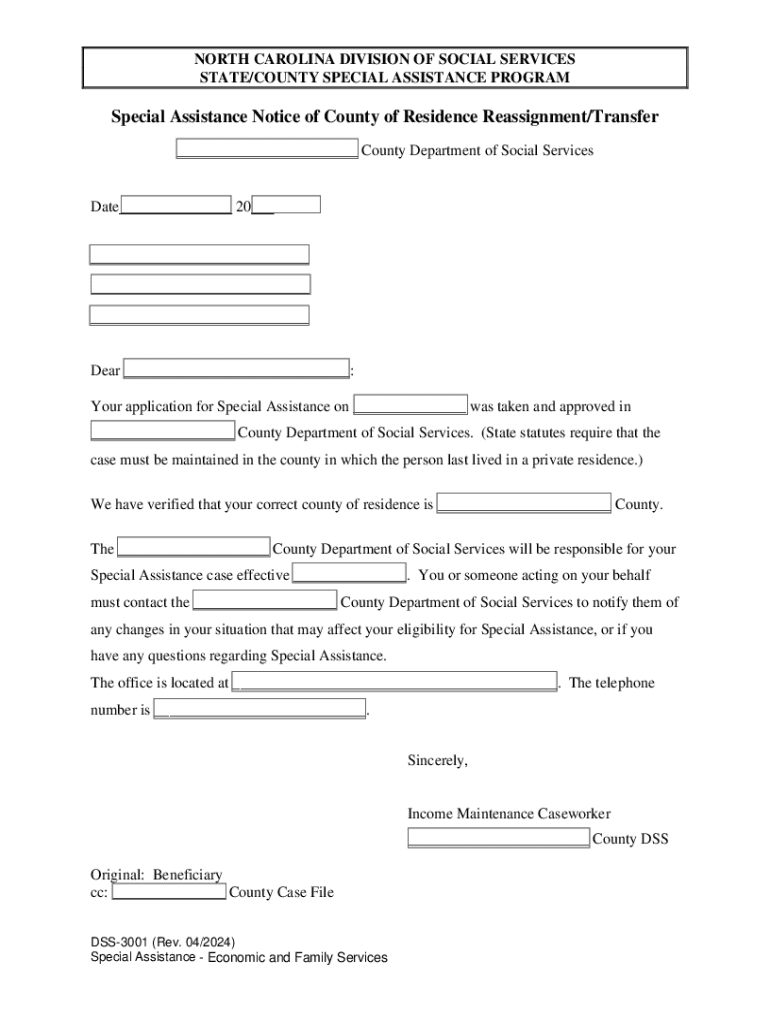







Definition and Purpose of the Special Assistance Notice
The Special Assistance Notice of County of Residence Reassignment transfer is a formal document issued by state social services divisions, such as the North Carolina Division of Social Services. This notice serves to inform the recipient that their Special Assistance case has been reassigned to a new county. This typically occurs when there is a verified change in the recipient's county of residence. The reassignment ensures that the recipient continues to receive necessary benefits corresponding to their new location. The notice outlines responsibilities, such as informing the new county's Department of Social Services about any changes affecting eligibility.
Responsibilities of the Recipient
Recipients of this notice are required to notify their new county’s Department of Social Services regarding any changes in their circumstances that could impact their eligibility for Special Assistance. This requirement is crucial to ensure uninterrupted access to benefits. Failure to comply may result in delays or loss of assistance. It's important for recipients to keep the department updated on milestones such as income changes, changes in household composition, or address updates.
How to Use the Special Assistance Notice
The Special Assistance Notice acts as a crucial communication tool between the recipient and social service agencies. Here are the detailed steps on how to properly use this notice:
-
Review the Details: Recipients should thoroughly review the document to understand the reasons for the reassignment and any instructions provided within the notice.
-
Contact the New Department: Use the contact information provided in the notice to connect with the relevant department in the new county. Establish a point of contact to address any questions or concerns.
-
Provide Necessary Information: Prepare to supply any requested documents or information that demonstrate eligibility under the new jurisdiction's guidelines.
Handling Potential Issues
Recipients might experience issues such as delays in service transfer or discrepancies in benefit amounts. In such cases, it's recommended to maintain documentation of communications and submissions, and to escalate unresolved issues through the department’s established grievance procedures.
How to Obtain the Notice
The Special Assistance Notice is typically issued automatically by state social services divisions upon verification of a change in a recipient's county of residence. Recipients do not need to make a request for this document. However, in cases where a notice has not been received following a move or change in residency status, the recipient should proactively contact their local Department of Social Services to ensure that their information is updated and to request a review of their case status.
Steps to Complete the Notice Process
Completing the process associated with the Special Assistance Notice involves several key steps:
-
Verify Information: Ensure that all personal information on the notice is correct.
-
Acknowledge Receipt: Some divisions may require recipients to acknowledge receipt of the notice by mail or through a designated online portal.
-
Compile Required Documents: Gather any supporting documents requested by your new county's Department of Social Services to facilitate a seamless transition.
-
Schedule an Appointment (if required): Some counties may require an in-person or phone appointment to finalize the transfer. Ensure compliance with any such requests.
-
Follow-Up: Regularly follow up with the county's department to confirm that all requirements have been fulfilled and that benefits will continue without interruption.
Who Typically Uses the Notice
The Special Assistance Notice is primarily used by individuals who rely on state-provided benefits and have experienced a change in their place of residence across county lines. This includes:
- Senior citizens receiving state assistance under various social welfare programs.
- Disabled individuals whose living arrangements or support networks necessitate relocation.
- Families under financial distress eligible for Special Assistance programs.
Recipients from diverse backgrounds may need to use this notice to ensure continuity of benefits as they relocate for personal, familial, or employment reasons.


Key Elements of the Notice
The notice typically includes several important elements that the recipient must pay attention to:
- Recipient Details: Personal identifiers such as name, previous and new address.
- Reason for Reassignment: A brief explanation of why the reassignment is happening, often due to a county relocation.
- Responsibilities: A list of obligations the recipient has to the new social services department, including timely notification of any changes in eligibility-related circumstances.
- Contact Information: Details for relevant contacts within the Department of Social Services who can provide answers to any queries.
Common Scenarios and Edge Cases
Certain scenarios may present complexities in the use of the notice, such as:
- Mismatch in Benefit Structures: Occasionally, a recipient’s entitlements might differ between counties, necessitating an inquiry into why changes have occurred and how they will affect future assistance.
- Delays in Document Processing: Unforeseen administrative delays in the recognition of reassignment may require follow-up communication to prevent a lapse in benefits.
State-Specific Rules
While the process described is predominantly followed in many states, specific nuances could exist in different jurisdictions. For instance, North Carolina’s protocol for processing such notices may differ slightly from those in neighboring states due to varying regulations about inter-county benefit management and eligibility criteria.
- North Carolina: Known for its online and in-person submission flexibility.
- Florida: May require notarized documents for eligibility confirmation during reassignment.
Understanding these state-specific regulations ensures compliance and smooth transitioning when engaging with varied social services departments.


