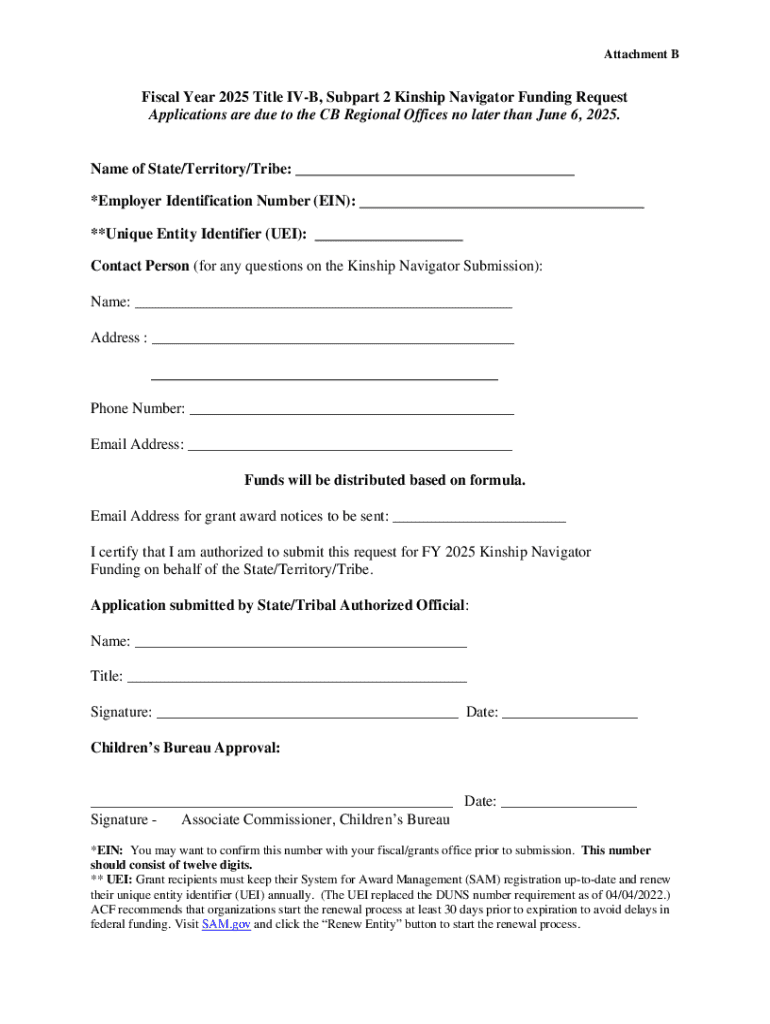







Definition & Meaning
"Attachment B" generally refers to a specific form or annex included in official documents, requests, or applications. In various contexts, particularly in government or legal documents, "Attachment B" serves as a supplementary component that provides additional details, schedules, or supporting information. This form often accompanies primary documents to ensure all relevant data is comprehensively covered. Understanding the purpose and content of "Attachment B" is critical, as it often contains nuanced information essential for the correct processing of the associated primary document. Recognizing that "Attachment B" can serve multiple roles across different applications is vital in navigating its usages effectively.
How to Use the Attachment B
Using "Attachment B" effectively requires a clear understanding of its purpose in the context of the primary document it accompanies. Begin by reviewing the primary document to identify where "Attachment B" is referenced, as it often provides additional details or acts as a checklist or a form for additional input. Ensure all instructions specific to "Attachment B" are followed closely. For instance, if it is used for detailing financial disclosures, ensure accuracy and completeness in filling out the information required. This meticulous approach ensures compliance and completeness in submission, reducing potential errors or omissions that could impact processing.
Steps to Complete the Attachment B
-
Read the Instructions Carefully: Before filling out "Attachment B," thoroughly read all instructions provided in both the attachment and its related documents. This ensures full understanding of what information is required.
-
Gather Necessary Information: Collect all pertinent data and documents needed to complete the form accurately. This may include financial records, personal identification, or previous correspondence.
-
Fill Out the Form: Carefully fill in each section of "Attachment B," ensuring legibility if completing it by hand. Double-check each entry for accuracy.
-
Review for Completeness: Before submission, review "Attachment B" in conjunction with the main document to confirm that all sections are complete and consistent with other disclosed information.
-
Submission: Follow the specified method of submission, whether it be online, by mail, or in-person. Ensure any additional required documents are attached.
Key Elements of the Attachment B
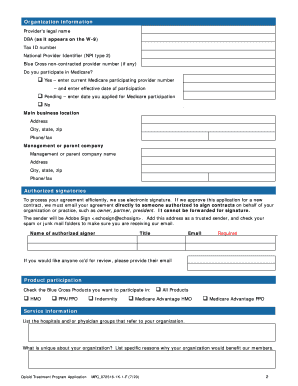
"Attachment B" typically contains several critical components, each serving a specific role in supporting or expanding on the main document. Common elements include:
- Detailed Sections: Specific areas to provide additional data not covered in the primary document.
- Signature Lines: Often required to verify authenticity and compliance.
- Disclosure Statements: Statements aimed at ensuring transparency and adherence to legal or regulatory standards.
- Supplementary Lists: Additional lists or tables providing details like financial figures or other quantified information.
These elements ensure that all the requisite information is systematically captured and structured to meet regulatory or procedural needs.
Legal Use of the Attachment B
The legal context of "Attachment B" varies widely, typically playing a crucial role in compliance and regulatory submissions. In government and legal settings, it serves as an extension of the main document, providing supplemental information necessary for legal clarity or statutory completeness. Adhering to prescribed formats and instructions is essential to ensure legal validation. Incorrect or incomplete submissions can lead to processing delays, fines, or penalties, highlighting the importance of rigorous compliance with requirements outlined in "Attachment B."
State-Specific Rules for the Attachment B
State-specific regulations can vastly influence how "Attachment B" is structured and used. Different states may require varied formats, data points, or submission processes based on localized legal requirements or administrative practices. For example, tax documents using "Attachment B" might have unique filing deadlines or mandatory contents dictated by state law. It is crucial for individuals and businesses to consult state-specific guides or legal advice to confirm compliance with local rules, ensuring all submissions meet the prescribed standards for that jurisdiction.
Required Documents
Completing "Attachment B" often necessitates the inclusion of additional documents to validate the information provided. These might include:
- Proof of Identification: Such as a driver's license or passport.
- Financial Documents: Bank statements, tax returns, or financial disclosures when applicable.
- Supporting Documentation: Any additional forms or papers referenced within "Attachment B" that are required for the completion of the submission process.
Ensuring all necessary documents accompany "Attachment B" is crucial for the acceptance and completeness of the main filing.
Form Submission Methods
"Attachment B" can be submitted through multiple methods depending on the requirements specified:
- Online: Many institutions accept electronic submissions, providing a convenient and secure means to submit "Attachment B" via digital platforms.
- Mail: Traditional mail submissions might be necessary where electronic filings are not available or mandated by regulatory protocols.
- In-Person: For certain government or legal documents, in-person submissions might be required to authenticate the process.
Selecting the appropriate submission method is vital to ensure timely and efficient processing, adhering to guidelines stipulated in the main document or by regulatory bodies.