






Definition & Meaning
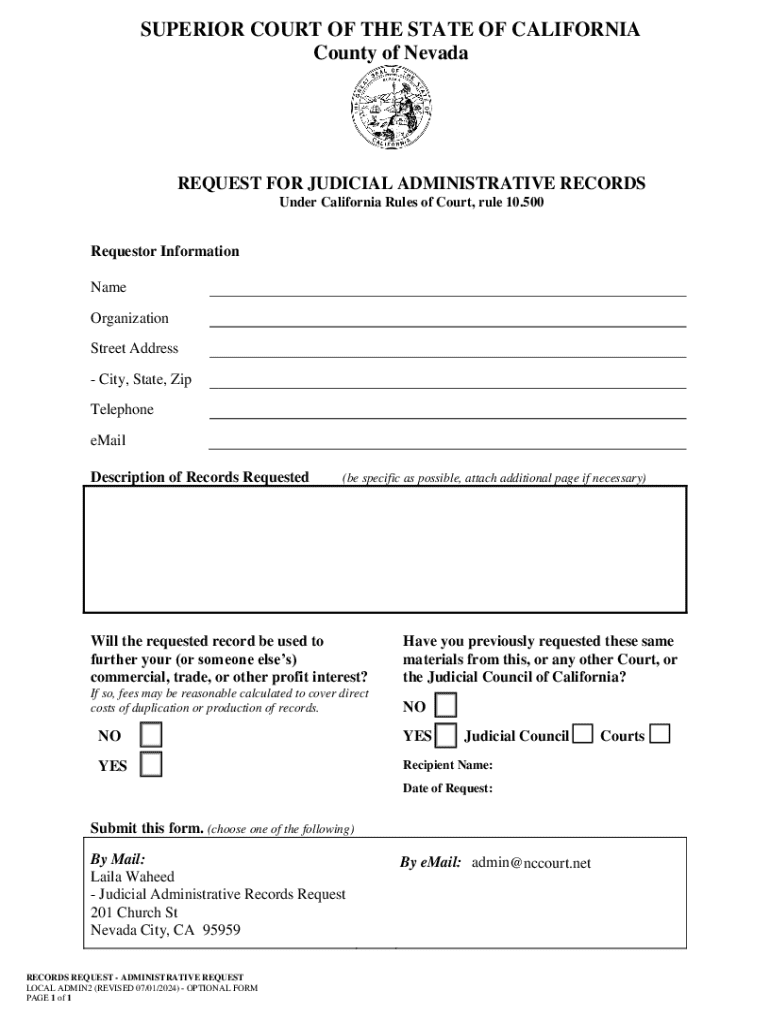
The phrase "Will the requested record be used to" refers to a section often found in judicial administrative record request forms used by courts, such as the Superior Court of California. This section inquires about the intended use of the records being requested. Understanding the purpose behind accessing these records is critical, as it can influence who is granted access, under what conditions, and the level of detail that can be disclosed. The answer provided in this section must clearly articulate the requestor's intentions since it may affect legal considerations and privacy obligations.
Key Elements of the Form
The "Will the requested record be used to" section is essential because it outlines the specific purpose for which the records are being requested. This might include:
- Legal proceedings: Such as preparing for a trial or an appeal.
- Research: For academic or historical analysis.
- Personal interest: For gaining insights into previous cases that may influence personal decisions.
- Other purposes: Such as journalism or policy development.
Each option requires the requestor to provide sufficient detail to justify the request, ensuring transparency and adherence to legal guidelines. Disclosing the accurate purpose helps mitigate misuse of sensitive information.
Legal Use of the Form
The use of judicial administrative records must comply with legal standards, aimed at ensuring transparency while protecting sensitive information. Courts review requests to determine if releasing records is permissible under the law. Misrepresenting the purpose could lead to legal consequences, as accessing these documents improperly might infringe on privacy laws or court rules. Consequently, clear and truthful answers in the "Will the requested record be used to" section uphold the integrity of the legal process and respect confidentiality.
Legal Considerations
- Confidentiality: Courts must respect confidentiality rules and ensure that disclosed records do not violate privacy rights.
- Transparency: Accurate disclosures improve trust in legal systems, ensuring that records are intended for legitimate purposes.
Steps to Complete the Form
- Provide Personal Information: Start by accurately filling in personal or organizational details, including your full name, address, and contact information.
- Describe the Records: Specify the records you wish to access, detailing any case numbers, dates, or relevant identifiers.
- State the Purpose: In the "Will the requested record be used to" section, clearly state why you need the records and what you intend to do with them.
- Review for Accuracy: Double-check all entries for accuracy and completeness to ensure no delays or rejections due to errors.
- Submit the Form: Choose your submission method, whether by mail, email, or in person, according to the instructions provided by the court.
Important Tips
- Clarity: Use clear and concise language.
- Specificity: Include as much relevant detail as possible to describe the purpose.
Who Typically Uses the Form
This form is primarily used by:
- Legal Professionals: Attorneys and paralegals require access to records for trial preparation and case review.
- Researchers and Academics: Scholars studying legal systems or historical cases often require these records.
- Journalists: Reporters working on investigative pieces or coverage of court cases.
- Private Individuals: Persons involved in or impacted by legal proceedings may need records for personal reasons.
Understanding the typical users sheds light on the diverse roles these records play, highlighting the form's versatility and importance in various professional and personal contexts.


State-Specific Rules
Different states may have unique regulations concerning the release of judicial administrative records. The Superior Court of California, for instance, has specific guidelines that follow the California Public Records Act. These rules govern what records are available, the process for requesting them, and the potential fees involved. It is critical for applicants to familiarize themselves with state-specific guidelines to ensure compliance and avoid possible delays or rejections.
Form Submission Methods
Records request forms can typically be submitted through several channels:
- Online: By email with a digital copy of the completed form.
- Mail: By sending the physical document to the court's designated address.
- In-Person: Some courts allow submission at their office or designated locations.
Each method may have different requirements concerning documentation, deadlines, or processing times. Ensuring the correct method is chosen based on the provided guidelines helps facilitate timely processing.
Required Documents
Completing the request form often necessitates accompanying documents, such as:
- Proof of Identity: To verify the identity of the requestor.
- Authorization Letter: If requesting on behalf of another party.
- Supporting Documentation: Any additional papers that substantiate the need for record access, like a lawyer's letter indicating why the records are pertinent to an active case.
Ensuring these documents are ready and attached when submitting the request form will aid in a smooth and efficient review process.