






Definition and Purpose of the Short-Term Rental Zoning Permit Application
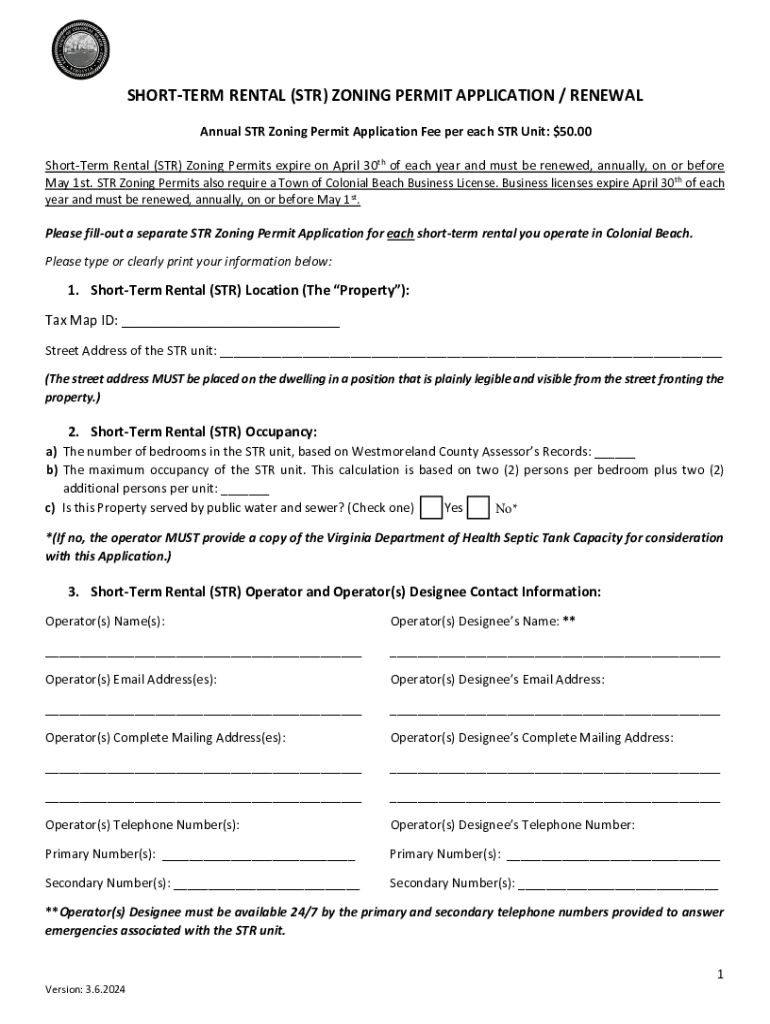
The Short-Term Rental (STR) Zoning Permit Application is a formal document required for property owners seeking permission to operate a short-term rental in certain jurisdictions. This application ensures that properties used for short-term rentals comply with local zoning regulations and safety standards. STRs include properties rented out for temporary stays, typically on platforms like Airbnb or VRBO. The application process helps maintain community standards and addresses potential issues such as noise, overcrowding, and parking.
- Primary Objective: Ensure compliance with zoning laws and community regulations.
- Regulatory Compliance: Aligns property use with local regulations to avoid legal complications.
Steps to Complete the Short-Term Rental Zoning Permit Application
Completing the STR Zoning Permit Application involves several detailed steps to ensure accuracy and compliance with local laws.
- Gather Necessary Information: Collect details about the property, such as its address, ownership, and current zoning classification.
- Review Local Regulations: Familiarize yourself with local zoning ordinances and regulations applicable to short-term rentals.
- Fill Out the Application Form:
- Enter all required personal and property information.
- Specify the intended use and occupancy limits of the rental.
- Attach Required Documents: Include any necessary documentation, such as proof of ownership, site plans, and safety certifications.
- Submit the Application: Depending on jurisdiction, applications may be submitted online, via mail, or in person.
- Pay Applicable Fees: Ensure all fees are paid, often required at the time of submission.
Important Terms Related to the Short-Term Rental Zoning Permit Application
Understanding the terminology associated with STR applications is vital for accurate completion and compliance.
- Zoning Classification: Designation that defines permitted uses of a property area.
- Occupancy Limit: Maximum number of occupants allowed in the rental at one time.
- Site Plan: A detailed diagram showing property layout, including structures, parking, and amenities.
- Compliance Certificate: Document verifying that the property meets local safety and zoning standards.
Required Documents for Submitting the Short-Term Rental Zoning Permit Application
To enhance the efficiency of the application process, ensure all necessary documents are organized and submitted with the application.
- Proof of Property Ownership: Includes deeds or tax records.
- Local Zoning Map Proof: Confirms the property's zoning compliance.
- Safety Certifications: Proof of compliance with fire safety and building codes.
- Floor Plan: Detailed map outlining property layout and features.
- Neighbor Notification Letter: In some jurisdictions, a letter informing neighboring properties of your rental plans.
Legal Use and Compliance of the Short-Term Rental Zoning Permit
Utilizing the STR Zoning Permit ensures legal operation within local jurisdictional guidelines. Operating without proper permits can result in fines and legal action.
- Regulatory Adherence: Designed to align property use with local ordinances.
- Civil Penalties: Non-compliance may lead to fines or revocation of the rental permit.
- Community Standards: Helps uphold neighborhood integrity and safety.
Penalties for Non-Compliance with the Short-Term Rental Zoning Permit
Failure to obtain the required permit or adhere to its terms can lead to severe penalties.
- Fines and Fees: Substantial monetary fines for operating without a permit.
- Cease and Desist Orders: Mandated shutdown of rental operations until compliance is achieved.
- Revocation: Permanent loss of rental privileges for sustained non-compliance.
Application Process and Approval Time for the Short-Term Rental Zoning Permit
The timeline for obtaining approval for the STR Zoning Permit can vary based on jurisdiction and the completeness of your application.
- Initial Review: Jurisdictions typically conduct an initial review within ten to twenty business days.
- Public Hearing Requirement: Some applications may necessitate a public hearing, adding time to the process.
- Final Approval: Upon successful completion of all requirements, approval typically follows a few weeks after submission.
State-Specific Rules for the Short-Term Rental Zoning Permit Application
Different states implement varied rules and regulations regarding short-term rental zoning permits, affecting application procedures and requirements.
- California: Requires thorough environmental reviews and neighborhood compatibility assessments.
- Florida: Emphasizes safety inspections and fire code adherence.
- Texas: Mandates strict occupancy limits and noise restrictions.
- New York: Often necessitates proof of insurance and compliance with multifamily dwelling regulations.
Understanding the specific requirements tailored to the jurisdiction can significantly impact the success of your application process.