







Definition & Meaning
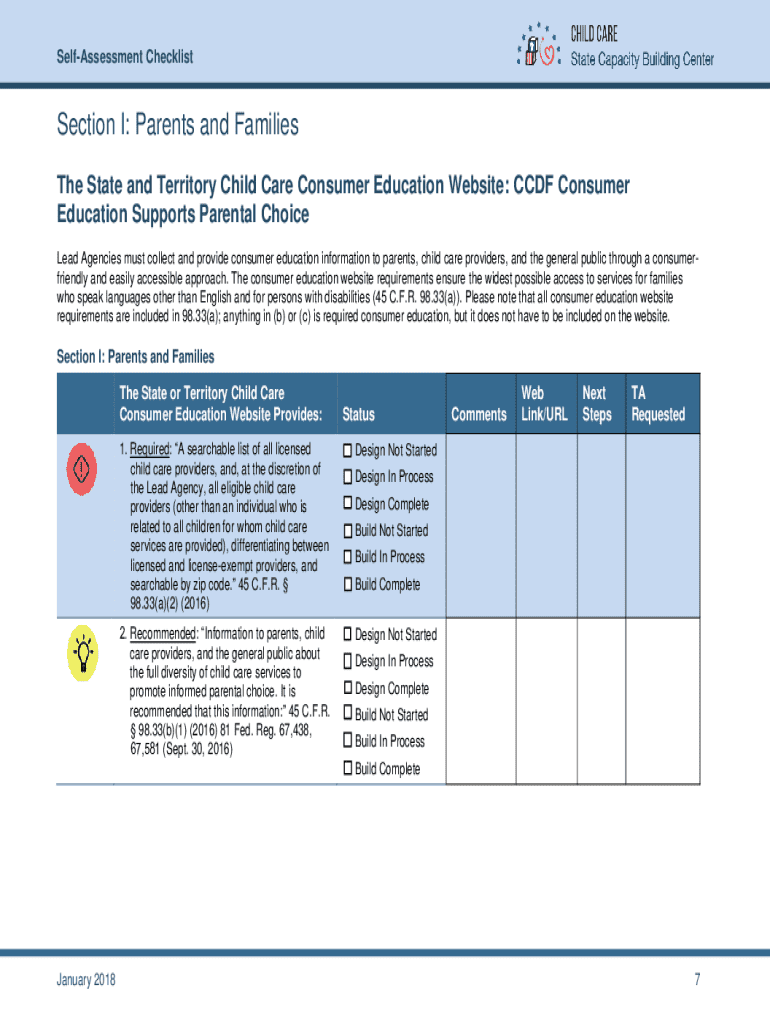
The "State and Territory Child Care Consumer Education Websites" refer to online platforms established by each U.S. state and territory to provide accessible information regarding child care services. These websites are mandated by the Child Care and Development Block Grant (CCDBG) Act of 2014, which aims to support families in making informed decisions about child care options by offering transparent, up-to-date details on the availability, quality, and cost of child care services.
Purpose and Functionality
- Information Access: Offers a centralized location for parents, providers, and the public to find details about child care facilities, including health and safety standards.
- Regulatory Compliance: Ensures that states comply with federal requirements by delivering accurate and comprehensive child care information.
- User Engagement: Promotes understanding and involvement from stakeholders by making information easily accessible and navigable.
Important Terms Related to State and Territory Child Care Consumer Education Websites
Understanding the terminology related to these platforms can assist users in navigating and utilizing the resources they offer. Here are several key terms:
- CCDBG: Child Care and Development Block Grant; a federal funding source for child care assistance programs.
- Licensing Standards: Regulations that child care providers must adhere to ensure safe and healthy environments for children.
- Accreditation: A voluntary process through which child care providers can demonstrate higher standards of quality.
Additional Key Terms
- Subsidy Programs: Financial assistance programs for families in need of child care services.
- Consumer Education: Information provided to help parents make informed decisions regarding child care options.
How to Use the State and Territory Child Care Consumer Education Websites
These websites are designed to be user-friendly, allowing seamless navigation for various users to acquire the information they need. Here’s how you can effectively utilize these sites:
- Search for Child Care Facilities: Use the search functions to locate child care providers by entering specific criteria like location or type of service.
- Access Licensing Information: View licensing details or inspection reports to assess the compliance and quality of providers.
- Explore Resources: Visit educational sections that offer guidance on how to evaluate child care quality, safety practices, and more.
Practical Usage Tips
- Utilize Filters: Apply advanced search filters to narrow down results based on specific needs or preferences.
- Bookmark Key Pages: Save important pages for quick access to frequently needed information.
Steps to Complete the State and Territory Child Care Consumer Education Websites Checklist
For those managing these websites, a checklist is available to ensure all necessary information and functionalities are included. Here’s a step-by-step guide on how to complete it:
- Review Current Content: Conduct a thorough assessment of existing site content to ensure all federal guidelines are met.
- Identify Gaps: Note any missing elements that are outlined in the CCDBG Act requirements.
- Update Information: Add or update sections as needed to include key content such as provider inspection reports or compliance with health standards.
Detailed Execution Plan
- Public Feedback: Collect and incorporate feedback from public users to identify additional needs or improvements.
- Technical Revisions: Work with IT professionals to implement any necessary technical updates or design changes.
State-Specific Rules for the State and Territory Child Care Consumer Education Websites
Each state may have unique regulations and guidelines governing their child care consumer education websites. Understanding these nuances is crucial for compliance and accurate information dissemination.
Examples of State Variations
- California: Incorporates additional environmental health assessments for providers.
- Texas: Offers detailed provider comparison tools to aid parental decision-making.
Compliance Considerations
- Ensure all local laws and child care standards are reflected accurately.
- Regularly update site content to adhere to evolving state legislation or policies.
Who Typically Uses the State and Territory Child Care Consumer Education Websites
These platforms are designed to serve a broad range of users with varying needs:
- Parents: Primary users seeking information to make informed child care decisions.
- Child Care Providers: Utilize the website for understanding licensing requirements and maintaining compliance.
- Policy Makers and Researchers: Use aggregated data to analyze trends and develop policy proposals.


Specific User Scenarios
- New Parents: Looking for safe, reliable, and cost-effective child care options.
- Working Families: Balancing child care needs with financial possibilities through subsidy information.
Examples of Using the State and Territory Child Care Consumer Education Websites
Exploring practical applications of these websites enhances understanding of their benefits:
- Case Study 1: A family in New York finds a nearby child care facility with high safety ratings and favorable parent reviews.
- Case Study 2: A provider in Florida accesses resources to meet state health and safety standards, ensuring compliance during inspections.
Further Scenarios
- Research Initiatives: Universities and think tanks accessing public data for studies in child development and public policy.
- Government Oversight: State agencies reviewing site analytics to improve resource distribution.
Digital vs. Paper Versions
While these websites serve as the primary digital resource, understanding the contrast with traditional paper versions of consumer education materials is useful for certain users.
Advantages of Digital Platforms
- Accessibility: Immediate access to up-to-date information from any internet-enabled device.
- Interactivity: Enhanced user experience through interactive tools and search capabilities.
Benefits of Paper Versions
- Offline Access: Availability in regions with limited internet access.
- Tangible Reference: Useful for individuals who prefer physical documentation for planning and record-keeping.




