






Definition and Purpose of Certificate of Occupancy Application
A Certificate of Occupancy (CO) Application is a crucial document in the real estate and construction industries, designed to ensure that a building or space is compliant with local building codes and regulations. Typically required by local governments, this document certifies that a property is safe and suitable for occupancy. The application necessitates detailing the property’s intended use, structural modifications, and compliance with zoning laws. This process protects public health, safety, and welfare by ensuring that buildings meet minimum standards before occupation.
Importance of the Certificate of Occupancy Application
Securing a CO is essential for legal occupancy and operation of a business or residence. It assures potential tenants, buyers, or employees that the premises are fit for its intended use. In areas like Roanoke, VA, failing to acquire a CO can result in penalties, fines, or forced evacuation until compliance is met. Moreover, a valid CO is often a prerequisite for obtaining business licenses, utility services, or building insurance. In essence, it legitimizes the legal use of the space, safeguarding investments and compliance with municipal regulations.
Key Elements of the Certificate of Occupancy Application
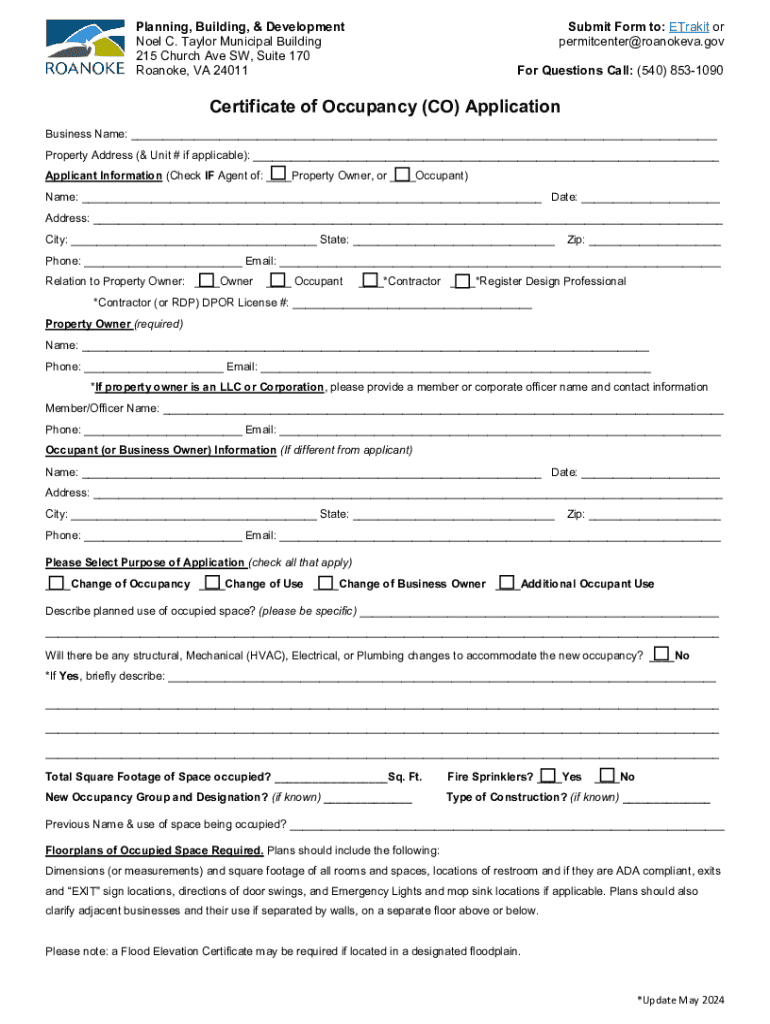
- Business and Property Details: Applicants must provide the name and address of the business as well as specific property details, including dimensions and intended use.
- Applicant and Property Owner Information: This includes names, addresses, and contact information for both the applicant and property owner.
- Purpose of the Application: Clearly state whether the application is for a new construction, renovation, or a change in the building's use.
- Planned Use of Space: Define the intended occupancy type, such as commercial, residential, industrial, or mixed-use.
- Structural Changes Needed: Specify any planned or completed alterations to the building structure, including permits obtained for the changes.
How to Use the Certificate of Occupancy Application
Upon accessing the CO application form, applicants should ensure that all sections are carefully filled out, reflecting accurate and up-to-date information. Supporting documents, such as floor plans, construction permits, and elevation certificates (if in flood-prone areas), should accompany the application to validate compliance with local codes. It is advisable to review the form for completeness and accuracy before submission to prevent delays in processing or approval. Keeping a copy for personal records is also recommended.
How to Obtain the Certificate of Occupancy Application
In most locales, the application can be acquired through the local building or zoning department. In Roanoke, VA, for example, the form might be available via the city’s website or obtained in person from the city planning office. Some jurisdictions offer online submission, facilitating ease of access and faster turnaround. Upon download or receipt, applicants should thoroughly review local guidelines and required documentation to accompany the application, ensuring a smooth submission process.
Steps to Complete the Certificate of Occupancy Application
- Gather Necessary Information: Compile details about the business, property, and ownership.
- Check Local Requirements: Verify specific municipal codes and necessary documents for submission.
- Complete the Form: Accurately fill out each section, paying special attention to details like property use and structural changes.
- Attach Required Documents: Include floor plans, structural permits, and any relevant compliance certificates.
- Submit the Application: Deliver the completed form and attachments through the designated submission method (online, mail, or in-person).
- Follow Up: Contact the issuing department to confirm receipt and check on the status of the application.
Legal Use of the Certificate of Occupancy Application
The CO application serves a legal function by documenting that a building meets safety and zoning requirements. It is pivotal for new businesses or residents to review local occupancy codes to ensure their application adheres to specific ordinances and legal mandates. In certain jurisdictions, the CO remains valid indefinitely unless significant changes are made to the property, while others may require renewal or re-inspection under specific conditions.
State-Specific Rules for the Certificate of Occupancy Application
Different states, and even cities, may have unique requirements for the CO application process. In Roanoke, VA, particular emphasis might be placed on flood elevation certificates due to regional concerns. It’s vital for applicants to consult local regulations and possibly seek advisory consultations with city planners or legal professionals to navigate any nuanced requirements unique to their area.
Who Typically Uses the Certificate of Occupancy Application
The primary users of a CO application are diverse, including:
- Business Owners: Establishing legal premises for operations.
- Property Developers: Validating new constructions or significant renovations.
- Landlords: Ensuring rental properties meet legal habitability standards.
- Home Buyers or Sellers: Confirming that residential buildings comply with safety and zoning laws.
- Real Estate Agents: Facilitating property transactions by verifying the CO status.


Examples of Using the Certificate of Occupancy Application
Consider a new restaurant owner in Roanoke planning to revamp an old factory into a dining space. To transition legally, they would need to submit a CO application detailing the change from industrial to commercial use and secure necessary permits for renovations. Another example is a family buying a home: the availability of a valid CO assures them that the property meets all safety codes, underscoring its livability and compliance with city ordinances.