







Definition & Meaning
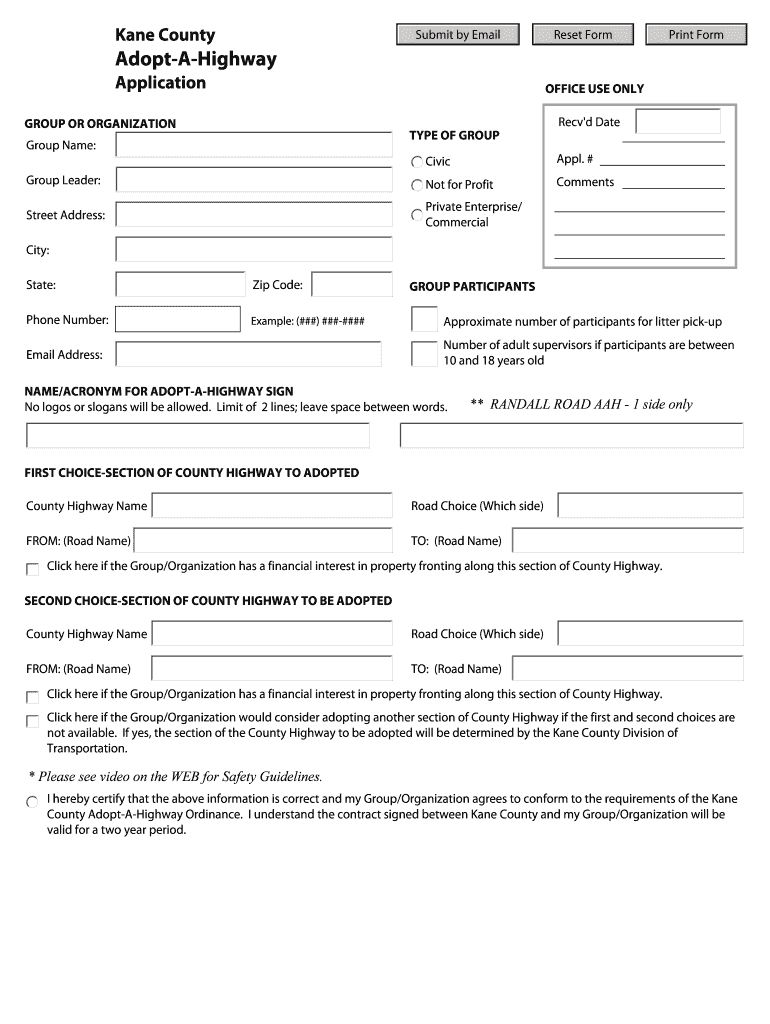
The "Adopt-A-Highway Application" is a formal document used by groups or organizations to participate in the Adopt-A-Highway program. This program enables participants to take responsibility for maintaining a designated section of a highway, primarily by organizing litter pick-up efforts. The application serves as a formal request to adopt a section and outlines the terms and responsibilities associated with participation in the program. Participating in this initiative not only promotes community involvement and environmental responsibility but also helps enhance the appearance of local highways.
Key Responsibilities of Participants
- Regular litter removal.
- Compliance with safety guidelines.
- Maintenance of signage erected by the highway department.
Benefits for the Community
- Promotes environmental stewardship.
- Enhances road aesthetics.
- Fosters community pride and camaraderie.
Steps to Complete the Adopt-A-Highway Application
Completing the Adopt-A-Highway Application involves several key steps, ensuring that the applicant's information is accurately captured and that they understand their commitments under the program. Here’s a detailed breakdown:
-
Gather Necessary Information: Collect details about the group or organization, including names, contacts, and relevant addresses.
-
Preferred Highway Section: Indicate the specific highway sections your group is interested in adopting. Include alternative choices in case the first choice is unavailable.
-
Participant Details: List all individuals who will be involved in the clean-up operations, ensuring that waivers and permissions, particularly for minors, are in place.
-
Compliance and Certification: Sign the certification statement confirming the group’s commitment to follow program guidelines and complete the activities as agreed.
-
Submission: Mail the completed form to the appropriate local highway department or submit it online, if available.
Potential Challenges
- Selecting preferred highway segments that align with the group’s location and interests can be competitive.
- Ensuring all participant information is complete and accurate to prevent delays in application processing.
Who Typically Uses the Adopt-A-Highway Application
A diverse range of organizations typically engages with the Adopt-A-Highway program, each bringing a unique contribution to the initiative. Here are common types of participants:
-
Civic Organizations: Groups focused on community service and environmental efforts often participate to create a direct impact on their local environment.
-
Non-profits and Charities: These entities use the program to increase their visibility and further their mission of community service and sustainability.
-
Corporate Groups: Businesses adopt highways as part of their corporate social responsibility initiatives, enhancing their public relations and engaging employees in communal efforts.
-
Educational Institutions: Schools participate to educate students on environmental responsibility and community service.


Advantages for Participants
- Increased visibility through signage recognizing their efforts.
- Opportunities to foster teamwork and community involvement.
Key Elements of the Adopt-A-Highway Application
The application comprises several vital components, each aimed at ensuring clear understanding and effective participation:
-
Group Information Section: Collects essential data about the organization intending to adopt a highway section.
-
Contact Person: A designated representative responsible for communications with the local highway authority.
-
Highway Selection Preferences: Provides space for indicating desired segments of the highway to adopt.
-
Commitment Acknowledgment: A declaration of understanding program requirements, such as regular clean-ups.
-
Safety and Risk Agreement: Ensures acknowledgment of safety guidelines to protect participants during their activities.
Critical Considerations
- Accurate completion ensures prompt processing and acceptance into the program.
- Safety agreements mitigate liability risks for both the organization and the highway department.
State-Specific Rules for the Adopt-A-Highway Application
Different states may have unique stipulations regarding the Adopt-A-Highway program, each influenced by local regulations and environmental goals. Understanding these differences is crucial for potential applicants:
-
Safety Regulations: Some states require specific safety training or equipment for participants.
-
Frequency of Clean-Ups: Mandated number of clean-up events can vary by state or even by district within a state.
-
Eligibility Criteria: Certain states may have specific eligibility conditions based on an organization’s type or size.
Practical Implications
- Applicants must ensure they comply with their local jurisdiction's rules to avoid complications or disqualifications.
- Staying informed about evolving state regulations can help ongoing program participants adapt to changes smoothly.
Required Documents
Several documents are necessary for completing the Adopt-A-Highway Application, which confirms an organization’s eligibility and commitment:
-
Application Form: The primary document outlining all essential information and agreements.
-
Participant Waivers: Consent forms, particularly for minors or volunteers, acknowledging program terms and safety guidelines.
-
Proof of Non-Profit Status (if applicable): Required for organizations claiming tax-exempt benefits, ensuring eligibility for certain additional benefits within the program.
Documentation Best Practices
- Organize all documents before submission to facilitate a smooth application process.
- Regularly update waiver forms to reflect participant changes or new safety guidelines.
Application Process & Approval Time
The application process for the Adopt-A-Highway program is methodical and may vary slightly by location, although the core process remains constant:
-
Application Submission: Send the completed application to the district’s highway department via mail or electronically if the option is available.
-
Review Period: Normally, the application undergoes a review process to verify details, which could take several weeks.
-
Approval Notification: Once approved, the group receives confirmation, including a schedule and guidelines for their first clean-up.
-
Sign Installation: After acceptance, signage is erected to commemorate the group's involvement with the highway.
Considerations for a Smooth Process
- Contact local authorities in advance to understand any specific regional nuances.
- Follow up post-submission to ensure that the application progresses through the review stages promptly.
Form Submission Methods (Online / Mail / In-Person)
Understanding the available submission methods for the Adopt-A-Highway application is crucial for timely involvement in the program:
-
Online Submission: Many areas provide an online portal for submission, offering a fast and efficient method.
-
Mail Submission: Traditional postal submission remains an option, although it may take longer for processing.
-
In-Person Submission: Some departments offer the choice to hand-deliver applications, which assures immediate receipt confirmation.
Tips for Effective Submission
- Online submissions can provide tracking and immediate confirmation of receipt.
- Always retain copies of all documents submitted for potential future reference or inquires.
Examples of Using the Adopt-A-Highway Application
Real-world applications of the Adopt-A-Highway program highlight its impact and illustrate successful participation strategies:
-
Community Green Teams: Local green initiatives often adopt highways to enhance their environmental efforts, giving members pride and motivation.
-
Corporate Participation: Businesses often use highway adoption to strengthen community ties and promote environmental stewardship as part of corporate values.
-
School Projects: Students engage with the program as a practical application of lessons on ecology and community responsibility, often integrating it with service learning credits.
Case Study
- An example involves a regional non-profit that leveraged highway adoption to boost its visibility and recruit new volunteers, doubling its active member count over a year.
By aligning strategies and goals with the program’s framework, organizations can tailor their participation to achieve both environmental impact and personal satisfaction.




