




01. Edit your shipping instructions template online
Type text, add images, blackout confidential details, add comments, highlights and more.

Type text, add images, blackout confidential details, add comments, highlights and more.

Draw your signature, type it, upload its image, or use your mobile device as a signature pad.

Send shipping instruction form via email, link, or fax. You can also download it, export it or print it out.
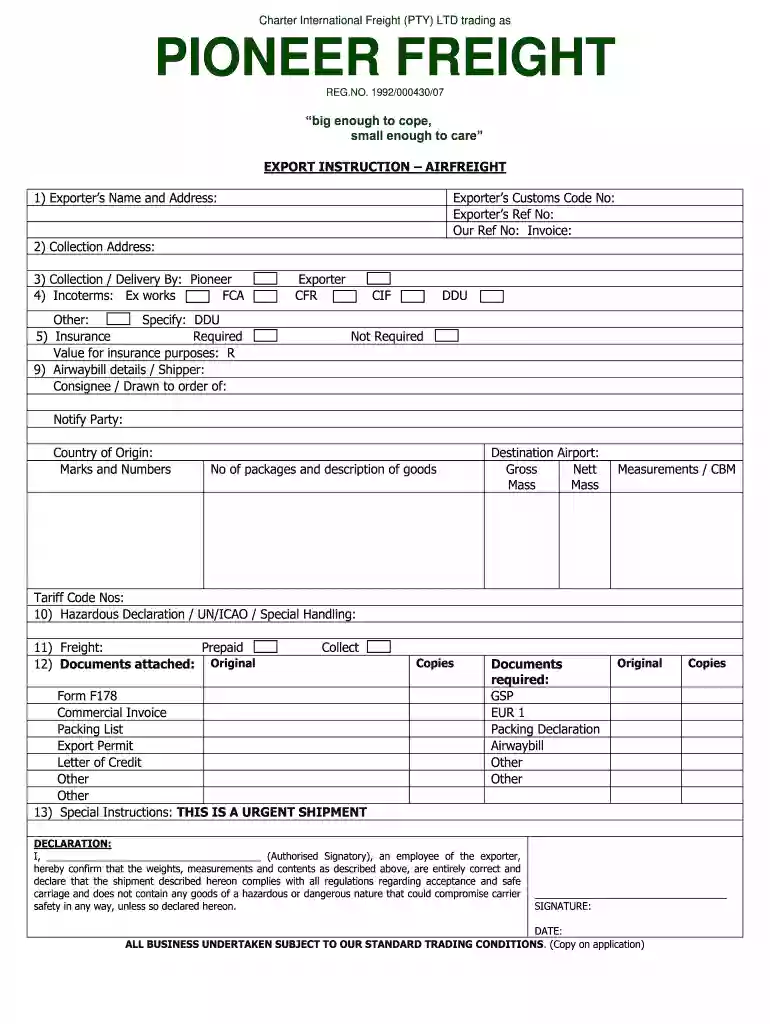
Export cargo shipping instructions are essential documents that provide detailed guidelines on how cargo should be shipped internationally. They serve as a crucial communication tool between exporters, freight forwarders, carriers, and customs authorities. These instructions typically include specific information about the goods being shipped, packaging details, shipping routes, and required documentation. They ensure that all parties involved understand their responsibilities and the necessary actions for compliance.
The document may outline the following:
Understanding these elements is vital for ensuring that shipments comply with international trade laws and regulations. Properly filled shipping instructions can prevent delays and reduce the risk of costly penalties during customs clearance.
Export cargo shipping instructions include several key elements that must be accurately completed to ensure smooth processing of shipments. The following are critical components:
Contact Information: This includes details of the shipper (exporter), consignee, and any intermediary such as a freight forwarder. Accurate contact information is essential for coordination.
Detailed Cargo Description: A thorough description of the goods, including their nature, quantity, value, and unit of measurement. This helps in customs evaluation and ensures compliance with regulations.
Packaging Information: Details about how the cargo is packed, including box dimensions, weight, and material used for packing. Proper packaging ensures safety during transit.
Shipping Instructions: Instructions for the carrier, including preferred routes, shipping dates, and any specific handling requirements such as temperature control for perishable items.
Documentation Requirements: A checklist of necessary documents for export, including invoices, bills of lading, export licenses, and certificates of origin.
Insurance Information: Recommendations or requirements for insuring the shipment against damage or loss during transit.
Each of these components plays a pivotal role in facilitating the shipment process and ensuring compliance with various regulatory standards.
Customs clearance is an essential step in the export shipping process that involves preparing and submitting the necessary documents for goods to pass through customs. This process ensures that shipments comply with the local and international laws governing trade.
Key aspects of customs clearance include:
Preparation of Documents: Exporters must compile all required shipping instructions and documentation, including invoices and certificates required by customs.
Valuation and Classification: The customs authority assesses the value of goods for duties and taxes based on the information provided in the shipping instructions.
Compliance Verification: Customs officials may inspect the cargo to verify that it matches the declared items and values stated in the shipping instructions.
Payment of Duties and Taxes: Exporters or consignees must settle any duties or taxes assessed prior to shipment release.
Failure to provide clear and accurate shipping instructions can lead to delays, fines, or even confiscation of goods, making proper customs clearance integral to international shipping operations.
Using a shipping instruction format can simplify the process of preparing export documentation. Common formats include templates provided by freight forwarders or customizable documents that cater to specific needs. Here are popular examples:
Standard Shipping Instructions Template: A generic form that outlines the essential information applicable to most shipments, including shipper details, consignee information, and cargo description.
Customs Clearance Instructions Template: This focused format emphasizes fields relevant to customs compliance and required documentation, helping to avoid delays at the customs checkpoint.
Shipping Instructions Format (Word): A downloadable Word document or template that users can easily modify, making it ideal for businesses needing flexibility.
Maersk Shipping Instructions: A specific format provided by Maersk that aligns with their operational guidelines and logistics systems, ensuring compliance with their policies.
Employing these formats allows exporters to ensure that all necessary details are captured consistently, reducing the likelihood of errors during the shipping process.
Exporting goods involves navigating a complex network of legal regulations that vary by country and product type. It is crucial to include compliance-related instructions in shipping documents to prevent legal issues. Important considerations include:
Export Control Laws: Understanding and incorporating relevant export control laws specific to the items being shipped. For instance, certain items may require export licenses due to their sensitive nature.
Trade Compliance: Adherence to U.S. and international trade agreements, tariffs, and trade sanctions that may affect the shipment's legality.
Regulatory Documentation: Including references to permits and certificates that demonstrate compliance with safety standards and legal requirements for transporting specific goods.
Regular training and updates on regulatory changes are necessary for export professionals to remain compliant and avoid penalties.
Completing export cargo shipping instructions involves a series of methodical steps to ensure all relevant information is captured accurately. Here are the recommended steps:
Gather Information: Collect necessary details about the cargo, including specifications, quantities, and any regulatory requirements.
Select a Format: Choose an appropriate shipping instructions template based on the cargo type and destination requirements.
Fill in Exporter and Consignee Details: Input the full contact information for both the exporter and the consignee, ensuring accuracy and completeness.
Detail the Cargo: Provide a thorough description of the goods, including their weight, dimensions, and value. Make sure to follow any specific product classification guidelines.
Add Shipping Details: Specify the preferred shipping method, carrier options, and any special handling instructions, particularly for sensitive items.
Verify Documentation Requirements: Cross-check the necessary documentation for compliance with customs regulations and ensure all required permits and certificates are included.
Review and Finalize: Conduct a thorough review of the completed shipping instructions for accuracy. It’s crucial to ensure there are no discrepancies that might cause delays in shipping or customs clearance.
Distribute the Instructions: Share the final document with all parties involved, including freight forwarders, carriers, and customs brokers.
Following these steps can significantly enhance the likelihood of a smooth shipping process and successful delivery of exported goods.
At DocHub, your data security is our priority. We follow HIPAA, SOC2, GDPR, and other standards, so you can work on your documents with confidence.
Apr 21, 2021 All freight charges on shipments for export disposition instructions printed on the Bill of Lading, shipping order, shipping label.Read more
This document describes the steps for shipping hardware or technical data that is subject to an import or export license under the International Traffic in ArmsRead more
Feb 10, 2026 Basic Importing and Exporting Tips for New Importers and Exporters Importing Exporting Processing Duties, Taxes, and Fees RelatedRead more


