
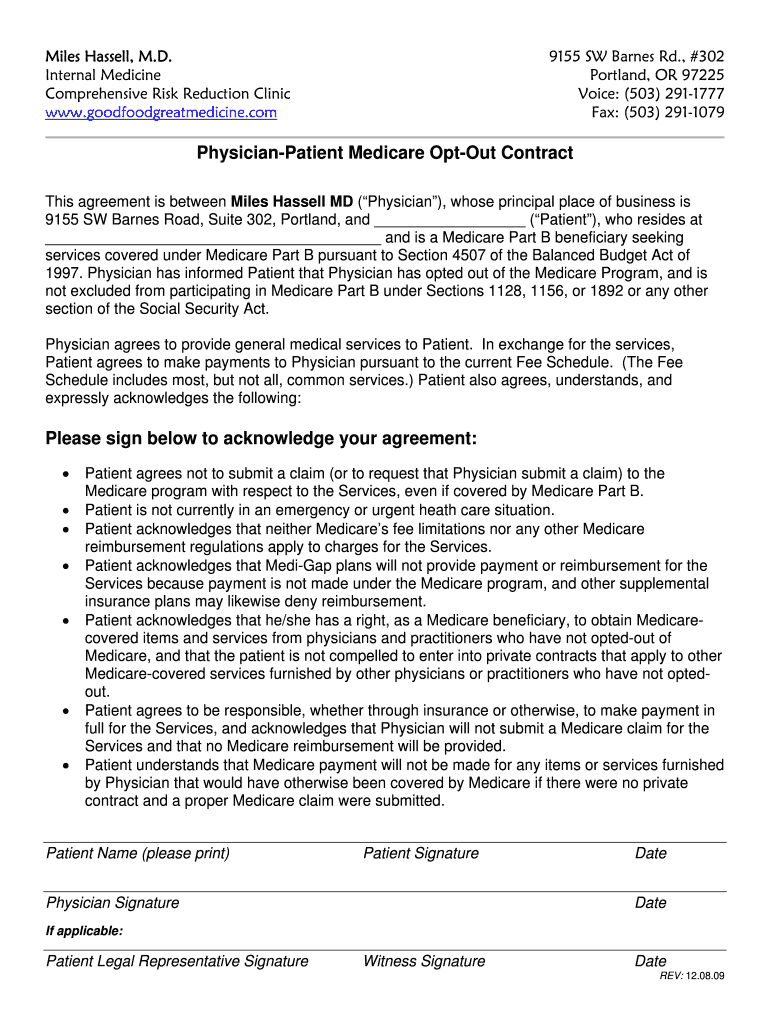







Definition and Understanding of the Physician-Patient Medicare Opt-Out Contract
The Physician-Patient Medicare Opt-Out Contract is a legal agreement between a Medicare beneficiary and a healthcare provider who has chosen not to participate in the Medicare program. This contractual arrangement allows physicians to provide services directly to patients without involving Medicare for reimbursement. The patient agrees to pay the physician out-of-pocket and acknowledges that no Medicare claims will be submitted for these services.
Key Characteristics
- Bilateral Agreement: The contract involves explicit consent from both the physician and the patient, formalizing their agreement outside of Medicare's claim submission procedures.
- Direct Payment: The patient agrees to pay the provider directly rather than having payments processed through Medicare.
- Legal Binding: Such contracts are legally enforceable and must adhere to specific federal guidelines for validity.
Purpose of the Contract
- Freedom of Choice: It allows providers the freedom to determine their fees and services without Medicare's restrictions.
- Patient Empowerment: Patients may choose to receive care from a specific provider even if they operate outside the Medicare system.
Utilizing the Physician-Patient Medicare Opt-Out Contract
For both physicians and patients, understanding and correctly implementing the opt-out contract is crucial.
For Physicians
- Prepare Documentation: Physicians must have an opt-out affidavit filed with Medicare to enter into valid contracts.
- Contract Clarity: It is essential to ensure that the terms regarding payment, services, and patient responsibilities are clearly laid out and agreed upon.
For Patients
- Informed Decision: Patients should be fully informed of their rights and the implications of opting out, including the lack of Medicare coverage for services received under this contract.
- Financial Readiness: Patients need to understand their financial obligations since Medicare will not cover these expenses.
Steps to Complete the Physician-Patient Medicare Opt-Out Contract
Completing this contract involves a series of well-defined steps to ensure compliance and clarity.
-
Drafting the Contract
- Physicians typically start by using a template that meets Medicare’s guidelines.
- Both parties should review key terms, including services covered and payment expectations.
-
Reviewing Legal Obligations
- Both physician and patient should understand the opt-out agreement's legal stipulations, ensuring they meet all requirements.
-
Signing the Agreement
- Signatures from both parties are required to authenticate the agreement legally.
-
Filing Documentation
- Physicians must file an affidavit with Medicare, documenting their decision to opt-out and confirming their agreement to accept direct payment from patients.
-
Patient Acknowledgement
- The patient must acknowledge in writing that they understand the terms and implications of the contract.
Important Terms and Conditions in the Physician-Patient Medicare Opt-Out Contract
Familiarity with essential terminology is key for accuracy in these contracts.
Core Terms
- Medicare Beneficiary: The patient who receives services but opts to pay directly.
- Undertaking Not To Bill Medicare: A crucial acknowledgment that both parties waive the right to Medicare billing for services covered under the contract.
- Opt-Out Affidavit: A document submitted by the physician to Medicare, formalizing their decision to opt out.
Essential Stipulations
- Payment Terms: The contract must specify how and when payments will be made.
- Service Specifications: Clear definitions of which services are covered and which might incur additional fees.
Legal Implications and Compliance of the Physician-Patient Medicare Opt-Out Contract
Adhering to legal standards ensures valid and enforceable agreements.
Compliance Requirements
- Term Length: Standard opt-out periods are typically two years, after which renewal or revocation is necessary.
- Notification: Medicare must be informed of a physician’s decision to opt-out through proper channels and documentation.
Examples and Use Cases
Different scenarios illustrate how these contracts are applied effectively.
Case Study Overview
-
Scenario One: A retired couple opts to work with a top-rated cardiologist who does not accept Medicare. By signing an opt-out contract, services are provided, and payment is settled without Medicare involvement.
-
Scenario Two: A specialized healthcare provider enters a contract to offer unique services not widely covered under Medicare plans, ensuring patients receive personalized care.
Lessons Learned
- Customization: Each contract should cater to specific arrangements and patient needs.
- Patient Awareness: Educating patients about their rights and responsibilities improves satisfaction and trust.
Each of these sections ensures a comprehensive understanding of the Physician-Patient Medicare Opt-Out Contract and its applications, enhancing document workflow while maintaining legal compliance and patient satisfaction.




