






Definition and Meaning
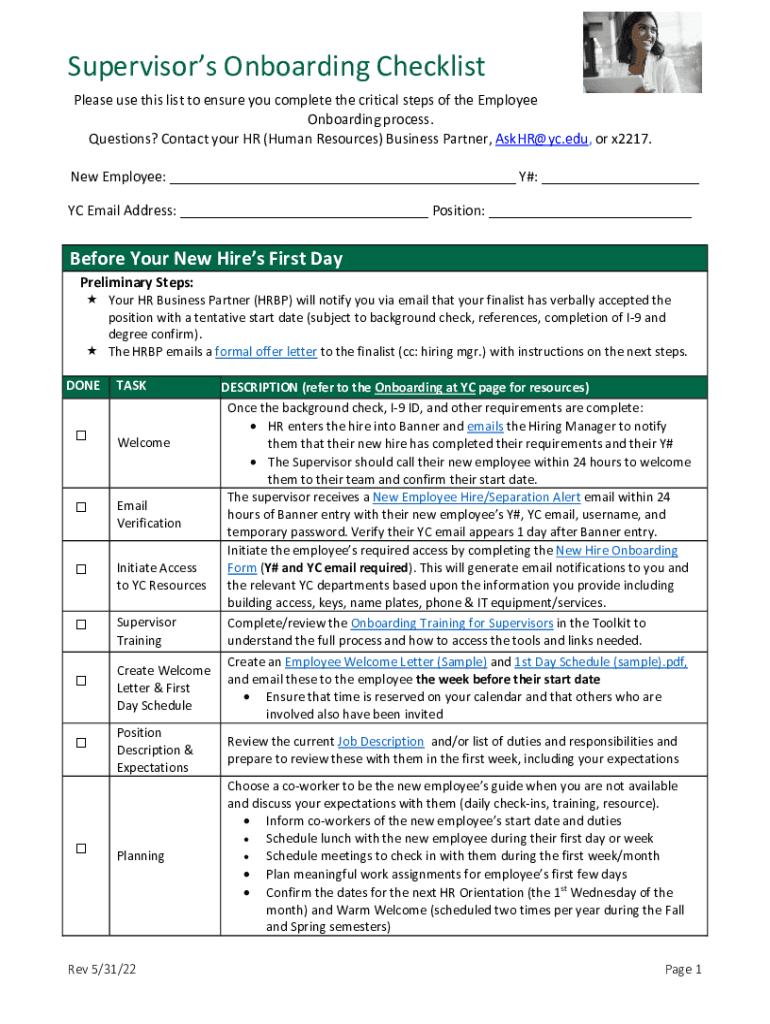
The Employee Onboarding Checklist for HR (Free Template) is a structured guide explicitly designed to assist human resources teams in efficiently managing the onboarding process for new employees. This checklist serves as a comprehensive roadmap, ensuring that all critical tasks are systematically addressed before, during, and after an employee's first day. By utilizing this template, HR professionals can streamline the onboarding process, enhance organizational consistency, and improve the overall experience for new hires. This structured approach ensures that new employees have the resources, support, and information they need to acclimate successfully to their new role and environment.
Key Elements of the Employee Onboarding Checklist
The checklist is meticulously crafted to cover a wide range of essential tasks involved in onboarding new employees. Key elements include:
- Pre-arrival preparation: Ensuring workspace setup, equipment provisioning, and access to necessary systems.
- Welcoming and orientation: Introduction to company culture, team members, and organizational policies.
- Training schedules: Detailed plans for role-specific training sessions and essential skills development.
- Documentation and compliance: Collecting necessary documentation and ensuring legal compliance with employment regulations.
- Continuous support and feedback: Scheduled check-ins and feedback sessions during the initial weeks.
These elements are designed to create a cohesive and supportive onboarding experience that facilitates smooth integration into the company.
How to Use the Employee Onboarding Checklist
To maximize the utility of the onboarding checklist, HR teams should follow these steps:
- Customization: Adapt the template to the specific needs and processes of the organization.
- Task delegation: Assign responsibilities to relevant HR personnel and hiring managers.
- Monitor progress: Use the checklist to track completed tasks and identify any outstanding items.
- Feedback loop: Incorporate feedback from new hires to refine and improve the checklist for future use.
By tailoring the checklist to fit organizational needs, HR teams can ensure a consistent and effective onboarding process.
Steps to Complete the Employee Onboarding Checklist
Completing the onboarding checklist involves several strategic steps:
- Initial planning: Define onboarding goals and align them with company objectives.
- Task execution: Conduct tasks such as documentation collection and orientation sessions as outlined in the checklist.
- Regular review: Assess the status of each task, updating the checklist as tasks are completed.
- Final evaluation: After the onboarding process, review performance metrics and feedback to identify areas of improvement.
Each step plays a crucial role in ensuring that every aspect of the onboarding process is efficiently and effectively covered.
Examples of Using the Employee Onboarding Checklist
Consider how different types of organizations use the onboarding checklist:
- Tech startups: Focus on cultural integration and rapid role-specific training to keep pace with fast growth.
- Non-profits: Prioritize alignment with organizational mission and values in addition to compliance with regulations.
- Corporate entities: Emphasize structured orientation programs and extensive policy briefings.
These examples demonstrate the flexibility of the checklist to suit varied organizational contexts and onboarding priorities.
Legal Use of the Employee Onboarding Checklist
Proper legal compliance is a critical element of the onboarding process:
- Documentation compliance: Ensure all employee documentation required by employment laws is collected and securely stored.
- Non-discrimination: Align onboarding practices with legal standards for fair and non-biased treatment of all employees.
- Confidentiality agreements: Implement confidentiality agreements to protect proprietary information.
Adherence to legal requirements is essential to mitigate potential liabilities and ensure a fair and compliant onboarding process.
Software Compatibility
The digital version of the onboarding checklist is compatible with a wide array of document management software, such as:
- DocHub: Allows real-time collaboration, annotation, and secure sharing of the checklist.
- Google Workspace: Seamlessly integrates with Drive for easy access and sharing among team members.
- Microsoft Office: Supports editing in Word and Excel for offline and online use.
This compatibility ensures HR teams can access, update, and share the onboarding checklist across various platforms, enhancing productivity and collaboration.
Who Typically Uses the Employee Onboarding Checklist
The checklist is predominantly used by:
- HR professionals: As a primary tool for guiding the onboarding process.
- Hiring managers: To ensure departmental readiness and role-specific onboarding.
- New hires: As a reference to understand what to expect from the onboarding experience.
Each user benefits from the structured approach, ensuring a well-coordinated and comprehensive onboarding experience.


Required Documents
The checklist often requires the collection of key onboarding documents, including:
- Employment contracts: Agreements outlining the terms of employment.
- Tax forms (e.g., W-4): Essential for payroll and tax reporting.
- Employee handbook: Guidelines and policies governing workplace conduct.
These documents aid in setting clear expectations and ensuring compliance with regulatory requirements.
State-Specific Rules and Requirements
Onboarding requirements can vary by state due to differing regulations:
- Employment laws: States may have unique labor laws impacting documentation and onboarding practices.
- Tax regulations: Variations in state tax laws require specific payroll documentation.
- Privacy laws: Compliance with state-specific privacy and data protection statutes.
Understanding these variations ensures seamless integration and compliance across different jurisdictions.