
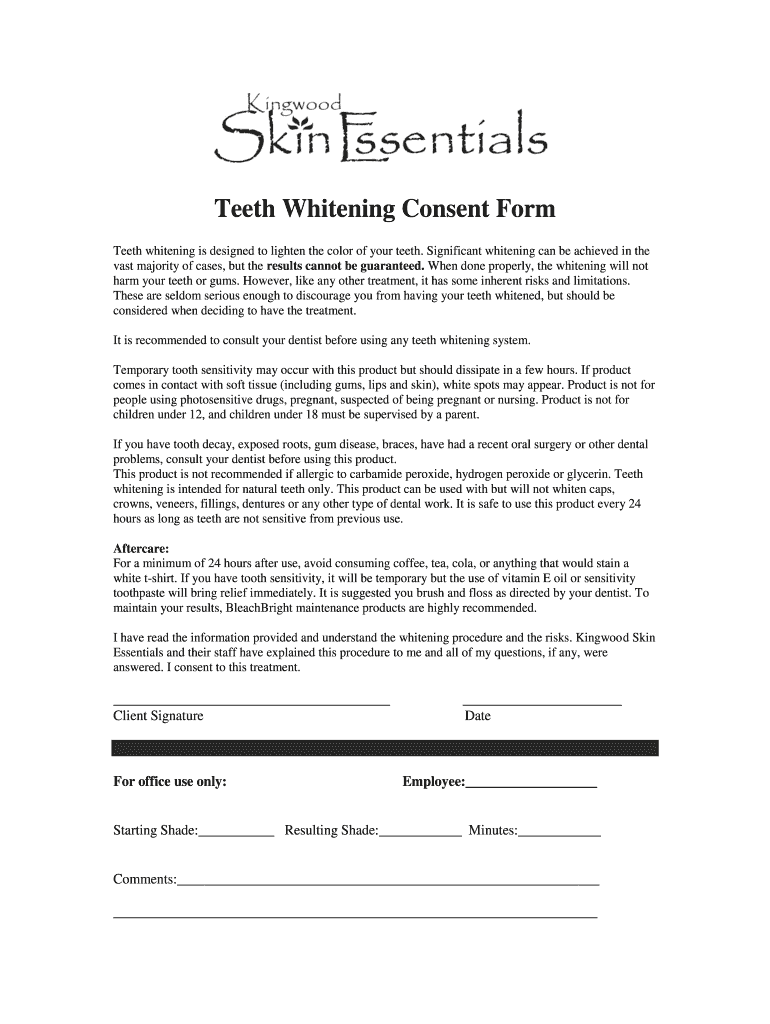







Definition and Significance of Consent Forms for Teeth Whitening
Consent forms for teeth whitening serve as a formal agreement between a dental practitioner and a patient, outlining the specifics of the teeth whitening procedure. These forms are essential for documenting informed consent, ensuring that patients understand the treatment's nature, purpose, risks, and aftercare instructions. By signing, patients acknowledge they have received adequate information and consent to proceed with the whitening treatment.
-
Purpose: The main goal of these consent forms is to protect both the patient and the practitioner by ensuring that the patient is fully aware of the implications of the whitening procedure. This includes understanding the expected results, the type of products that will be used, and any potential side effects.
-
Risks Involved: Common risks associated with teeth whitening can include temporary tooth sensitivity and potential allergic reactions to whitening agents. These forms typically outline these risks, helping patients make informed decisions.
-
Precautions: The forms often remind patients to consult their dentist prior to undergoing the treatment, especially if they have sensitive teeth, gum disease, or other dental issues.
How to Utilize Consent Forms for Teeth Whitening
Utilizing consent forms for teeth whitening involves several steps to ensure compliance and clarity throughout the process. Practitioners should have a clear protocol for presenting these forms to patients.
-
Preparation: Ensure the consent form includes comprehensive information regarding the procedure, potential risks, and aftercare. This prepares both the practitioner and the patient for the steps that lie ahead.
-
Discussion: Prior to the patient signing the form, facilitate a discussion about the procedure. This allows patients to ask questions and for the dental professional to provide tailored responses based on individual concerns.
-
Review and Signing: Ensure that the patient reads the entire consent form. It is crucial they acknowledge understanding by signing the document. Electronic signatures generated through platforms like DocHub are legally binding and create a streamlined workflow.
-
Documentation: Store the signed consent forms securely, maintaining an organized record to protect both the patient’s rights and the practitioner’s liability.
Steps to Complete the Teeth Whitening Consent Forms
Completing a teeth whitening consent form involves a systematic approach to ensure that all necessary information is gathered and documented correctly.
-
Provide Patient Information: Collect patient details, including their name, contact information, and medical history. This step verifies that the practitioner has necessary background information to evaluate the patient’s suitability for the procedure.
-
Informational Section: Clearly articulate the details of the teeth whitening process. This section should explain the method of whitening—such as in-office bleaching or at-home kits—and the expected results.
-
Risk Acknowledgment: Include a section where patients can acknowledge their understanding of the potential risks, including discomfort or diminished enamel strength. This forms a protective legal premise for the practitioner.
-
Aftercare Instructions: Encourage patients to follow specific aftercare to maintain the results, which might include avoiding certain foods or beverages for a specified time.
-
Signature Section: Finally, provide areas for both the patient’s and practitioner’s signatures, indicating that informed consent has been appropriately given and received.
Importance of Consent Forms for Teeth Whitening
Consent forms for teeth whitening are vital for several reasons. They create a transparent relationship between the dental practitioner and the patient, and they serve as documentation of the patient's consent.
-
Legal Protection: In the event of disputes regarding the treatment outcome or any adverse reactions, well-documented consent forms can protect practitioners from legal claims. They provide evidence that the patient was adequately informed of the procedure and agreed to its execution.
-
Promoting Patient Trust: By ensuring that patients understand what to expect, dentists can cultivate an environment of trust and confidence. Patients feel valued and respected when their concerns are taken seriously.
-
Regulatory Compliance: Many states require consent forms for specific dental procedures. Maintaining compliance with these regulations helps avoid fines or disciplinary actions.
Who Typically Uses Consent Forms for Teeth Whitening
Consent forms for teeth whitening are generally used by various professionals in the dental field. Understanding who employs these forms can shed light on their necessity across settings.
-
Dentists: Dentists perform teeth whitening procedures and utilize consent forms to inform patients about the process and risks involved.
-
Dental Hygienists: In some practices, dental hygienists may perform teeth whitening as part of their duties, hence the need for proper consent documentation.
-
Cosmetic Dentists: Practitioners specializing in cosmetic dentistry often utilize these forms as part of their broader patient agreement process, especially when recommending multiple cosmetic procedures.
-
Dental Assistants: While not typically the primary provider of whitening treatments, dental assistants may present the consent forms for signature under the guidance of licensed professionals.
Key Elements of Teeth Whitening Consent Forms
Teeth whitening consent forms contain several critical components that provide clarity and comprehensiveness about the procedure.
-
Patient Information Section: This area captures vital data to confirm the identity and medical history of the patient.
-
Procedure Description: A succinct description of the teeth whitening method being employed, clarifying whether the procedure will occur in-office or at home.
-
Risk and Benefit Disclosure: A balanced discussion of the potential side effects and benefits of teeth whitening. This section ensures patients have realistic expectations.
-
Aftercare Guidelines: Specific instructions detailing how to care for teeth post-treatment, which may include dietary restrictions or oral hygiene tips.
-
Signature and Date: The document should provide spaces for the patient's consent signature and the date of signing, as well as the provider's signature to confirm they have discussed the information.
By ensuring that these elements are present and effectively communicated, dental professionals can foster a more informed, respectful, and compliant patient experience in the teeth whitening process.




