Definition & Meaning
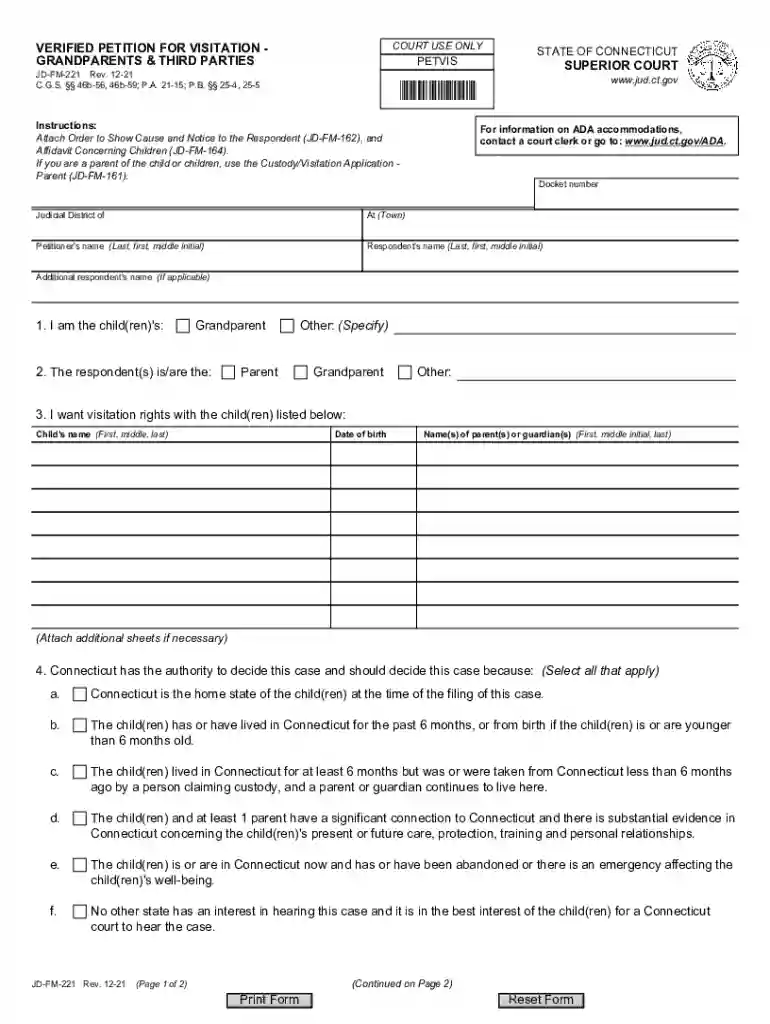
The "Verified Petition for Visitation - Grandparents and Third Parties" is a legal document used primarily in the United States, particularly within the jurisdiction of Connecticut, to request visitation rights with a child. This petition is intended for individuals who are not the child's primary custodians but seek a legal remedy to maintain or establish a relationship with the child. Common petitioners include grandparents and other non-parental figures in the child's life. The document serves as a formal request to the court, detailing the petitioner's relationship to the child, the reasons for the visitation request, and any pertinent legal grounds for the court to consider jurisdiction.
Importance in Family Law
- Establishes a formal process for non-custodial adults to request visitation.
- Provides a legal basis for courts to decide on visitation matters.
- Protects the interests of both the child and the petitioner by ensuring that the request is evaluated under legal standards.
Key Elements of the VERIFIED PETITION FOR VISITATION - GRANDPARENTS AND THIRD PARTIES
The key elements of the Verified Petition for Visitation include specific sections that require detailed information from the petitioner.
Relationship to Child
- Clearly states the petitioner's connection to the child.
- Includes details like the nature and history of the relationship.
- Demonstrates existing bonds or past interactions with the child.
Reasons for Requesting Visitation
- Justifications for why visitation is in the best interest of the child.
- Explanation of how the visitation will benefit the child's emotional or developmental needs.
- Any supporting evidence or testimonies from third parties.
Jurisdiction and Legal Grounds
- Outlines why Connecticut or the respective state has jurisdiction over the case.
- References any relevant state laws or statutes that empower the court to hear the petition.
- Details any prior legal actions related to the child's custody or visitation.
How to Use the VERIFIED PETITION FOR VISITATION - GRANDPARENTS AND THIRD PARTIES
Using the Verified Petition for Visitation involves specific steps to ensure that all legal requirements are met.
Preparation and Research:
- Gather necessary documents that demonstrate your relationship with the child.
- Research applicable state laws and any prior court decisions that might affect your case.
Filling Out the Form:
- Provide accurate and thorough responses to each section of the petition.
- Make sure all information is correct to avoid delays or rejections.
Submission:
- Verify that all required documents are attached.
- Submit the petition to the appropriate court either through mail or in person, depending on court procedures.
Steps to Complete the VERIFIED PETITION FOR VISITATION - GRANDPARENTS AND THIRD PARTIES
Gather Required Information
- Basic personal details of the petitioner and the child.
- Historical details of the relationship with the child.
- Any existing legal orders or previous petitions related to visitation.
Complete the Petition Form
Section 1: Personal Information:
- Include full legal names, addresses, and contact information.
Section 2: Relationship Declaration:
- Clearly articulate your relationship with the child and provide supporting evidence or anecdotes.
Section 3: Visitation Proposal:
- Specify desired visitation schedules, including frequency and duration.
- Explain how the proposed visitation plan benefits the child.
Section 4: Jurisdictional Argument:
- Provide a clear legal basis for the court’s jurisdiction and any relevant legal references.
Sign and Verify:
- Sign the petition in presence of a notary to confirm the truthfulness of the information provided.
Legal Use of the VERIFIED PETITION FOR VISITATION - GRANDPARENTS AND THIRD PARTIES
The petition serves as a critical tool within family law to ensure the child’s welfare is maintained while fostering important non-parental relationships.
Case Considerations
- The court considers the child’s best interests as the paramount concern.
- The petition may be contested by the child’s custodial parent.
- Legal representation is often recommended to navigate complex legal procedures and advocate effectively for the petitioner’s interests.
State-Specific Rules for the VERIFIED PETITION FOR VISITATION - GRANDPARENTS AND THIRD PARTIES
Connecticut-Specific Guidelines
- Connecticut law requires a demonstration of a significant relationship between the petitioner and the child.
- Evidence that visitation would be in the best interest of the child, balancing parental rights and third-party involvement.
Variations Across States
- Rules about who can file may vary between states, with some allowing broader categories of third-party petitioners.
- Each state may have different procedural requirements, submission timelines, and jurisdictional criteria.
Examples of Using the VERIFIED PETITION FOR VISITATION - GRANDPARENTS AND THIRD PARTIES
Scenario 1: Grandparents Seeking Visitation
- Grandparents file a petition after being denied contact with their grandchild post-divorce of the child’s parents.
- They detail their active role in the child’s upbringing and provide evidence of the benefits of maintaining this relationship.
Scenario 2: Non-Relative Third Party
- An individual with a long-standing close relationship with the child files for visitation.
- The example highlights legal hurdles and strategic approaches to demonstrating the necessity and benefits of continued contact.
Required Documents
Preparing the Verified Petition for Visitation requires several supporting documents:
- Evidence of the petitioner’s relationship with the child, such as photos, letters, or affidavits.
- Any documentation of prior contact, such as visitation schedules or school records indicating involvement with the child’s education.
- Legal documents or court orders related to the child’s custody or previous visitation arrangements.
This comprehensive overview of the Verified Petition for Visitation ensures that petitioners understand the form’s purpose, key elements, and specific requirements to effectively navigate the legal process for obtaining visitation rights.