






Definition and Purpose of Form 3903
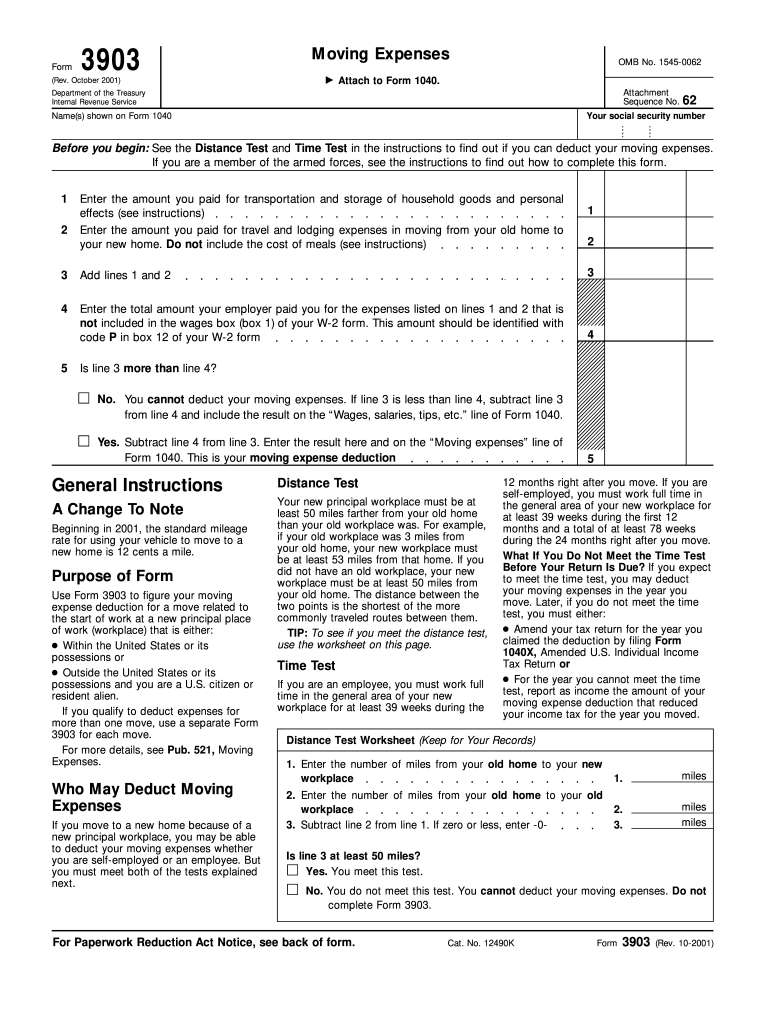
Form 3903, titled "Moving Expenses," is primarily used by individuals who meet certain criteria while relocating for a new principal workplace. The form allows taxpayers to claim deductions for moving expenses on their federal income tax return. The main purpose is to offset costs associated with the move, such as transportation and storage, reducing the overall tax burden.
Key Elements of the Form
Form 3903 requires detailed information about the individual’s move, including the date of relocation, addresses of the old and new workplace, and the nature of expenses incurred. The form includes sections for the calculation of deductible expenses, ensuring that only eligible costs are considered. These expenses might include moving household goods, travel, and lodging. Understanding these elements is crucial for accurately completing the form and maximizing the potential deductions.
Eligibility Criteria


Distance Test
To qualify for the deduction, the move must pass the Distance Test. The new workplace must be at least 50 miles farther from the taxpayer’s old home than the old workplace was. This is a crucial factor that determines eligibility, designed to ensure that only significant relocations are eligible for deductions.
Time Test
The Time Test requires that the taxpayer work full-time for at least 39 weeks during the first 12 months following the move. This ensures that the move is indeed connected to a new job and not for personal reasons. The test is essential to verify the legitimacy of the deduction claim, though exceptions exist for specific situations such as retirements.
Steps to Complete Form 3903
-
Gathering Information: Collect all necessary documents including travel receipts, contracts with moving companies, and any related expense documentation.
-
Complete Personal Information: Fill in personal details, ensuring accuracy in the reporting of previous and new addresses.
-
Expense Calculation: Enter the moving expenses in the designated fields, ensuring alignment with IRS guidelines for deductible costs.
-
Apply Tests: Verify that both the Distance and Time Tests are met by calculating the respective criteria. Specific worksheets can aid in this step if multiple moves or jobs are involved.
-
Finalize and Submit: Review the entire form for completeness and accuracy before attaching it to the federal tax return.
Important Terms
Deductible Expenses
These are costs directly associated with the move, such as transportation of belongings, travel to the new location, and lodging expenses during the move. Non-deductible expenses include meals, temporary living quarters, and real estate-related expenses like selling a home.
Filing Deadlines and Submission Methods
Form 3903 should be filed alongside the federal income tax return by the standard filing deadline, typically April 15. The form can be submitted through various avenues including online filing systems like IRS e-file, mailing the documents, or using a tax preparation software. Remember, late submissions can result in penalties or loss of deduction eligibility.
IRS Guidelines for Form 3903
The IRS provides clear guidelines on what constitutes an allowable moving expense. Taxpayers must adhere to these rules to ensure deductions are legitimate and compliant. This includes maintaining records and receipts, understanding eligible expenses, and knowing how to apply for exceptions if standard criteria are not met.
Special Provisions
Members of the armed forces on active duty have specific provisions that allow them to bypass the Distance and Time Tests, especially if the move is due to a military order. This exemption reflects the distinct nature of military relocations and acknowledges the unique demands placed on service members.
Software Compatibility
For those using tax software like TurboTax or QuickBooks, Form 3903 is often supported, facilitating an easier transition from form completion to filing. This integration can streamline the process, ensuring compliance and accuracy while reducing the likelihood of errors.