






Definition and Meaning
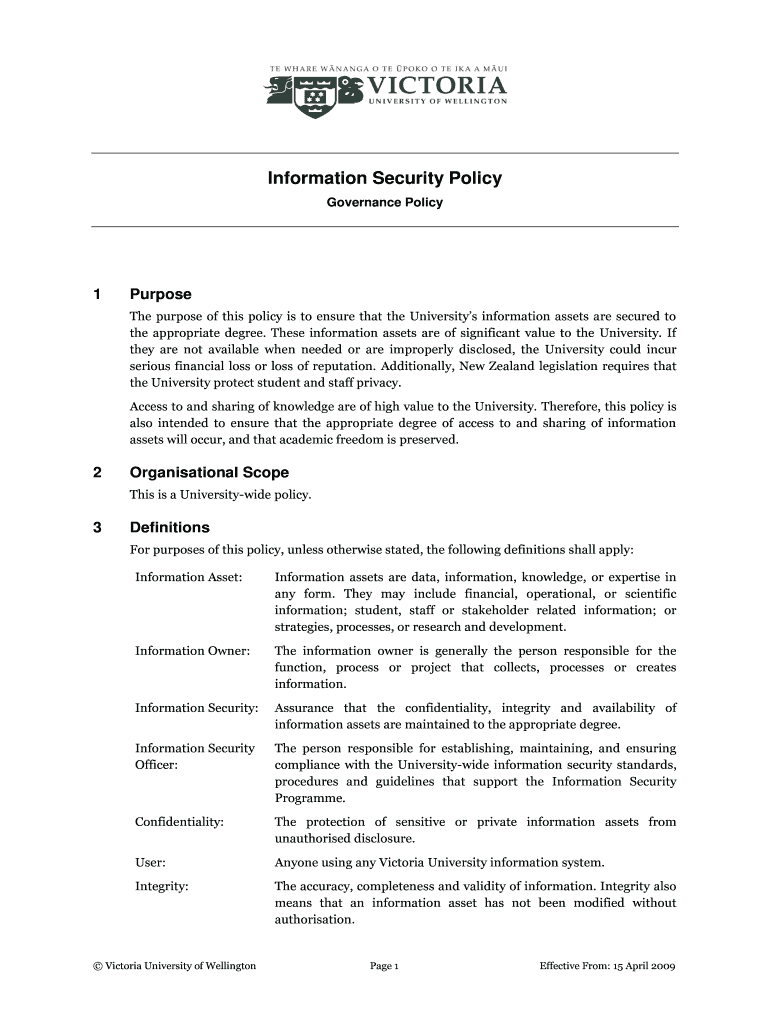
The policy in question aims to secure the university's information assets by defining standards and procedures to protect data confidentiality, integrity, and availability. It sets a framework for managing threats and vulnerabilities to ensure that sensitive, personal, and institutional data remain safeguarded. The policy identifies stakeholders responsible for data protection and emphasizes the importance of compliance with relevant legislation and regulations.
Key Elements of the Policy
-
Access Control: Implementing strict access protocols ensures that only authorized personnel have access to sensitive information. This is managed through user authentication, role-based permissions, and regular audits.
-
Data Encryption: Utilizing advanced encryption methods like 256-bit SSL for data at rest and in transit to protect against unauthorized access.
-
Incident Management: Establishing procedures to detect, report, and respond to information security incidents swiftly, minimizing potential damage.
-
Risk Assessment: Regular evaluations of potential threats and vulnerabilities that could jeopardize the university’s information assets.
Important Terms Related to the Policy
-
Information Assets: This encompasses all forms of data the university collects, processes, stores, or transmits during its operations.
-
Confidentiality, Integrity, and Availability (CIA Triad): A model designed to guide security policies within an organization, focusing on preventing unauthorized access, maintaining data accuracy, and ensuring reliable access to information.
-
Governance Framework: A structured approach for aligning IT strategies with business objectives to ensure compliance with policies, standards, and regulations.
Steps to Implement the Policy
-
Identify Information Assets: Catalog all data types and classify them based on sensitivity and value.
-
Develop Security Controls: Establish technical and administrative controls tailored to protect these assets.
-
Train Staff: Conduct regular security training sessions for all employees to enhance awareness and understanding of their roles in protecting data.
-
Monitor Systems: Implement continuous monitoring systems to detect unusual activities that could signal a security breach.
-
Audit Compliance: Regular audits to ensure policy adherence and identify areas for improvement.
Who Typically Uses This Policy
This policy is utilized by university staff, including IT departments, faculty members, and administrative staff, who are directly involved in handling and managing information assets. Additionally, students may have limited interaction with the policy, primarily to understand their obligations in safeguarding their personal information and following best practices in digital security.
Legal Use of the Policy
The policy must align with federal and state regulations relating to data protection and privacy. This includes compliance with laws such as the Family Educational Rights and Privacy Act (FERPA) and other relevant legislation that governs the management of educational records and student information in the U.S.
State-Specific Rules
While the policy provides a general framework applicable across the university, there may be specific state regulations that require additional measures or reporting. For example, certain states have stringent data breach notification laws that mandate the university to notify affected individuals within a specified period.
Examples of Using the Policy
-
Data Breach Scenario: In the event of a data breach, the policy outlines steps for immediate notification to affected parties, involvement of authorities, and actions to secure data and prevent further unauthorized access.
-
Third-Party Vendors: When engaging third-party vendors, the policy ensures that contracts include clauses that obligate vendors to comply with the university's data protection standards and policies.
Business Types That Benefit Most
Similar policies are crucial for educational institutions, health organizations, and financial services, as these organizations handle large volumes of sensitive data. By adopting strict data protection policies, these institutions protect themselves against potential data breaches and maintain the trust of their stakeholders.
Digital vs. Paper Version
Utilizing digital tools for policy management can enhance accessibility and ensure real-time updates are implemented across the board. Digital versions allow for seamless sharing and integration with existing systems, facilitating better compliance management and reporting.
Each section comprehensively covers essential aspects of the policy, ensuring that stakeholders altogether grasp the measures necessary to protect the university's information assets.