




01. Edit your form online
Type text, add images, blackout confidential details, add comments, highlights and more.

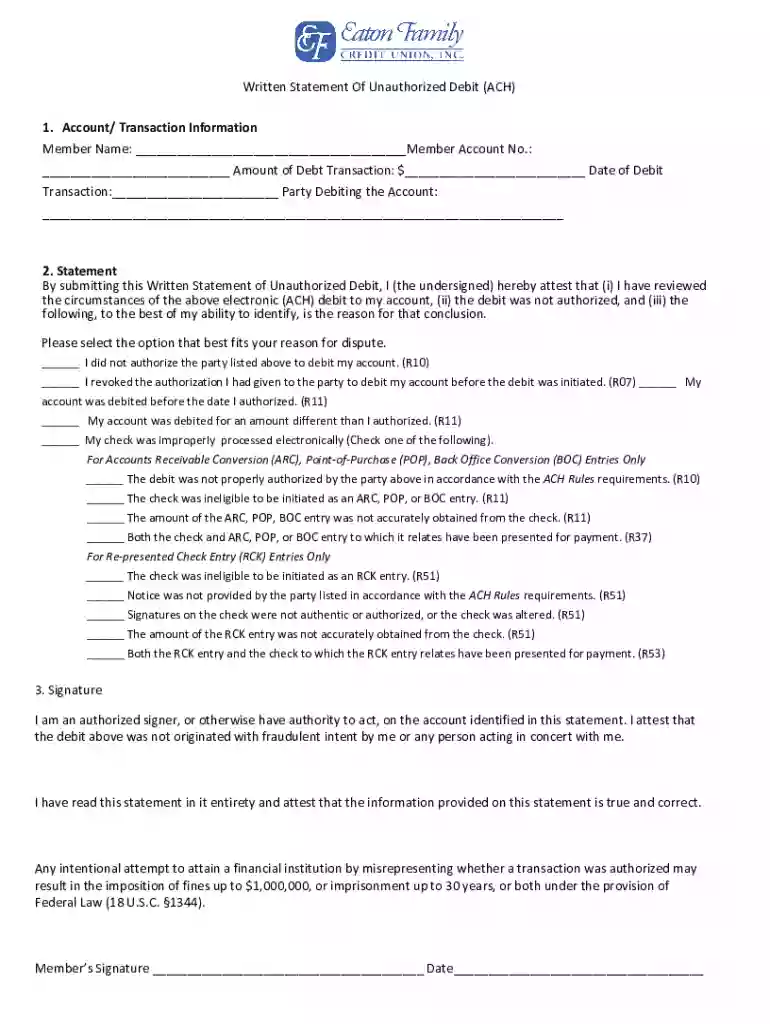
Type text, add images, blackout confidential details, add comments, highlights and more.

Draw your signature, type it, upload its image, or use your mobile device as a signature pad.

Send it via email, link, or fax. You can also download it, export it or print it out.
The Written Statement of Unauthorized Debit (ACH) allows account holders to formally dispute unauthorized electronic debits from their bank accounts. This document serves as an official declaration from the account holder to their financial institution, articulating that a specific transaction was unauthorized. It is a critical form used primarily in the United States banking system, providing legal grounds to challenge and reverse such transactions.
To use the Written Statement of Unauthorized Debit form effectively, follow these steps:
Identify the Unauthorized Debit: Review your account statements or online bank activity to precisely identify the transaction you believe to be unauthorized.
Gather Information: Compile all relevant details about the transaction, such as the date, amount, and recipient.
Contact Your Bank: Reach out to your bank immediately to notify them of the suspected unauthorized transaction. They may offer guidance on how to proceed with the form.
Complete the Form: Fill out the form with accurate information, including your account details and the reason for disputing the transaction. Be specific about why the debit is unauthorized.
Submit the Form: Provide the completed form to your bank. This can often be done in person, via mail, or through an online banking portal, depending on the bank's available submission methods.
Follow Up: After submission, check with your bank to confirm receipt and to inquire about the progress of your claim.
Completing the form requires precision and attention to detail. Here is a step-by-step guide:
Fill in Account Information: Include your full name, account number, and contact details. This identifies which account the dispute is related to.
Detail the Unauthorized Transaction: Clearly specify the transaction date, amount, and the party receiving the funds.
Specify the Dispute Reason: Choose from predefined options, such as "No authorization was given," "Incorrect amount debited," or "Transaction is fraudulent."
Provide Additional Details: If applicable, provide any further information that supports your claim, like conversation records or emails with the involved party.
Sign the Form: By signing, you attest to the accuracy of the provided information and acknowledge the legal implications of submitting false claims.
Submit to the Bank: Return the form through the bank's specified channels, ensuring it is completed fully and accurately to avoid delays.
Account Holder Information: Essential for identifying the account and individual challenging the transaction.
Transaction Details: Includes the precise debit amount and date, aiding in transaction identification and traceability.
Reason for Dispute: Offers a structured way for the account holder to specify why the debit is contested.
Declaration and Signature: Provides a formal statement affirming the truthfulness of the claim, helping to uphold legal integrity.
The form is most often used by individuals and businesses who notice unexplained charges to their accounts. It is a safeguard against unauthorized debits for regular account holders and business owners alike, ensuring that their financial transactions reflect legitimate and approved activities.


To support your claim, certain documents can be beneficial:
When using the Written Statement of Unauthorized Debit, compliance with legal standards is paramount. Claims must be truthful and based on factual evidence as misrepresentations can have legal consequences. The form acts within the framework of U.S. banking laws, ensuring consumer protection against fraud and unauthorized transactions.
Banks generally offer several ways to submit your dispute:
Online: Many banks allow secure upload of forms through their internet banking services.
Mail: Traditional mailing remains an option for submitting physical forms.
In-Person: Visiting a bank branch can ensure the immediate hand-off of your documentation and direct communication with bank officials.
Ensuring correct and timely submission boosts the prospects of a successful dispute resolution. Always confirm method availability with your bank as it may vary.
At DocHub, your data security is our priority. We follow HIPAA, SOC2, GDPR, and other standards, so you can work on your documents with confidence.


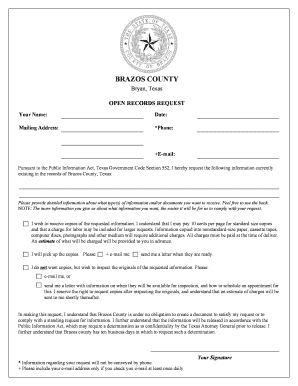

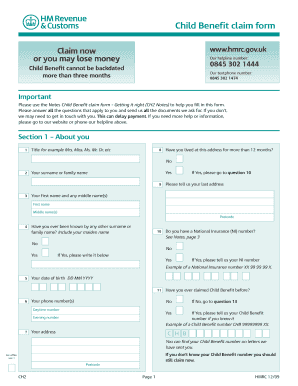
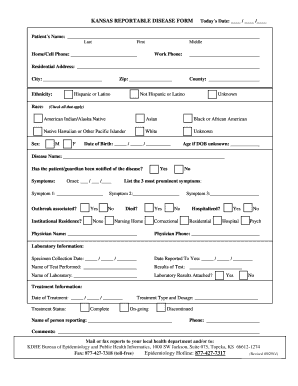

Jan 3, 2022 The 2021 Operating Rules Guidelines change the Written Statement of Unauthorized Debit rule, which makes an RDFI responsible for obtaining aRead more
Jun 15, 2026 Fraud Prevention: Integrated fraud detection and risk management features help mitigate unauthorized transactions. Financial Services: BusinessRead more


