
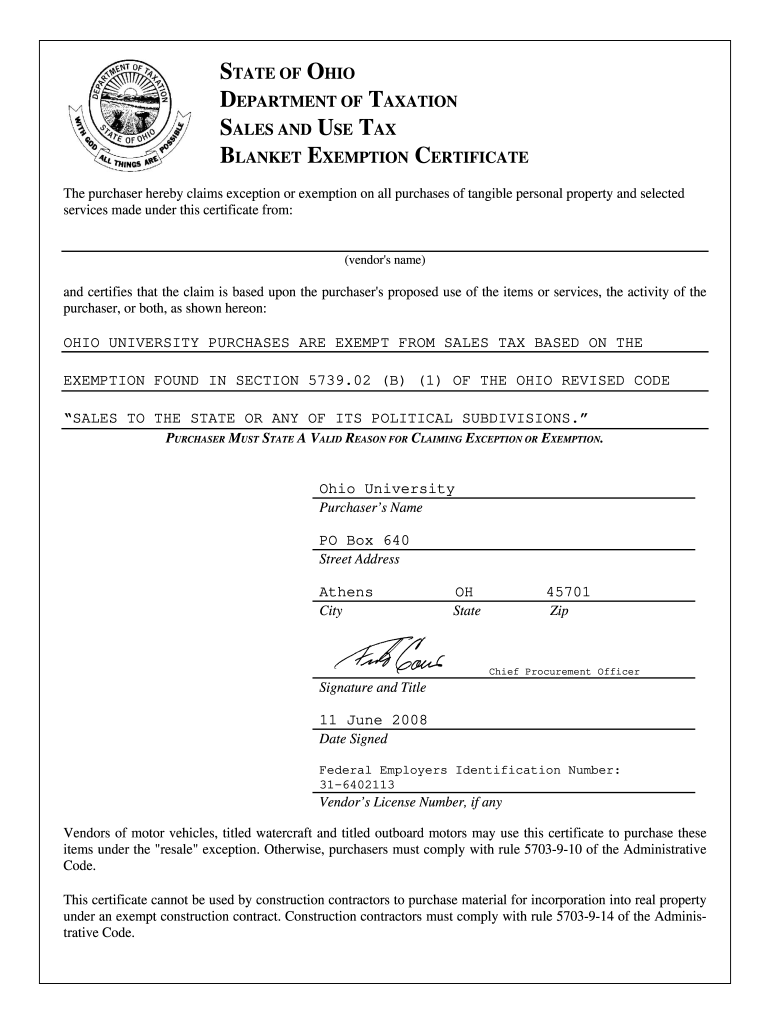







Definition and Meaning of the Ohio Tax Exempt Form
The Ohio tax exempt form is a document that allows qualifying individuals or entities to claim exemption from sales tax when purchasing tangible personal property or specific services in the state of Ohio. The most common version of this form is the Blanket Exemption Certificate, which is issued by the Ohio Department of Taxation. It is based on specific provisions outlined in the Ohio Revised Code, particularly Section 5739.02 (B)(1). This form serves multiple purposes, primarily enabling educational institutions, non-profit organizations, and governmental entities to make purchases without incurring sales tax, which can lead to significant cost savings.
Key Elements of the Ohio Tax Exempt Form
The Ohio tax exempt form encompasses several essential elements that dictate its proper use and requirements. These elements ensure that both purchasers and vendors follow state regulations consistently.
- Purchaser Information: The form requires the name and address of the purchaser. This information is crucial for verification and audit purposes.
- Reason for Exemption: A valid reason for claiming exemption must be provided. This could include the nature of the purchaser's organization (e.g., non-profit, educational institution) or the type of service or goods purchased.
- Signature: The form must be signed by an authorized representative of the purchasing entity, confirming that the claims made in the document are true and accurate.
- Type of Purchase: The form specifies the types of purchases that qualify for tax exemption under Ohio law, such as tangible goods that will not be resold.
Understanding these key elements is integral for compliance with state guidelines.
Steps to Complete the Ohio Tax Exempt Form
Completing the Ohio tax exempt form requires careful attention to detail to ensure accuracy and compliance. Here are the essential steps involved in the process:
- Access the Form: Obtain the latest version of the Ohio tax exempt form, either through the Ohio Department of Taxation's website or via your organization’s tax representative.
- Fill in Purchaser Information: Enter the name, address, and tax identification number of the entity claiming the exemption.
- Specify the Exemption Type: Clearly state the reason for the tax exemption. For instance, an educational institution may cite its status as a recognized non-profit organization.
- Detail the Items or Services Purchased: Indicate the specific goods or services for which the exemption is being claimed. This includes descriptions and quantities when applicable.
- Sign the Form: Have an authorized representative sign and date the form, affixing their title or position within the organization.
- Distribute the Form: Provide the completed form to the vendor at the time of purchase to ensure that sales tax is not charged.
It is crucial to maintain a copy of the signed form for your records, as this may be necessary for future audits or compliance checks.
Who Typically Uses the Ohio Tax Exempt Form
The Ohio tax exempt form is utilized by a variety of entities that qualify for tax exemption under Ohio law. The following groups frequently make use of this form:
- Educational Institutions: Schools, colleges, and universities often use the form for purchasing supplies, equipment, and other necessities without incurring sales tax.
- Non-Profit Organizations: Charitable entities recognized by the IRS may utilize the form to further their missions while conserving financial resources by avoiding sales tax on purchases.
- Government Agencies: Local, state, and federal government entities also use the Ohio tax exempt form for transactions related to public services.
- Religious Organizations: Churches and religious entities that meet certain criteria can claim exemption to support their operational costs.
Understanding who qualifies for the tax exemption can help potential users assess their eligibility and benefit from sales tax savings.


Important Terms Related to the Ohio Tax Exempt Form
Familiarity with specific jargon surrounding the Ohio tax exempt form is crucial for proper utilization and comprehension. Key terms associated with the form include:
- Exemption Certificate: A document affirming that a purchaser is entitled to sales tax exemption on specific transactions.
- Sales Tax: A tax imposed by state and local governments on the sale of goods and services, which varies by jurisdiction.
- Tangible Personal Property: Physical items that can be touched and moved, such as furniture and equipment, which may qualify for exemption.
- Authorized Representative: An individual who has the legal authority to sign documents on behalf of an organization, typically a manager or executive.
- Compliance: Adhering to legal requirements set forth by state and federal laws, especially in tax matters.
Grasping these terms enhances understanding and application of the Ohio tax exempt form for eligible entities.
Examples of Using the Ohio Tax Exempt Form
Practical scenarios can demonstrate how the Ohio tax exempt form operates in real-world transactions. Here are a few examples:
- Educational Purchase: A university needs to buy computers for a newly added computer lab. By presenting the Ohio tax exempt form to the vendor, the university can avoid paying sales tax on the computers, substantially reducing their overall expenditure.
- Non-Profit Event Supplies: A non-profit organization hosting a fundraising event can use the form to purchase decorations and catering supplies without incurring tax costs. This maximizes their available budget for charitable initiatives.
- Government Committee Meeting: A city government entity requires rental of a venue for a public meeting. By providing the tax exemption form, they can rent the space without the additional financial burden of sales tax.
These examples highlight the broad applicability of the Ohio tax exempt form across various sectors and show how entities can benefit from cost savings.




