
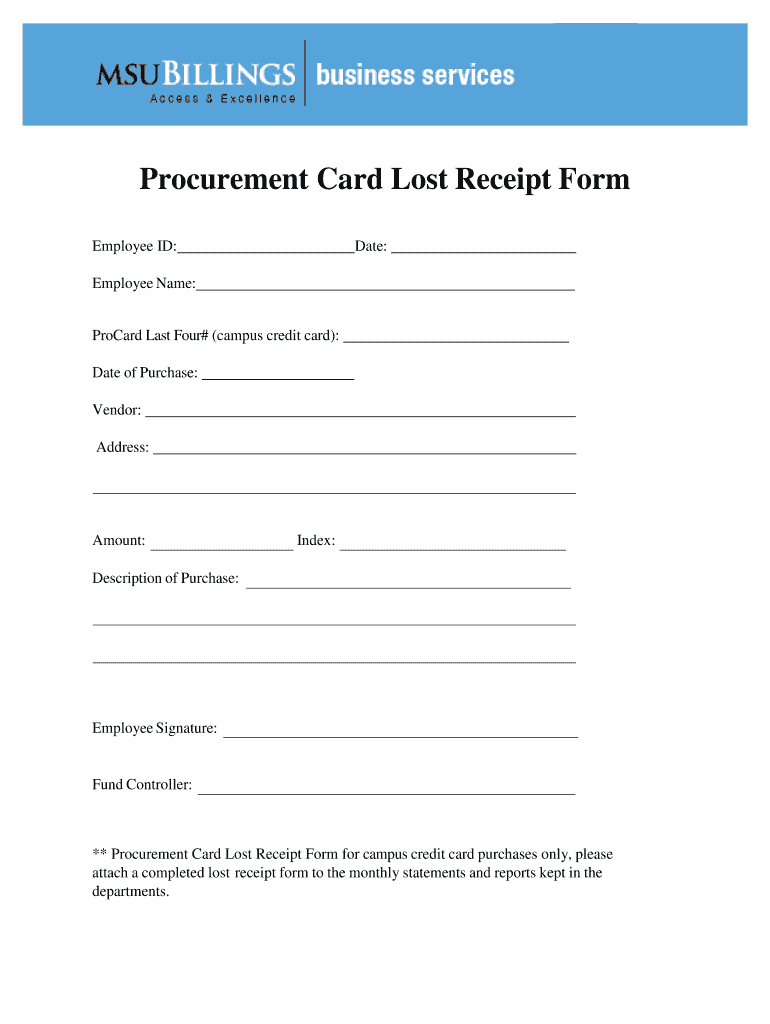







Definition & Meaning of the Lost Receipt Form Template Word
The lost receipt form template word is specifically designed for individuals or employees who have misplaced or lost receipts associated with official transactions or purchases, particularly in institutional or business contexts. This standardized document allows users to inform their organizations about the missing receipts, ensuring accountability for expenses even in the absence of physical proof. It aims to streamline the process of claiming reimbursements or settling expenses that normally require original receipts, thereby facilitating efficient financial management.
Purpose of the Lost Receipt Form
The form serves several critical purposes:
- Documentation: It provides a written record of the lost receipt, detailing the transaction in question.
- Validation: The form aids in validating the claims made by employees or individuals by requiring them to provide essential transaction details.
- Accountability: It establishes accountability, as users must sign the form, affirming the accuracy of the information provided.
Key Features of the Template
A well-structured lost receipt form template includes various fields that can simplify the process. These features typically encompass:
- Employee Information: Identification details, such as name, employee ID, and contact information.
- Transaction Details: Dates of purchase, vendor names, and descriptions.
- Amount: The total monetary value associated with the lost receipt.
- Affidavit Section: A declaration confirming the loss of the receipt.
How to Use the Lost Receipt Form Template Word
Using the lost receipt form template word is a straightforward process that ensures proper documentation of lost receipts.
Step-by-Step Instructions
- Download the Template: Access the lost receipt form template from a trusted source or create it using document editing software.
- Fill in Personal Information: Enter your name, employee ID, and department details at the top of the form.
- Detail Transaction Information: Provide specific details about the purchase. Include:
- Date of the transaction
- Vendor name
- Description of what was purchased
- Total amount spent
- Sign the Affidavit: Acknowledge the loss of the receipt by signing the affidavit section, confirming the accuracy of the information provided.
- Submission: Submit the completed form along with any related documents (such as monthly statements or reports) to the appropriate department for processing.
Considerations During Completion
- Ensure accuracy to avoid delays in reimbursement.
- Keep a digital copy of the form for your records.
- Be aware of any submission deadlines to avoid penalties.
Steps to Complete the Lost Receipt Form Template Word
Completing the lost receipt form template word accurately is crucial to ensure that your reimbursement request is processed without complications.
Detailed Completion Process
- Title the Document: Clearly label the document as "Lost Receipt Form" to ensure immediate identification.
- Enter Employee Details: Fill in your details accurately at the top section:
- Full name
- Employee ID or number
- Contact information
- Insert Transaction Details: In the designated sections, record:
- Date of Purchase: The exact date when the transaction took place.
- Vendor Information: The name of the company or individual from whom the purchase was made.
- Purchase Description: A brief explanation of what was bought (e.g., office supplies, travel).
- Total Amount: Clearly indicate the amount that was purportedly spent.
- Affidavit Section: Read and acknowledge the affidavit stating that the receipt is indeed lost. Sign and date this section to validate your claim.
- Submit the Completed Form: Ensure to attach any relevant statements or additional documents for your department's review.
Important Terms Related to Lost Receipt Form Template Word
Understanding specific terminology associated with the lost receipt form template word can aid in navigating the reimbursement process more effectively.
Key Terms Explained
- Affidavit: A formal declaration made under oath, affirming the truthfulness of the information provided in the lost receipt form.
- Reimbursement: The process through which an employee is compensated for expenses incurred on behalf of the organization.
- Transaction: Any instance of buying or selling goods or services for which a receipt is typically provided.
- Vendor: The individual or company from which the goods or services were purchased.
Examples of Using the Lost Receipt Form Template Word
Practical examples help illustrate various scenarios in which the lost receipt form template word can be effectively utilized.
Real-World Scenarios
-
Business Travel: An employee attending a conference loses the receipt for hotel accommodation. They complete the lost receipt form to claim reimbursement for the expense.
-
Office Supplies: A staff member purchases supplies for a project but misplaces the receipt. By filling out the lost receipt form, they can still submit the transaction for reimbursement to their employer.
-
Client Entertainment Expenses: A manager hosts a lunch meeting with a client but loses the invoice. The lost receipt form template word can be used to document the expense for reimbursement, providing the necessary transaction details in lieu of the missing receipt.
Filing Deadlines / Important Dates for Lost Receipt Form Submission
Compliance with filing deadlines is critical when submitting a lost receipt form template word to ensure timely reimbursements and adherence to organizational policies.
Key Dates to Remember
- Monthly Submission Deadline: Most organizations require submission of expense reports, including lost receipt forms, by the end of each month to ensure timely reimbursement in the subsequent payroll period.
- Annual Review Period: Some businesses may have annual cut-off dates for submitting outstanding expenses, requiring users to finalize their expenses by a certain date each fiscal year.
- Specific Event Deadlines: If the expense is related to an event, such as a company retreat or conference, familiarize yourself with the financial documentation guidelines established for that event to avoid delays.




