







Definition and Meaning of the Missing Receipt Form
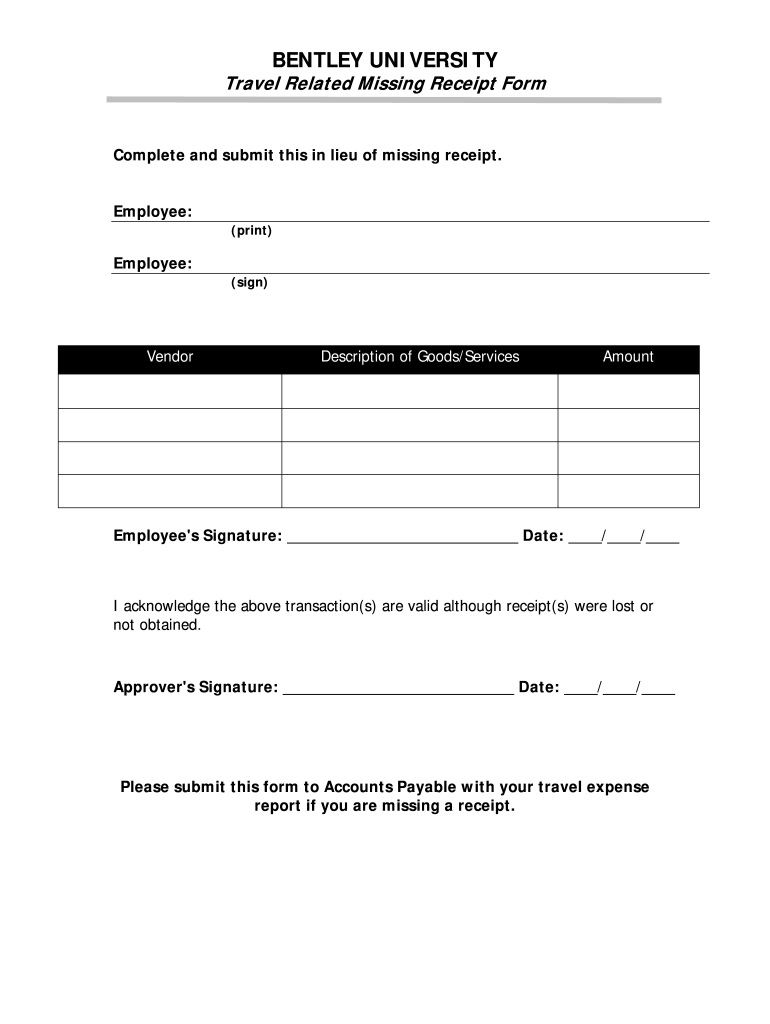
The missing receipt form is a crucial document used by individuals and organizations to report and account for lost or missing receipts, particularly regarding expenses incurred during business travel or purchasing. This form serves to ensure transparency and compliance with financial documentation requirements. When a receipt is lost, individuals can use this form to declare the absence of a receipt and provide necessary details, enabling organizations, such as employers or tax authorities, to validate the expenses claimed.
Usage Context
In the business world, a missing receipt form is often seen in contexts where receipts are mandatory for reimbursement or audit purposes. Common situations include travel expense claims made by employees, vendors missing receipts for inventory purchases, or taxpayers claiming deductions on their tax returns without the necessary documentation.
Importance
The importance of the missing receipt form lies in its ability to provide a formal documentation process, ensuring that expenditures are properly recorded and justifiable even when traditional proof of purchase is absent. It protects both the employee and the employer, providing a framework for accountability during financial audits or reviews.
How to Use the Missing Receipt Form
The process of utilizing the missing receipt form typically involves several steps to ensure accurate completion and adherence to required guidelines.
Step-by-Step Instructions
- Obtain the Form: Secure a copy of the missing receipt form from your organization's finance department or download it from available sources online.
- Personal Information: Fill in your personal details, including your name, department, and any identifiers as required, such as employee number or account reference.
- Details of the Expense: Provide a comprehensive description of the missing receipt. This includes:
- Date of the transaction
- Amount spent
- Purpose of the expense
- Vendor or business involved
- Signatures: Obtain necessary approvals from supervisors or approvers who can verify the legitimacy of the expense. This often involves signatures from both the individual claiming the expense and a higher authority in the organization.
- Submission: Submit the completed form to the Accounts Payable or appropriate department handling expense reports. Depending on your organization, this may involve digital submission or physical delivery.
Key Elements of the Missing Receipt Form
Understanding the specific components of the missing receipt form is essential for complete and effective use.
Common Components
- Header Information: Name of the company or entity, form title, and date of submission.
- Claimant Information: Sections for the employee's details, including name, employee ID, and date of the request.
- Expense Section: Areas designated for detailing the missing receipt information, including:
- Description of the goods/services
- Amount involved
- Date and location of the transaction
- Affidavit Declaration: A declaration stating that the information provided is true to the best of the claimant's knowledge, often requiring a signature.
- Authorization Signatures: Space for supervisory confirmation, indicating before submission that the entries are verified.
Additional Annotations
Providing context and detail is beneficial for those reviewing the form. If relevant, include any email correspondence or notes with vendors related to the missing receipt area.
Who Typically Uses the Missing Receipt Form
Various professionals and organizations utilize the missing receipt form for legitimate travel and business expenses.


Typical Users
- Employees of Corporations: Commonly used by employees seeking reimbursement for business-related travel expenses where receipts have been misplaced.
- Small Business Owners: Often utilize this form to maintain accurate financial records and justifications for tax deductions when receipts for purchases are not available.
- Freelancers and Contractors: This group may rely on the missing receipt form to confirm and claim deductions for business expenses incurred during project execution.
- Non-Profit Organizations: Staff members needing to claim expenses for activities or events can use this form to provide accountability for their expenditures without direct receipts.
Legal Use of the Missing Receipt Form
The missing receipt form serves a legal purpose in documenting financial claims where traditional proof of expenditure is absent, offering a layer of security and compliance with regulatory practices.
Compliance with Regulations
- IRS Guidelines: When filing tax returns, the IRS requires that substantiate expenses through appropriate documentation. A missing receipt form can serve as a valid substitute when receipts cannot be produced, providing supporting evidence that could be necessary during audits.
- Audit Readiness: Organizations can use this form to prove due diligence to auditors, showing efforts made to log all financial transactions, including those lacking direct receipts.
Legal Implications
Without proper substantiation of expenses, organizations or individuals might face penalties or lost tax deduction opportunities. The legal ramifications highlight the necessity of maintaining transparent financial practices, making the use of the missing receipt form both prudent and necessary.




