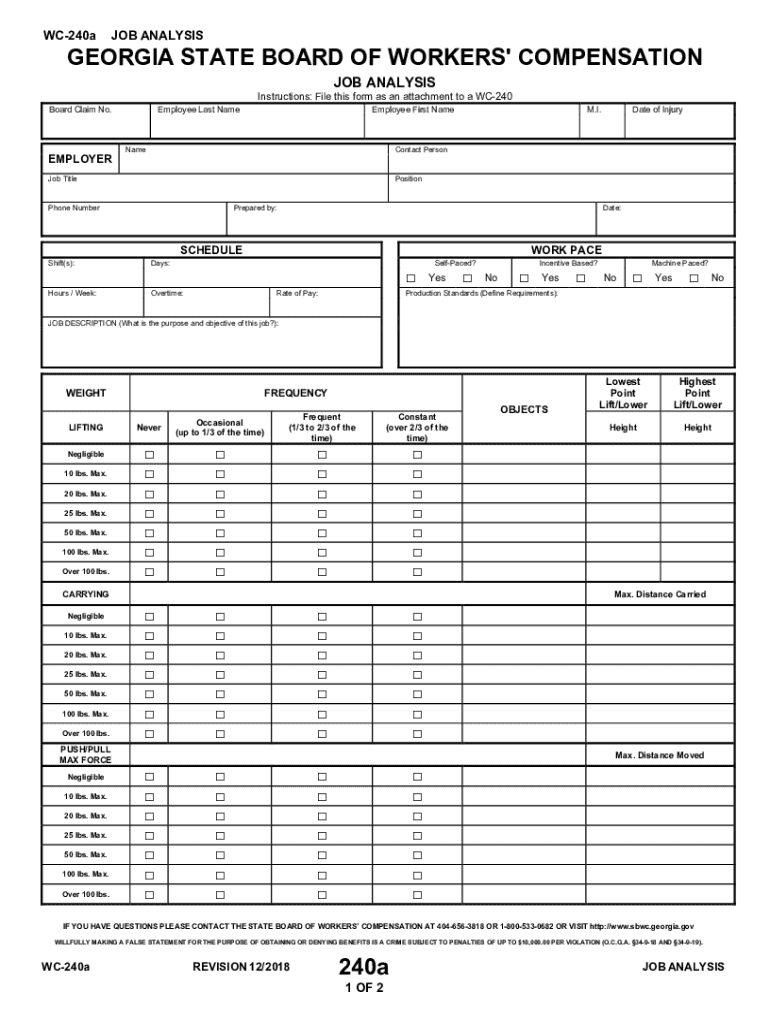







Definition and Meaning
Job Analysis is a systematic process used to collect and document information about specific job roles. This process involves detailing the duties, responsibilities, necessary skills, outcomes, and work environment of a particular job. Primarily used by organizations to ensure they have a clear understanding of what a job entails, Job Analysis serves as the foundation for various human resources functions. It is critical for drafting job descriptions, setting performance standards, and establishing the necessary qualifications for a role. By conducting a Job Analysis, organizations can align job requirements with their strategic goals, effectively manage employee performance, and ensure compliance with labor regulations.
How to Use the Job Analysis Form
To effectively use the Job Analysis form, one must approach it as a structured survey designed to capture comprehensive job-related information. Start by previewing the form to understand the sections and data points it covers. This form typically includes fields for identifying the job title, department, and location. Follow systematic steps:
- Gather Background Information: Collect essential details about the job from existing records, such as previous job descriptions or company guidelines.
- Conduct Interviews: Engage with employees currently holding the position to gain insights into daily tasks, responsibilities, and challenges.
- Observe Job Performance: Where applicable, observe the job being performed to accurately document activities and any equipment used.
- Complete the Form: Fill out each section of the form with precise and objective data, ensuring all fields are addressed.
Steps to Complete the Job Analysis
Completing a Job Analysis requires thoroughness and attention to detail. Typically, this process involves several key steps:
- Initial Research: Review existing documents related to the job, such as prior analyses, job descriptions, or organizational charts.
- Data Collection: Gather qualitative and quantitative data through interviews, surveys, or observation of the job in practice.
- Determine Job Duties and Tasks: List the key duties and tasks of the position, noting any relevant frequency or duration.
- Identify Necessary Skills and Qualifications: Outline the skills, education, and experience required to perform the job effectively.
- Evaluate Working Conditions: Describe the job’s physical settings, expected work hours, and conditions (e.g., potential hazards or stress factors).
- Review and Validate: Have supervisors or experienced employees review the analysis for accuracy and completeness.
Key Elements of the Job Analysis
A comprehensive Job Analysis contains several core elements that define the job's scope and expectations. These include:
- Job Title and Summary: This provides a concise explanation of the job’s purpose and primary responsibilities.
- Duties and Responsibilities: A breakdown of the tasks, including frequency and importance.
- Required Skills and Qualifications: Detailed specification of education, skills, experience, and personal attributes needed.
- Physical and Cognitive Demands: Documentation of any physical exertion or mental endeavors required by the job.
- Work Environment: Information about the setting in which the job functions, considering elements like noise level or physical hazards.
Who Typically Uses the Job Analysis
Job Analysis is a tool that benefits a variety of stakeholders within an organization. Human Resource professionals use it to craft job descriptions, recruitment strategies, and performance appraisals. Hiring managers rely on it to ensure candidates meet job requirements, while training and development specialists utilize the information to tailor programs that align with job-specific skills. Additionally, legal and compliance officers may refer to Job Analysis results to ensure adherence to labor laws and regulations, thereby reducing the risk of legal disputes.


Legal Use of the Job Analysis
The Job Analysis form is not only a practical tool but also a critical component in legal compliance and defense. Under the Equal Employment Opportunity Commission guidelines, organizations must avoid discriminatory practices in hiring and employment. By documenting required skills and job duties objectively, companies can defend against claims of unfair hiring practices. Furthermore, Job Analysis aids in ensuring that job descriptions comply with the Americans with Disabilities Act (ADA), accommodating necessary modifications for an inclusive workplace.
Important Terms Related to Job Analysis
Understanding the terminology associated with Job Analysis helps clarify the process and its applications:
- Competency: The combination of skills, knowledge, and abilities required for effective job performance.
- Task: A distinct work activity that forms part of a job duty.
- Job Description: A result of Job Analysis, outlining job roles, responsibilities, and working conditions.
- Performance Standards: Criteria derived from Job Analysis used to evaluate employee performance.
Examples of Using the Job Analysis
Job Analysis can be exemplified through various organizational scenarios. For instance, a manufacturing company may conduct a Job Analysis to redesign production roles, hoping to improve efficiency following the integration of new technologies. Another example involves a healthcare provider reassessing job roles to ensure compliance with updated health and safety regulations. In each case, Job Analysis informs the development of clear job descriptions and identifies areas for potential staff training or restructuring.