
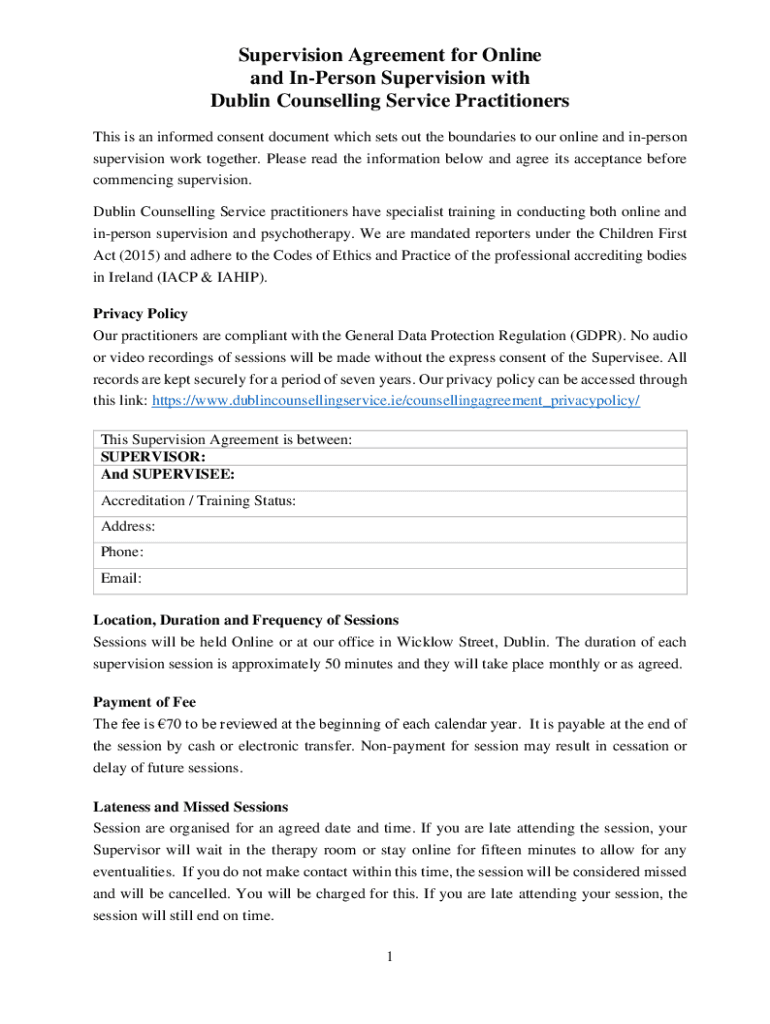







Definition and Meaning
A Clinical Supervision Agreement is a formal contract between a supervisor and a supervisee, typically in the context of mental health, counseling, or social work. This agreement details the expectations, responsibilities, and terms of the supervisory relationship. It ensures both parties understand their roles, helping to maintain professional standards and ethical practices. The document commonly includes terms such as scope of supervision, frequency of meetings, privacy policies, and protocols for confidentiality. In essence, the agreement serves as a foundational document that outlines the framework for guiding the professional development and clinical practice of the supervisee.
Scope of Supervision
- Defines the specific areas of practice covered under supervision.
- Sets boundaries for professional activities and development goals.
- Ensures targeted skill-building and competency in specific clinical practices.
Privacy and Confidentiality
- Complies with relevant legal standards (e.g., HIPAA in the U.S.).
- Outlines protocols for maintaining client confidentiality in discussions.
- Includes clauses for handling breaches of confidentiality.
How to Use the Clinical Supervision Agreement
Using a Clinical Supervision Agreement involves a few essential steps that ensure both parties are aligned on expectations and commitments. The process typically includes reviewing the agreement, discussing specific terms, and mutual consent.
- Review the Document: Both parties should thoroughly read the agreement to understand the details.
- Discuss Specific Terms: Engage in a conversation to clarify any terms, and negotiate any necessary changes.
- Sign the Agreement: Both the supervisor and supervisee should provide their signatures to formalize the agreement.
- Maintain Regular Reviews: Schedule periodic reviews of the agreement to ensure ongoing relevance and effectiveness.
Example Scenarios
- A newly qualified counselor needs supervision hours for licensure.
- A social worker is transitioning into a new area of specialty and requires additional guidance.
Key Elements of the Clinical Supervision Agreement
Understanding the core components of a Clinical Supervision Agreement is crucial for clarity and the successful establishment of a supervisory relationship.
Roles and Responsibilities
- Supervisor: Provides guidance, feedback, and assessment of clinical skills.
- Supervisee: Engages actively in learning and shares relevant case material.
Session Details
- Frequency and duration of supervision meetings.
- Modes of supervision (in-person, online, or a combination).
Financial Arrangements
- Details on fees, payment schedules, and any additional costs.
- Policies for cancellations and missed appointments.
Steps to Complete the Clinical Supervision Agreement
Completing the Clinical Supervision Agreement requires both parties to engage in open communication and agreement on certain logistical and ethical details.
- Initial Consultation: A preliminary meeting to establish mutual understanding and expectations.
- Draft Agreement: Create a draft that outlines all necessary sections, including meeting schedules and confidentiality agreements.
- Review and Amend: Allow both parties to suggest changes and finalize the structure.
- Finalize and Sign: Both parties sign the agreement to put it into effect.
- Implement and Review: Regularly implement the agreed terms and review progress against set objectives.
Important Terms Related to the Clinical Supervision Agreement
- Informed Consent: Ensures that both parties understand the terms and implications of the supervision.
- Confidentiality Clause: A legal requirement to protect client information shared during supervision.
- Professional Development: Ongoing education and growth in the supervisee's specific area of practice.
Legal and Ethical Guidelines
- Ensure compliance with applicable laws and ethical standards.
- Maintain records of supervision as required by licensure bodies.
Legal Use of the Clinical Supervision Agreement
The legal use of a Clinical Supervision Agreement revolves around ensuring compliance with professional licensure requirements and ethical standards.
- Licensure Compliance: Supports supervisees in fulfilling necessary supervision hours.
- Risk Management: Protects both parties with clear terms to mitigate potential disputes.
- Record Keeping: Maintains documentation for legal and professional validation.
Compliance with U.S. Standards
- Aligns with state-specific legal requirements.
- Ensures adherence to professional body standards, such as those set by the American Counseling Association.
Examples of Using the Clinical Supervision Agreement
Clinical Supervision Agreements are versatile tools used in various settings to ensure both practical and ethical development for professionals.
Case Studies
- Mental Health Clinics: Regular supervision for therapists dealing with complex cases.
- Educational Institutions: Support for students in practicum placements.
Real-World Applications
- In hospitals, agreements enforce structured supervision for clinical psychologists.
- Private practices use these agreements to provide adjunct support to newly licensed practitioners.
Who Typically Uses the Clinical Supervision Agreement
The Clinical Supervision Agreement is a critical document used across various professional fields, particularly within mental health and health care settings.


Common Users
- Mental Health Professionals: Therapists, counselors, and psychologists.
- Social Workers: Professionals seeking specialist supervision for license renewal.
- Educational Trainers: Use agreements to structure guided internships and field placement experiences.

Benefits to Different Professionals
- New Graduates: Gaining necessary experience and licensure hours.
- Experienced Practitioners: Seeking advanced competencies or transitioning into specialty areas.
Overall, the Clinical Supervision Agreement is a tool designed to facilitate open communication and professional development while ensuring compliance with ethical and legal standards.




