






Definition and Purpose
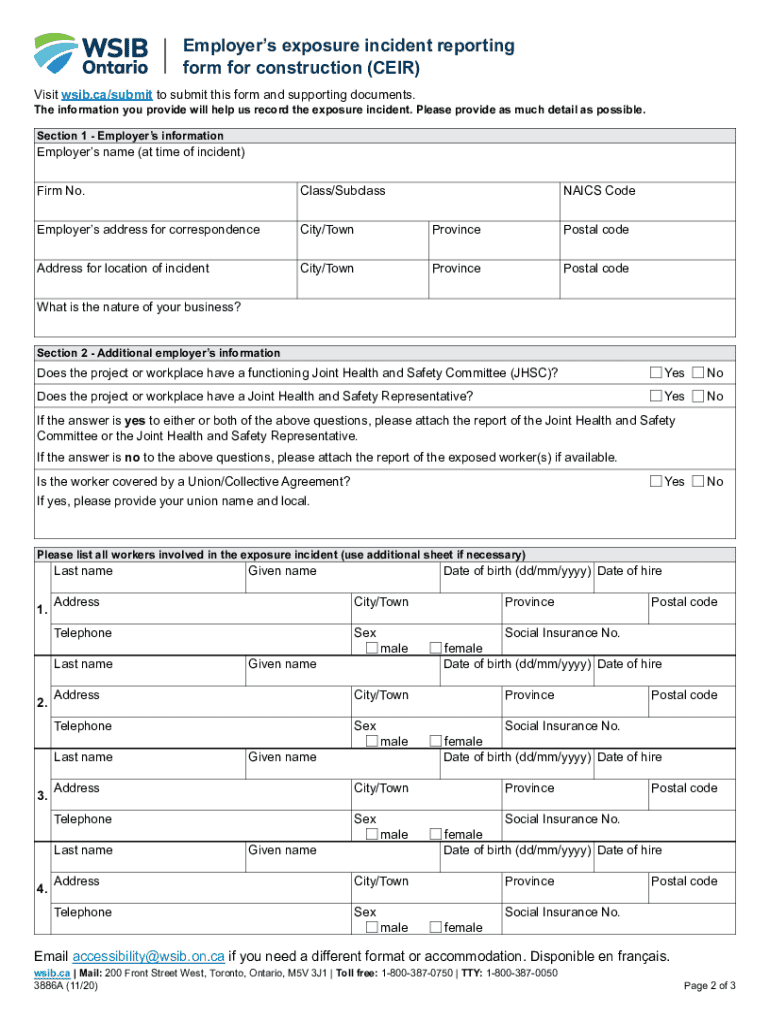
The WSIB Incident Reporting Form is a crucial document used for reporting workplace incidents, particularly unexpected exposures in industries like construction. It is designed to collect comprehensive details about an incident, including employer and worker information, the nature of the exposure, and the circumstances surrounding the event. This form helps standardize the reporting process and ensures compliance with workplace safety regulations.
Steps to Complete the Form
- Provide Employer Details: Enter the full legal name of the employer, address, and contact information.
- Report Incident Date and Time: Specify when the incident occurred, making sure to include both date and precise time.
- Describe the Incident: Offer a detailed description of what happened, focusing on how the exposure occurred and the resultant conditions.
- Identify Involved Workers: List the names, job titles, and any other relevant information of the workers involved in the incident.
- Complete Additional Sections: Fill any further sections that detail medical care provided, any follow-up required, and actions taken immediately after the incident.
- Sign and Date the Form: Have the supervisor or Joint Health and Safety Committee representative sign the document to authenticate the report.
Who Typically Uses the Form
The primary users of the WSIB Incident Reporting Form include supervisors and Joint Health and Safety Committee representatives. These individuals are responsible for ensuring that incidents are accurately documented and reported without any delay. This form is essential for organizations in industries with higher risks of workplace exposure, like construction and manufacturing, where incident reporting is a critical component of workplace safety protocols.


How to Obtain the Form
The WSIB Incident Reporting Form can be accessed through online platforms such as DocHub, where it is available in a fillable and printable format. Users can download the form, fill it out electronically, and submit it according to their organization's directives. This online accessibility ensures that the form can be promptly completed and shared, facilitating timely incident reporting.
Legal Use and Compliance
This form is integral to ensuring compliance with occupational health and safety regulations in the U.S. By fully completing and submitting the WSIB Incident Reporting Form, employers fulfill their legal obligation to report workplace incidents, which is crucial for tracking workplace safety trends and implementing preventive measures. It also assists in transparent communication with health and safety bodies, contributing to regulatory compliance.
Key Elements of the Form
- Employer Information: Basic details about the employer are required.
- Incident Details: Comprehensive documentation of the incident, including date, time, and a factual description.
- Worker Information: Identification of all individuals involved in or affected by the incident.
- Signatures: A section for authorized personnel to sign and confirm the accuracy of the report.
Important Terms Related to the Form
- Exposure: Any situation where employees come into contact with hazardous elements.
- Incident: An unexpected event resulting in potential harm or exposure.
- WSIB: Workplace Safety and Insurance Board, the body that often requires such documentation.
- Joint Health and Safety Committee: A group within a workplace aiming to improve safety conditions and oversee incident reporting.
Form Submission Methods
Organizations typically have several options for submitting the WSIB Incident Reporting Form:
- Online Submission: Via platforms like DocHub, where forms can be completed and sent digitally.
- Mail Submission: Printing the completed form and sending it through postal services.
- In-Person Submission: Delivering the form directly to a health and safety or administrative office, though this is less common in the digital age.
Penalties for Non-Compliance
Failure to report incidents using the WSIB Incident Reporting Form can result in significant penalties, including fines and sanctions from regulatory bodies. It may also lead to increased scrutiny and more stringent regulatory oversight, adversely affecting the organization's reputation and legal standing.
Examples of Using the Form
In a construction company, an incident might involve unexpected exposure to harmful chemicals when a protective covering fails. The supervisor would use the WSIB form to document the event, detailing how the exposure happened, the number of workers involved, and preventive measures implemented to avoid future occurrences. This report would then guide the organization in improving safety protocols.