
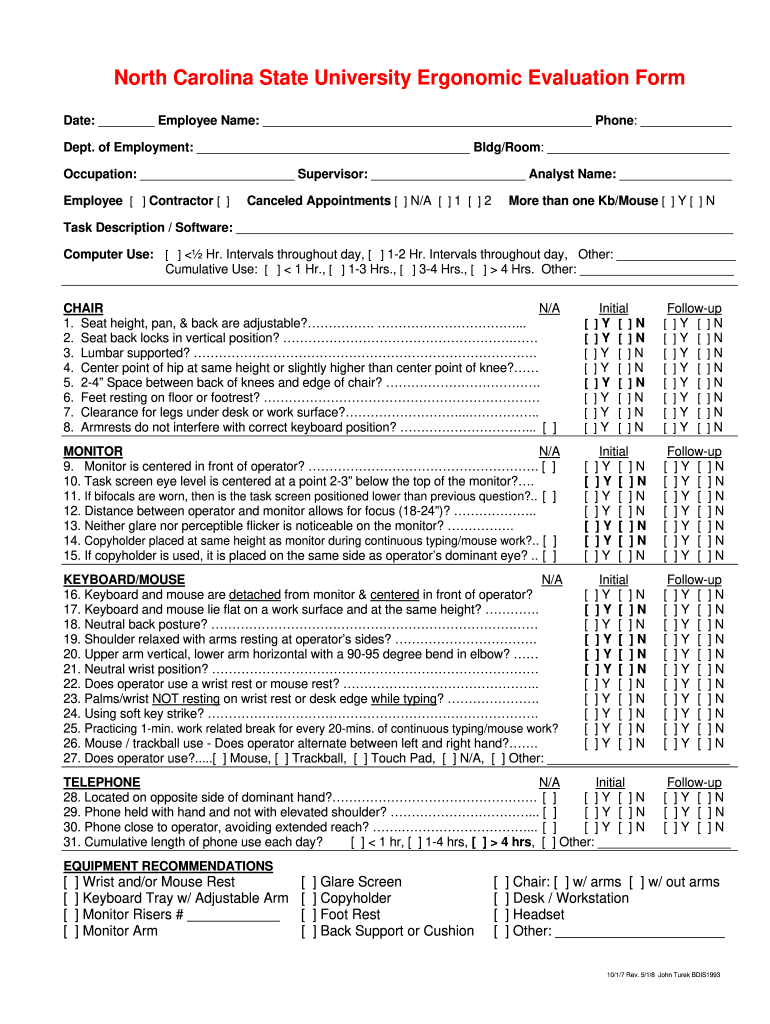







Definition and Importance of the Ergo Evaluation Form
The ergo evaluation form, often referred to as the ergonomic assessment form, is a structured tool utilized to evaluate the ergonomic conditions of an individual's workstation. Its primary significance lies in identifying potential ergonomic risks, collecting feedback about work conditions, and ultimately enhancing employee comfort and productivity. These assessments typically comprise a series of specific questions and prompts designed to analyze ergonomic factors related to seating, monitors, keyboards, and overall workstation setup.
Understanding the formal purpose of the ergo evaluation form is crucial for organizations seeking to foster a safer work environment. By systematically analyzing various aspects of workstation ergonomics, employers can identify areas needing improvement, which assists in minimizing the risks of musculoskeletal disorders and other related injuries.
Key objectives of the ergo evaluation form include:
- Documenting existing workplace conditions.
- Evaluating employee comfort and accessibility to tools.
- Offering recommendations based on observed ergonomics practices.
Steps to Complete the Ergo Evaluation Form
Completing the ergo evaluation form requires careful consideration of both personal workstation setups and broader workplace ergonomics. The following steps provide a clear guide for ensuring a comprehensive evaluation:
-
Gather Necessary Information: Start by collecting your personal information, including your position, department, and specific tasks performed daily. This context is essential for understanding how your workstation setup impacts your work.
-
Evaluate Current Workstation Setup: Use the form to detail your workstation layout. Pay attention to key elements like chair height, monitor position, keyboard placement, and mouse usage. Answer yes/no questions or rate conditions based on the guidelines provided within the form to track potential risk factors.
-
Identify Ergonomic Risks: Focus on identifying discomfort or challenges associated with your workstation. Common considerations include:
- The alignment of your monitor with eye level.
- The adjustability of your chair to support your lower back.
- The positioning of your keyboard and mouse to prevent strain on your wrists.
-
Provide Recommendations: Based on your evaluations, suggest specific adjustments or changes that could enhance ergonomic conditions. This may involve recommendations for equipment upgrades, changes in layout, or additional ergonomic tools to alleviate discomfort.
-
Submit the Form for Review: Once completed, submit the form to the appropriate personnel within your organization, such as the HR department or a workplace safety officer, for analysis and recommendations.
By following these steps, you ensure a thorough examination that helps emphasize the importance of ergonomic practices in the workplace.
Key Elements of the Ergo Evaluation Form
An effective ergo evaluation form comprises several critical elements that facilitate a comprehensive examination of workplace ergonomics. These key components include:
-
Personal Information Section: This section captures essential details about the employee, like job role and specific tasks, providing context to the evaluation. It is crucial as it allows for correlations between workplace setups and job responsibilities.
-
Workstation Assessment Questions: The heart of the form includes targeted questions that focus on various ergonomic aspects:
- Chair comfort and adjustability.
- Monitor height and distance from the eye level.
- Accessibility and positioning of peripherals like keyboard and mouse.
-
Risk Indicators: These indicators measure discomfort at different levels, allowing users to indicate the frequency and intensity of their discomfort. Examples may include options to select varying levels of pain related to specific tasks.
-
Recommendations and Actions: This section encourages the respondent to document their suggested adjustments or improvements based on their observations. Presence of this encourages proactive engagement and personal accountability in improving workplace ergonomics.
By encompassing these elements, the ergo evaluation form efficiently assesses ergonomic conditions while actively encouraging employee involvement in optimizing their workspaces.
Legal Considerations for Using the Ergo Evaluation Form
When utilizing the ergo evaluation form, it is essential to comply with relevant legal regulations and guidelines to ensure proper usage and protection of employees. Some legal considerations include:
-
Occupational Safety and Health Administration (OSHA) Compliance: Employers must adhere to OSHA regulations concerning ergonomic practices. Assessments should focus on preventing workplace injuries and be performed regularly to ensure ongoing adherence to safety standards.
-
Confidentiality: Information gathered on the form must be handled with care to maintain employee confidentiality. Any records should comply with privacy standards and not disclosed without consent.
-
Documentation and Follow-up: Keeping detailed records of evaluations and follow-up actions is critical for legal protection. This documentation can demonstrate an organization's commitment to employee safety and can be vital in case of legal inquiries.
By understanding these aspects, employers and employees can better navigate the legal landscape surrounding workplace ergonomics and ensure they are protected against potential liabilities.
Important Terms Related to the Ergo Evaluation Form
Familiarity with the vocabulary surrounding the ergo evaluation form aids users in navigating the evaluation process effectively. Key terms include:
-
Ergonomics: The study of people's efficiency in their working environment, focusing on designing workplaces and tools that fit employees’ physical needs.
-
Musculoskeletal Disorders (MSDs): Health conditions affecting muscles, nerves, tendons, joints, and the spine, often arising from poor ergonomic practices.
-
Anthropometry: The measurement of the human body to inform design and ergonomics, ensuring workspaces accommodate diverse body types.
-
Posture: The position of the body during tasks, significantly affecting comfort and health risks in the workplace.
-
Workstation Design: Refers to the physical setup of a workspace, including equipment placement and overall layout, which is crucial in preventing ergonomic-related issues.
Understanding these terms enhances communication between employees and management regarding workplace ergonomics and facilitates better implementation of improvements through the ergo evaluation form.