






Definition & Meaning
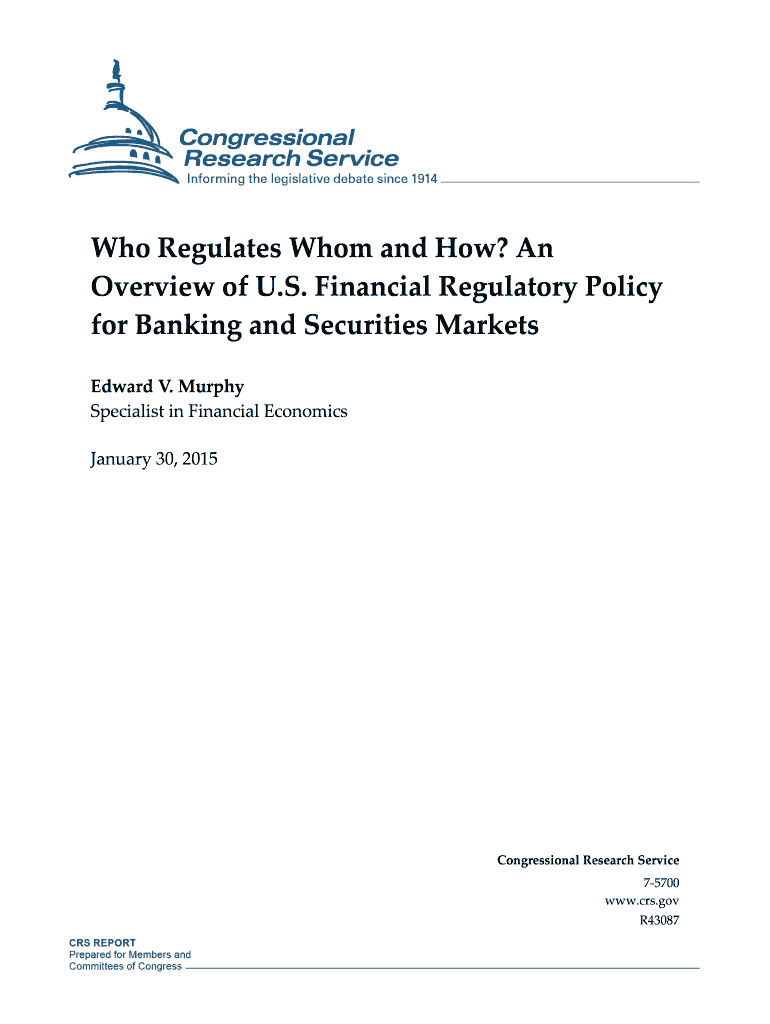
The "Who Regulates Whom and How" document serves as an informational resource detailing the complex layers of regulatory oversight in the United States. It provides insights into various federal agencies' roles and responsibilities in supervising different sectors, primarily focusing on financial and securities markets. The document explains how these agencies enforce regulations to ensure compliance, protect consumer interests, and uphold financial stability. In essence, it highlights the regulatory framework and the dynamics between regulatory bodies and the entities they oversee.
Key Aspects Covered
- Federal Agencies: Includes information about the Federal Reserve, SEC, CFTC, and other key regulatory bodies.
- Roles and Responsibilities: Describes how these agencies implement regulations and supervise compliance.
- Regulatory Goals: Emphasizes objectives like risk management, consumer protection, and market integrity.
Steps to Complete the Who Regulates Whom and How
While "Who Regulates Whom and How" is generally not a form requiring completion, one can utilize its insights by methodically examining the regulatory landscape. Businesses and individuals should follow these steps to better understand their regulatory obligations:
- Identify Relevant Agencies: Determine which federal or state agencies regulate your business or financial activities.
- Review Regulatory Obligations: Examine specific regulations that apply, including compliance requirements and reporting rules.
- Document Compliance: Maintain records and qualifications demonstrating adherence to regulatory standards.
- Engage with Regulators: For clarity and specific guidance, communicate with regulatory bodies directly.
Practical Example:
- Financial Institutions: Must comply with both Federal Reserve guidelines for risk management and SEC rules focused on investor disclosures.
How to Use the Who Regulates Whom and How
This resource is best utilized as a reference tool for understanding the U.S. regulatory framework. It is indispensable for legal compliance teams, corporate strategists, and financial advisors, offering a comprehensive view of the regulatory responsibilities that apply to various business sectors.
Use Cases:
- Compliance Strategy Development: Firms can use the document to develop thorough compliance checklists and align internal policies with regulatory expectations.
- Educational Resource: Educational institutions may use this as a teaching aid in courses related to regulatory law or public policy.
Key Elements of the Who Regulates Whom and How
The document incorporates essential elements to provide a robust understanding of regulatory oversight:
- Regulatory Body Functions: A detailed explanation of agency powers and operation methods.
- Overlapping Jurisdictions: Clarification on how multiple agencies may regulate the same entity or issue.
- Historical Context: Background on regulation development, including key legislative acts like the Dodd-Frank Act.
Important Terms Related to Who Regulates Whom and How
Understanding the terminology within regulatory documents is critical. Below are important terms:
- Prudential Regulation: Focuses on the safety and soundness of financial institutions.
- Systemic Risk: The risk of collapse within an entire financial system or market.
- Consumer Protection: Measures and regulations designed to protect the interests of consumers.
Examples of Using the Who Regulates Whom and How
Practical application of the document includes analyzing case studies where companies navigated the regulatory landscape effectively:
- Post-2008 Financial Reforms: How banks adapted to new regulations under the Dodd-Frank Act.
- Securities Compliance: Instances where corporations adjusted operations to meet SEC disclosure requirements following enforcement actions.
Who Typically Uses the Who Regulates Whom and How
This document is a valuable resource for various professionals and organizations:
- Legal Professionals: Aid in advising clients on regulatory compliance.
- Corporate Executives: Inform strategic decision-making in regulated industries.
- Regulatory Consultants: Provide guidance on navigating complex regulatory environments.


Legal Use of the Who Regulates Whom and How
The "Who Regulates Whom and How" document holds significant legal utility by serving as an authoritative reference for compliance and regulatory interpretation:
- Legal Precedent: Can be used to support arguments in compliance disputes.
- Risk Assessment: Assists in evaluating regulatory risks and potential legal exposure.
Filing Deadlines / Important Dates
Though not a form, understanding the timing of regulatory requirements is crucial. Organizations must stay updated with:
- Annual Reports: Deadlines for filing mandatory reports with regulatory bodies.
- Compliance Audits: Scheduling reliant on regulatory cycles or changes in law.
Eligibility Criteria
Businesses and individuals must understand eligibility for specific regulatory requirements:
- Sector-Specific Regulations: Financial institutions may have different requirements than manufacturing firms.
- Threshold-Based Compliance: Companies above certain asset thresholds face more stringent oversight.

Who Issues the Form
While not a form per se, the insights from "Who Regulates Whom and How" require active oversight from:
- Federal Regulatory Bodies: Primary issuers of regulations include the SEC and Federal Reserve.
- State Regulatory Agencies: Issue guidelines pertinent to localized requirements.
State-Specific Rules for the Who Regulates Whom and How
Regulatory compliance can significantly differ at the state level:
- State Banking Regulations: Varying state laws can affect how banks must operate within state boundaries.
- Local Securities Laws: Additional rules may apply to securities not covered by federal oversight.
Business Types That Benefit Most from Who Regulates Whom and How
Certain business forms rely heavily on understanding regulatory structures:
- Banking and Finance Institutions: Must navigate extensive regulations to operate legally and efficiently.
- Public Corporations: Required to comply with comprehensive disclosure and reporting standards under SEC regulation.