
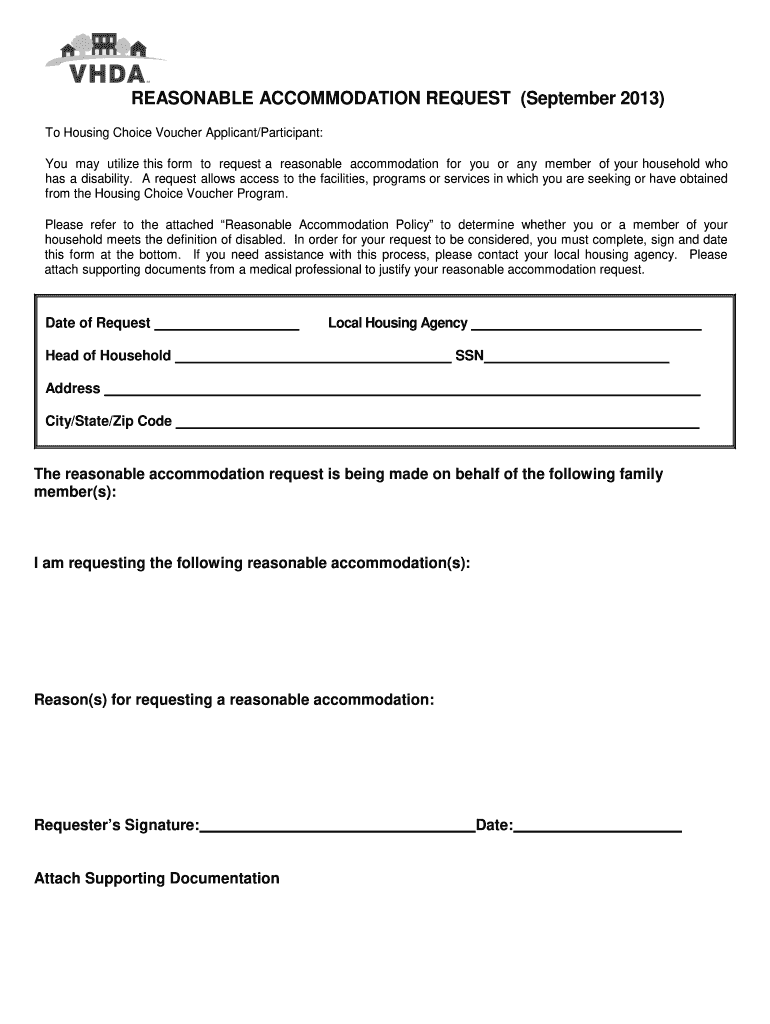







Definition and Meaning of the Reasonable Accommodation Letter
A reasonable accommodation letter from a doctor for housing is an official document that supports an individual's request for adjustments or modifications to their living situation due to a disability. This letter confirms the existence of a disability and outlines what accommodations are necessary to ensure the individual can enjoy their housing equally.
Key Components of the Letter
- Identification: The letter must include basic information about the individual requesting the accommodation, including their name and address.
- Medical Verification: A healthcare professional must attest to the individual's disability, outlining its nature and severity.
- Accommodation Request: It should specify the type of reasonable accommodations needed, such as modifications to the living space or changes in policies pertaining to housing.
- Duration of Need: The letter may indicate how long the accommodations will be necessary, or state if they are permanent based on the disability.
Importance in the Housing Context
This document is vital for individuals needing special considerations in housing due to disabilities. It serves as necessary evidence for landlords or housing authorities to evaluate and respond to accommodation requests under fair housing laws.
How to Use the Reasonable Accommodation Letter
To effectively use a reasonable accommodation letter from a doctor for housing, the following steps should be observed:
- Gather Supporting Documentation: Compile any additional documentation that may be required by the housing authority or landlord, such as proof of income or existing housing policies.
- Submission: Present the letter along with any supplementary materials to the appropriate housing provider. This can often be done via mail, email, or in person, depending on the provider’s requirements.
- Follow Up: After submission, keep communication lines open. It’s essential to follow up to confirm receipt and inquire about the status of the request.
Important Considerations
- Timeliness: It's best to submit the accommodation letter as early as possible, especially if moving arrangements or existing lease agreements are involved.
- Clarity and Completeness: Ensure that the letter clearly states all necessary information to avoid potential delays in processing the request.
Steps to Obtain the Reasonable Accommodation Letter
Acquiring a reasonable accommodation letter from a doctor involves several straightforward steps:
- Consult with a Healthcare Professional: Schedule an appointment with a doctor or licensed mental health professional familiar with your condition.
- Discuss Your Needs: During the appointment, communicate your living situation and how your disability affects your housing needs.
- Request the Letter: Ask the healthcare professional to write a reasonable accommodation letter detailing your disability and the specific accommodations required.
Document Requirements
- Professional Credentials: Ensure that the letter is printed on official letterhead with the professional’s credentials and contact information.
- Language: The language used in the letter should be clear and unambiguous, supporting your request comprehensively.
Legal Use of the Reasonable Accommodation Letter
The reasonable accommodation letter from a doctor has legal implications under the Fair Housing Act, which protects individuals with disabilities from discrimination.
Legal Framework
- Fair Housing Act: This U.S. law mandates that housing providers must make reasonable accommodations for individuals with disabilities, ensuring they can access and enjoy housing.
- Documentation Necessity: Housing providers often require documentation, such as a reasonable accommodation letter, to understand and substantiate requested modifications.
Compliance and Rights
- Rights of Tenants: Individuals have the right to submit requests without facing retaliation. Providers are legally obligated to consider requests made under proper documentation.
- Failure to Accommodate: If a housing provider unjustly denies a request backed by a reasonable accommodation letter, they may face legal consequences for discrimination.
Examples of Using the Reasonable Accommodation Letter
Considering practical scenarios can help illustrate how the reasonable accommodation letter from a doctor can be utilized effectively:
- Physical Modifications: For a tenant in a wheelchair requesting a ramp installation, a letter can specify the necessity of this modification due to mobility impairment.
- Service Animals: If a tenant requires a service animal, the letter can clarify the medical necessity for the animal and request an exception to a no-pet policy.
- Late Payment Arrangements: A letter might also support requests for adjusted payment timelines due to financial instability caused by a disability.
Real-World Application
These examples demonstrate how the letter functions not just as a formality but as a critical tool in advocating for one’s rights within housing. Properly leveraging this document can significantly enhance the chances of receiving necessary accommodations.




