





Definition and Purpose of Filing with FIRE
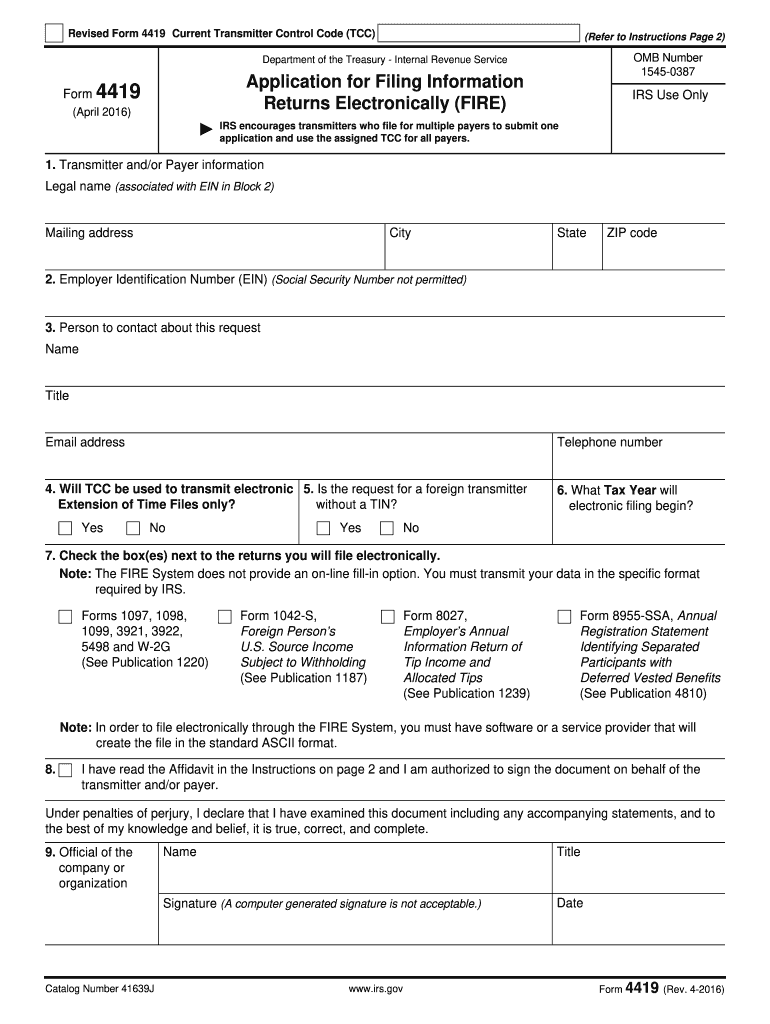
The Filing Information Returns Electronically (FIRE) System is essential for electronic submission of information returns to the IRS. This system accommodates multiple return types like Forms 1099, 1098, and W-2G, making it a valuable tool for businesses and payers who must report income and other financial information to the federal government. Using FIRE helps ensure that submissions are timely, secure, and compliant with IRS standards.
Key Elements of the FIRE System
- Transmitter Control Code (TCC): Required for electronic filing; obtained via Form 4419.
- Compatibility: The system handles several different forms, ensuring a wide range of information returns can be processed.
- Efficiency: Electronic submission reduces processing time and decreases the chance of lost or delayed documents.
How to Use the FIRE System
Successfully using the FIRE System involves several key steps:
- Obtain a TCC: Use Form 4419 to apply for a Transmitter Control Code, which is mandatory for access to FIRE.
- Prepare Documentation: Compile all necessary forms, ensuring they meet IRS requirements for electronic filing.
- Submit via FIRE: Follow the IRS-upload protocols, ensuring data integrity and confidentiality.
- Await Confirmation: After submission, monitor your electronic mailbox for confirmation of receipt and any IRS feedback.
Important Steps in Document Submission
- Format Compliance: Ensure all documents are in IRS-approved formats compatible with FIRE.
- Data Validation: Double-check the accuracy of input data to avoid errors and potential resubmissions.
- Feedback Follow-Up: Promptly address any issues or corrections highlighted by the IRS to prevent processing delays.
Steps to Obtain the Requirements for Filing with FIRE
Obtaining the requirements for filing with FIRE involves a structured approach:
- Identify Necessary Forms: Determine which specific forms need to be filed electronically.
- Review IRS Guidelines: Access the official IRS website or related documentation for the latest filing requirements.
- Secure a TCC: Submit the completed Form 4419 to apply for your Transmitter Control Code, which is pivotal to proceeding with the electronic filing.
- Understand Compliance Needs: Clarify any legal, technical, or procedural requirements that your submissions must meet.
Documentation and Compliance Details
- Form 4419 Submission: Must include complete contact information for authorized personnel.
- Legal and Procedural Clarity: Stay informed on changing regulations or updates that impact the electronic submission process.
- Technical Readiness: Ensure that systems used for filing are updated to handle the latest IRS requirements.
Filing Deadlines and Important Dates
Timeliness is critical in utilizing the FIRE System effectively to avoid penalties:
- Annual Deadlines: Generally required by January 31st for certain forms, with extensions available under specific circumstances.
- IRS Processing Times: Most returns receive confirmation within 1-2 business days; however, this can vary depending on volume and compliance issues.
Extensions and Consequences
- Extensions: May be granted under specific conditions, but must be requested prior to deadlines.
- Penalties for Lateness: Non-compliance or delayed submission can result in significant fines, underscoring the importance of timely filing.
Who Typically Uses the FIRE System?
The FIRE System serves a diverse audience required to report financial transactions to the IRS electronically:
- Businesses and Corporations: Often use the system for streamlined submission of bulk information returns.
- Payroll and Accounting Firms: Benefit significantly from its capability to manage large volumes of data with accuracy.
- Governmental Entities and Non-Profits: Utilize FIRE to maintain compliance with federal reporting standards.

Business Scenarios and Benefits
- LLCs and Corporations: Frequently need to report information returns such as Forms 1099-MISC, requiring electronic submission.
- Selection of Filing Method: Businesses benefit from faster processing and fewer errors via electronic filing compared to paper submissions.
Legal Implications and Considerations
Compliance with the FIRE System's requirements involves several legal considerations:
- ESIGN Act Compliance: Electronic submissions through FIRE are legally binding, adhering to federal standards for electronic transactions.
- Confidentiality Obligations: It's crucial to ensure data submitted is protected by robust security measures to prevent unauthorized access.
Protecting Data Integrity
- Security Protocols: Employ encryption and secure transmission methods when dealing with sensitive data.
- Monitoring and Audits: Regularly audit submission practices and implement corrective measures as necessary to maintain compliance.
IRS Guidelines and Submission Methods
The IRS provides comprehensive guidance for using the FIRE System, available through various official channels:
- Online Resources: The IRS website offers detailed instructions on preparing and filing returns electronically.
- Direct Support Options: IRS technical support can assist with specific technological or procedural queries.
Options for Submission
- Electronic Means: Preferred method for efficiency and accuracy, offering direct transmission of data to the IRS.
- Hybrid Methods: May include electronically filing select forms while submitting others in paper format, as allowed by IRS guidelines.
Penalties for Non-Compliance
Failing to comply with FIRE requirements can result in severe penalties:
- Financial Penalties: Charged per form and can accumulate quickly.
- Reputational Damage: Non-compliance can impact an entity's credibility and trustworthiness.
- Legal Repercussions: Ensure diligent review of submission processes to avoid potential lawsuits or regulatory issues.
Overall, understanding the FIRE System and its requirements is critical for any entity that processes multiple forms of information returns, ensuring compliance with IRS regulations and avoiding potential penalties.