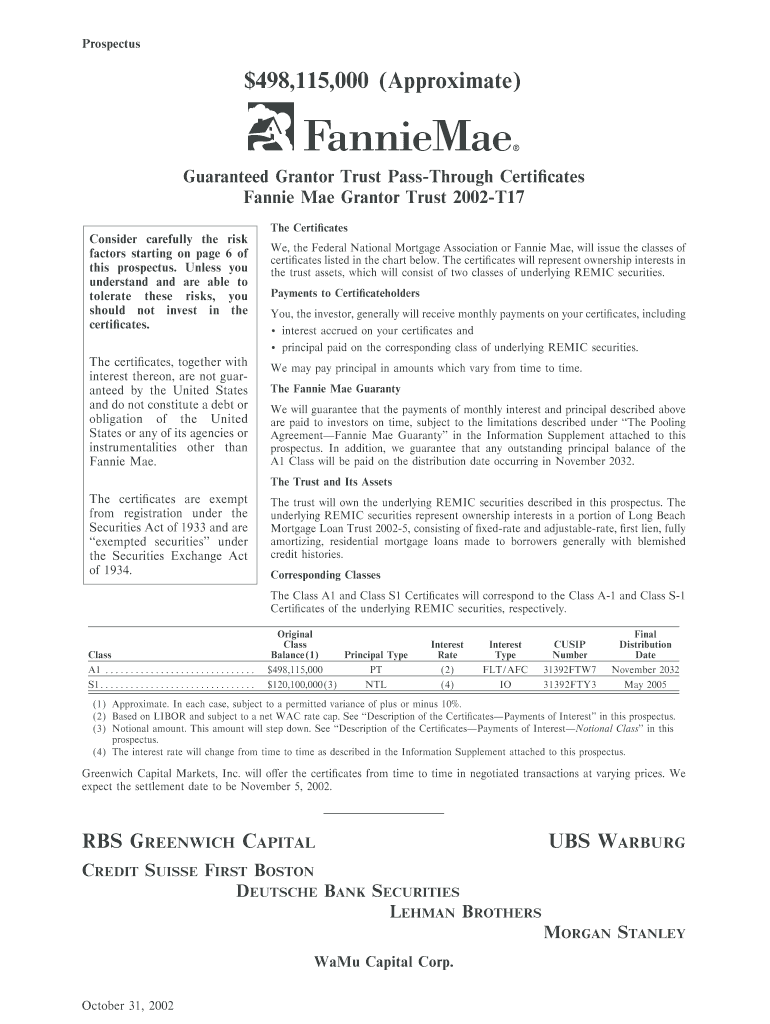







Definition & Meaning
The "Approximate - Fannie Mae" refers to potential estimates associated with Fannie Mae's financial products or documents, such as pass-through certificates or grantor trusts. These approximations provide insights into the expected financial outcomes, important for assessing risk and returns. These estimates are typically associated with larger financial transactions involving mortgage-backed securities. They help investors, lenders, and financial analysts understand potential yield variations based on fluctuating economic conditions.
Practical Application
Understanding these estimates is crucial for stakeholders making informed decisions about investing in Fannie Mae-related products. For example, an investor might use the approximate values to gauge the viability of investing in a specific tranche of a Fannie Mae-backed security.
How to Use the Approximate - Fannie Mae
Professionals in finance, especially those dealing with mortgage securities, rely on these approximations to project financial outcomes. To utilize the "Approximate - Fannie Mae," users should:
- Review associated documents, such as prospectuses, that provide detailed information on potential estimate calculations.
- Compare current market conditions with the assumptions made in the approximate values.
- Adjust investment strategies based on potential risks and expected returns derived from these approximations.
Example Usage Scenarios
An investor evaluating mortgage-backed securities may review approximate projections to decide on purchasing specific Fannie Mae issues. This involves analyzing historical performance, future expectations, and the underlying assumptions of the estimates.
Steps to Complete the Approximate - Fannie Mae
Engaging with the Approximate - Fannie Mae involves several steps that include:
-
Gather Required Documentation:
- Obtain detailed prospectuses and related financial documents.
- Familiarize yourself with the financial model and assumptions used.
-
Analyze Historical Data:
- Review past performances of similar securities.
- Assess trends and identify patterns in yield fluctuations.
-
Evaluate Economic Indicators:
- Consider interest rate changes, housing market trends, and economic forecasts.
-
Formulate Investment Strategy:
- Based on the approximation, devise a strategy that best aligns with your financial goals and risk tolerance.
Detailed Consideration
Due diligence involves collaborating with financial advisors who specialize in mortgage-backed securities to validate the accuracy of the approximations and adjust strategies for best outcomes.
Important Terms Related to Approximate - Fannie Mae
A thorough understanding of the following terms is necessary for leveraging "Approximate - Fannie Mae":
- Pass-Through Certificates: Financial instruments derived from mortgage-backed securities, offering investors a share of pre-specified mortgage pools.
- Granters Trust: A trust structure allowing pass-through of income to beneficiaries, often used in these financial contexts.
- Yield Curve: A graphical representation showing the interest rates on debts for different loan lengths.
- Tranches: Portions of securities divided by risk or other differentiators, key in financial decisions about approximations.
Further Explanation
Each of these terms plays a critical role in calculating and interpreting approximate values, influencing investor decisions.
Legal Use of the Approximate - Fannie Mae
Approximations must abide by specific legal frameworks established under U.S. securities laws, ensuring transparency and fairness.
Compliance Requirements
- Disclosure Laws: Issuers must comprehensively disclose risks and assumptions involved in approximations.
- Regulatory Oversight: Subject to SEC regulations to maintain lawful and fair practices in issuance and investment.
Who Typically Uses the Approximate - Fannie Mae?
The primary users include:
- Investors: Assessing securities for portfolio diversification.
- Financial Analysts: Evaluating market conditions and securities performance.
- Mortgage Lenders: Understanding risk factors for financial products tied to Fannie Mae.


Impact on Various Stakeholders
These approximations provide critical viewpoints for different stakeholders, determining investment viability and helping guide financial strategies.
Examples of Using the Approximate - Fannie Mae
Investors might analyze approximate values during:
- Economic Downturns: Adjusting investments based on potential impact on returns.
- Market Fluctuations: Evaluating shifts in housing markets to refine strategies.
Real-World Scenarios
One instance might involve a hedge fund considering a substantial investment in Fannie Mae securities, using approximations to simulate different market conditions and project possible outcomes.
State-Specific Rules for the Approximate - Fannie Mae
Laws and regulations governing financial securities can vary by state, affecting how approximations are handled and interpreted.
Key Variations
- State Regulations: Influence the approval, distribution, and reporting requirements, possibly altering the legal landscape for investments.
- Local Economic Conditions: State-level economic health may necessitate tailored approaches to understanding and applying these approximations.
Filing Deadlines / Important Dates
Timeliness in filing documents related to the Approximate - Fannie Mae is crucial, affecting compliance and strategic planning.
Key Timeframes
- Quarterly Reports: Required updates and disclosures for securities stakeholders.
- Investment Cycle Dates: Specific windows for optimal security transactions based on approximations and market conditions.
Required Documents
Understanding and utilizing an "Approximate - Fannie Mae" necessitates:
- Prospectuses: Offering comprehensive data on risk factors, approximations, and financial outcomes.
- Economic Reports: Latest analyses and market reports relevant to mortgage-backed securities.
Document Details
Documentation must be meticulously maintained for legal compliance and strategic assessment, enabling informed decision-making for financial engagements.
This structured overview provides an exhaustive depiction of the "Approximate - Fannie Mae," enhancing stakeholders' ability to make informed decisions regarding their financial instruments and investments.