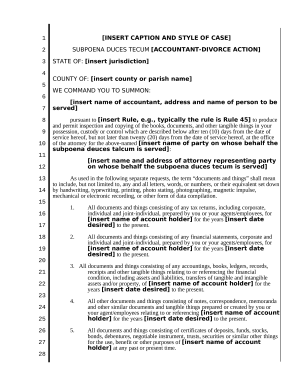
Definition & Meaning of OHCQ Assisted Living Forms
OHCQ assisted living forms are official documents used to ensure compliance with health regulations set by the Office of Health Care Quality (OHCQ), which oversees assisted living facilities in the United States. These forms are essential for documenting various aspects of operation and care provision within facilities to assure the health and safety of residents. Types of forms typically include applications for facility licensing, incident report forms, and assessments of resident care plans.
Key Elements of the Forms
- Facility Information: Includes details about the facility such as name, address, and licensure status.
- Resident Health Assessments: Documents individual health and care needs to ensure proper support is provided.
- Staffing Records: Tracks qualifications and credentials of care staff to maintain regulatory compliance.
- Incident Reports: For recording any accidents or unusual incidents affecting resident welfare.
How to Use OHCQ Assisted Living Forms
To effectively use the OHCQ assisted living forms, a systematic approach ensures accuracy and compliance. Facilities should regularly update and maintain these documents as circumstances evolve.
Steps to Complete the Forms
- Access the Forms: Obtain the necessary forms from the OHCQ website or through official channels.
- Gather Required Information: Collect all relevant data, including resident health information and facility details.
- Complete the Forms: Fill out the forms accurately, incorporating all necessary signatures and dates.
- Review for Accuracy: Double-check all entered information to avoid errors that could lead to noncompliance.
- Submit as Required: Follow submission instructions carefully, whether by mail, in person, or electronically, to meet compliance deadlines.
How to Obtain OHCQ Assisted Living Forms
To obtain OHCQ assisted living forms, stakeholders need to follow specified procedures that differ slightly by state. Generally, these forms are accessible electronically to streamline the process.
Obtaining Methods
- Online Download: Many forms can be easily downloaded from the respective state OHCQ websites.
- Request by Mail: Some forms may require a formal request to be sent and received via mail.
- In-Person Collection: Facilities might visit a state health department office to collect physical copies of forms.
Who Typically Uses OHCQ Assisted Living Forms
The primary users of OHCQ assisted living forms include facility administrators, healthcare providers, and regulatory officers. These individuals ensure that all operational and care standards are met.
User Roles and Responsibilities
- Administrators: Oversee completion, submission, and compliance of forms related to facility operations.
- Healthcare Providers: Fill out health assessments and care plans for residents, ensuring accuracy and timeliness.
- Regulatory Officers: Use submitted forms to assess compliance and carry out inspections or audits.
Legal Use of OHCQ Assisted Living Forms
The legal context surrounding OHCQ assisted living forms is crucial, as these forms serve as contractual and regulatory documents. Proper usage ensures facilities operate within legal parameters.
Importance of Legal Compliance
- Ensures Facility Licensing: Proper documentation maintains an active and compliant licensing status.
- Protects Resident Rights: Documented care plans and incident reports uphold resident safety and legal protections.
- Guides Operational Audits: Forms provide a transparent record for use in regulatory inspections and audits.
Important Terms Related to OHCQ Assisted Living Forms
Understanding the terminology related to OHCQ assisted living forms is crucial for proper completion and compliance. This common vocabulary helps facilities navigate the bureaucratic landscape effectively.
Key Terms and Definitions
- Compliance: Adherence to rules and regulations set by governing bodies.
- Licensure: Official permission for a facility to operate under set conditions.
- Assessment: Evaluation of resident's health and care needs.
- Incident Reporting: Documentation of significant events affecting care or safety.
State-Specific Rules for OHCQ Assisted Living Forms
Each state in the U.S. can have specific rules and regulations governing assisted living facilities. Understanding and adhering to these variations is essential for compliance.
State Differences
- Regulatory Standards: Different states may have varying standards for resident care and facility operations.
- Form Requirements: Some states require additional documentation or specific forms unique to their jurisdiction.
- Submission Procedures: Procedural differences can exist regarding how forms are submitted and processed.
Software Compatibility for Managing OHCQ Assisted Living Forms
Technology plays a significant role in the management of OHCQ assisted living forms. Software tools can facilitate storage, organization, and submission of forms seamlessly.
Compatible Software Solutions
- DocHub: Simplifies the edit, signing, and submission process for electronic forms.
- Google Workspace: Integrated tools for collaboration and sharing of form data within teams.
- QuickBooks: Financial software compatibility for submitting financial documents related to facility management.
By understanding these components, facilities can effectively utilize OHCQ assisted living forms to improve operational compliance and enhance resident care.