
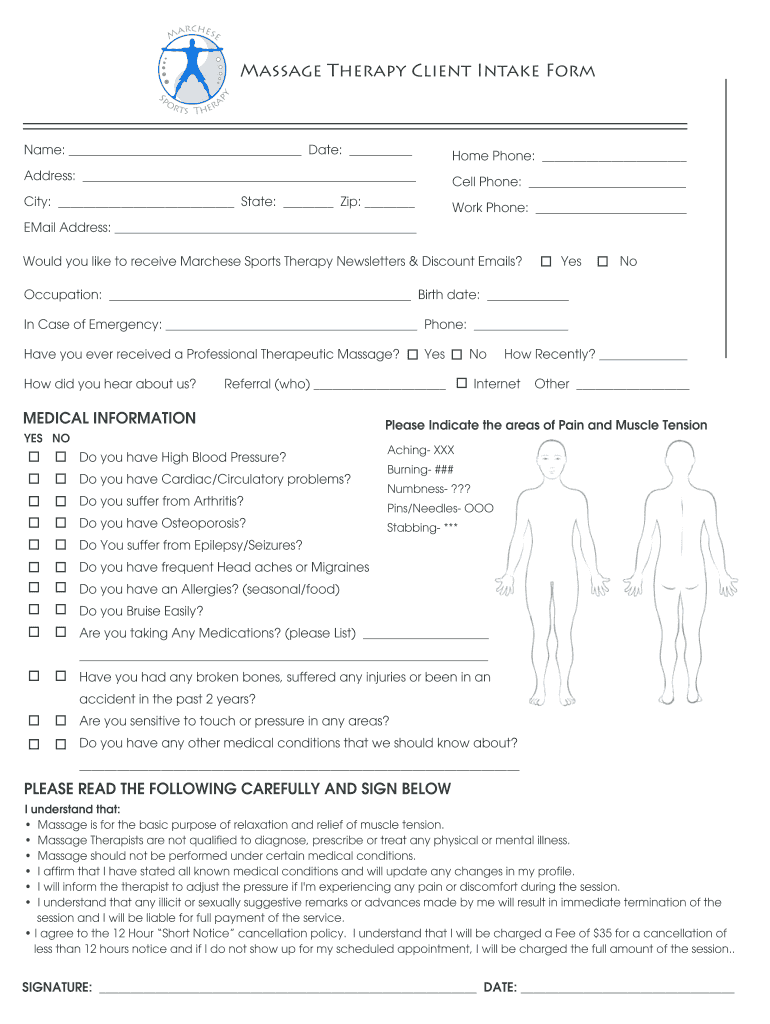







Definition and Importance of the Massage Therapy Intake Form
The massage therapy intake form is a critical document utilized by practitioners to gather essential information from clients seeking massage services. This form collects personal details, medical history, and specific health-related information to ensure that the client receives appropriate and safe treatment tailored to their individual needs.
Key Components of the Massage Therapy Intake Form
- Personal Information: Includes the client's name, contact information, date of birth, and emergency contact details.
- Medical History: Clients disclose any past or present medical conditions, surgeries, injuries, or chronic pain issues. This section is crucial for the therapist to understand any limitations or contraindications that may affect the treatment.
- Areas of Pain or Concern: Clients identify specific areas where they experience discomfort, allowing the therapist to focus on those regions during the session.
- Consent for Treatment: Clients acknowledge the nature of the treatment and consent to receive massage therapy, ensuring that they understand the techniques and methods used by the therapist.
Usage and Benefits
Employing a massage therapy intake form is essential for multiple reasons:
- Personalized Treatment Plans: The form aids therapists in creating tailored treatment plans based on individual needs.
- Risk Management: By collecting comprehensive medical history, therapists can avoid potential risks associated with treating clients with specific health issues.
- Professional Documentation: This form serves as an official record that can be referenced in future sessions, ensuring consistency in the treatment approach.
A well-designed intake form not only protects the client’s interests but also enhances the professionalism and efficacy of the massage practice.
Steps to Complete the Massage Therapy Intake Form
Completing the massage therapy intake form involves several straightforward steps that clients should follow to provide accurate information.
-
Personal Details: Begin by entering your full name, contact details, and date of birth. This section helps the therapist to keep accurate records and contact you if necessary.
-
Medical History: Provide a detailed account of your medical history. List any current medications, previous surgeries, and diagnoses of medical conditions such as arthritis, diabetes, or heart problems. Being thorough here is critical for ensuring your safety during the massage.
-
Areas of Pain: Indicate any areas of discomfort on the provided diagram or list. It's helpful to be specific, as this guide the therapist on what to focus on during your session.
-
Consent Section: Read through the consent section carefully. This part outlines the scope of the treatment, potential risks, and your right to withdraw consent at any time. Sign and date the section to indicate your agreement to the treatment plan.
-
Additional Questions: Some forms may include open-ended questions regarding your massage preferences, past experiences, and any specific goals you may have for your therapy sessions. Take this opportunity to communicate any relevant concerns.
Ensuring that all sections are filled out completely helps to facilitate an effective and safe therapeutic experience.
Legal Considerations Surrounding the Massage Therapy Intake Form
The legal framework governing the use of massage therapy intake forms is vital for ensuring compliance and protecting both clients and therapists.
Compliance with Healthcare Regulations
-
Health Insurance Portability and Accountability Act (HIPAA): Practitioners must ensure that client information is kept confidential and secure to comply with HIPAA regulations. The intake form should include a privacy notice detailing how the information is used and stored.
-
Informed Consent: The intake form serves as a basis for informed consent, where clients agree to the type of therapy they will receive. This legal protection is necessary to document that the client is aware of the treatment modalities and any potential risks involved.
Implications for Practice
Understanding the legal aspects of the massage therapy intake form helps practitioners maintain professional integrity and safeguard their practices. Compliance with relevant regulations not only protects client information but also upholds the standards of the massage therapy profession.
Key Elements of the Massage Therapy Intake Form
A comprehensive massage therapy intake form should encompass several essential components that not only promote safety but also enhance client experience.
Core Sections to Include
-
Demographic Information: Collect basic information such as the client's birth date, gender, and occupation, which can help therapists tailor their approach.
-
Medical History and Current Health: This section is fundamental. Including questions about previous injuries, allergies, and chronic conditions ensures the therapist understands any limitations.
-
Consent Statements: Clearly stated consent clauses affirm the client’s agreement to receive treatment after being informed of its nature and potential risks.
-
Emergency Contact Information: Including this information is important for unexpected situations that may require immediate attention.
Integrating these core elements not only fosters a safe therapeutic environment but also enhances the communication between practitioners and clients.
Variants and Formats of the Massage Therapy Intake Form
The massage therapy intake form is available in various formats to cater to different practices and preferences.
Available Formats
-
Digital Intake Forms: These are gaining popularity as online tools allow clients to complete forms in advance, making the in-person experience more efficient. Platforms like DocHub support the creation and management of digital intake forms, enabling smooth data collection.
-
Printable Formats: Printable forms remain essential for practices that prefer traditional paper methods. These versions can be downloaded and printed in PDF format for in-office use.
-
Template Variations: Customizable templates allow therapists to adjust the content based on their specific practice needs. This adaptability ensures that all relevant questions for individual practices are covered.
Using these different formats caters to clients' preferences and enhances the operational efficiency of massage therapy practices by streamlining the intake process.
Conclusion
In understanding the massage therapy intake form's structure, importance, and legal considerations, both practitioners and clients can navigate the therapeutic relationship more effectively. Ensuring that the form is comprehensive and well-structured facilitates safety, efficacy, and satisfaction in the massage therapy experience.




