






Definition & Meaning
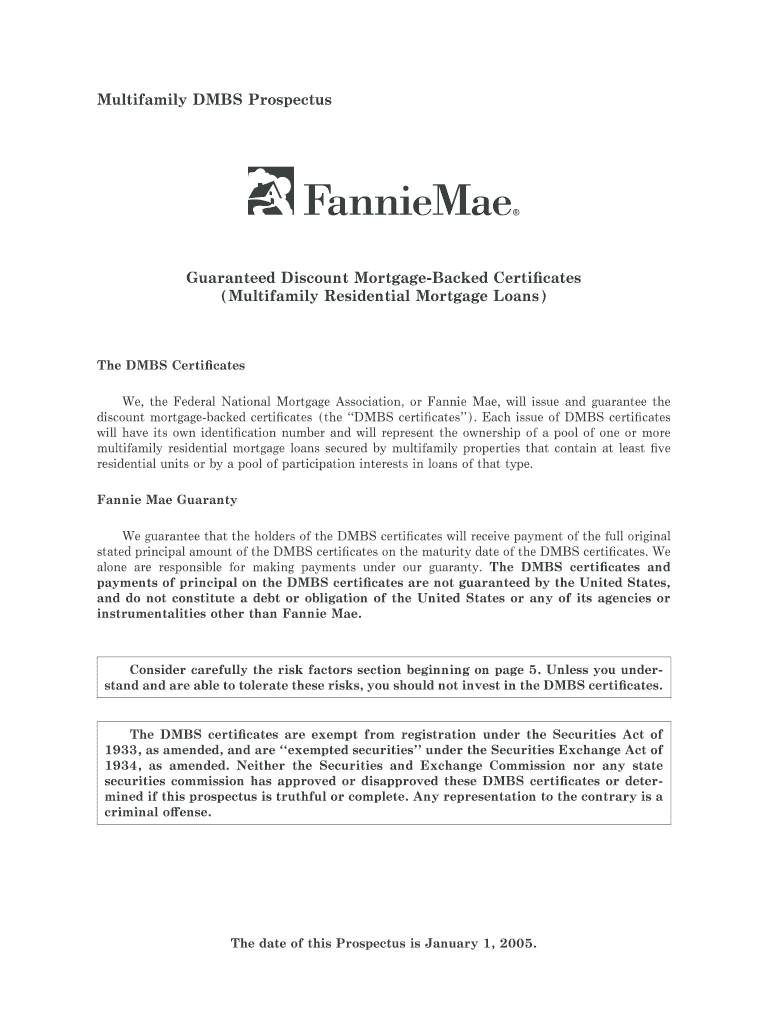
The January 1, 2005 (DMBS) - Fannie Mae document relates to Discount Mortgage-Backed Securities (DMBS) issued by Fannie Mae. These securities represent ownership in pools of multifamily residential mortgage loans. They offer a detailed framework for investors by outlining the structures and risks associated with these certificates. While the securities come with a Fannie Mae guarantee, they are not backed by the U.S. government, which is crucial for understanding the risk exposure. This document is an essential resource for investors seeking to navigate the multifamily DMBS market. It provides comprehensive insights into the tax implications, servicing of loans, and legal considerations.
How to Use the January 1, 2005 (DMBS) - Fannie Mae
To effectively utilize the January 1, 2005 (DMBS) document, investors should first familiarize themselves with the key components of DMBS, including the structure, issuance, and guarantees. Investors can use the document to assess the risk profiles of the securities, enabling informed decision-making. Identifying specific sections relevant to individual investment strategies is crucial, such as those detailing the servicing of loans and the legal obligations of holding these securities. It is also advisable to consult with financial advisors or legal experts to fully grasp the implications highlighted within the document.
Important Terms Related to January 1, 2005 (DMBS) - Fannie Mae
Understanding specific terminology is vital when working with the January 1, 2005 (DMBS) document. Key terms include:
- Discount Mortgage-Backed Securities (DMBS): Securities that signify ownership in mortgage loan pools, provided at a discount.
- Fannie Mae Guarantee: A promise that principal and interest payments will be made, regardless of the actual loan payments.
- Multifamily Residential Loans: Loans secured by properties with more than four residential units.
- Servicing of Loans: Ongoing administrative tasks in managing mortgage loans, which include collecting payments and managing escrows.
Familiarity with these and other relevant terms ensures accurate comprehension of the document and aids effective communication between investors and financial advisors.
Key Elements of the January 1, 2005 (DMBS) - Fannie Mae
The document details several fundamental elements critical to its use:
- Issuance and Guarantees: Explanation of how the securities are issued and the extent of guarantees provided by Fannie Mae.
- Risk Factors: Comprehensive analysis of potential risks associated with investing in DMBS, including interest rate risks and prepayment dynamics.
- Tax Implications: Assessment of tax ramifications that affect investors, guiding them to make tax-efficient investment decisions.
Each element provides foundational knowledge necessary to navigate the multifamily DMBS market and evaluate investment strategies.
Steps to Complete the January 1, 2005 (DMBS) - Fannie Mae
Completing this document involves several steps:
- Review the Prospectus: Carefully read through the entire document to understand all its facets.
- Identify Sections Relevant to Your Investment: Pinpoint sections pertinent to your investment strategy or financial interests.
- Seek Professional Advice: If unclear, consult with a financial advisor or an attorney specializing in securities.
- Evaluate Risk Factors: Assess the risk factors and tax implications to shape your investment strategy.
- Make Informed Decisions: Use the insights gathered to make educated investment choices in multifamily residential mortgage loan securities.
Properly completing this process helps align the document’s use with your investment objectives.
Legal Use of the January 1, 2005 (DMBS) - Fannie Mae
The January 1, 2005 (DMBS) document serves legal purposes by delineating obligations and protections for investors:
- Investor Protection: Outlines the guarantees and legal rights provided by Fannie Mae.
- Compliance and Regulation: Ensures that investments conform to regulatory standards, providing legal security.
- Risk Disclosure: Legally requires the disclosure of risks associated with investing in these securities.
Understanding these legal facets ensures compliant and informed participation in the DMBS market and mitigates potential legal risks.
Examples of Using the January 1, 2005 (DMBS) - Fannie Mae
In practical terms, the January 1, 2005 (DMBS) document can be leveraged in various scenarios:
- Investment Analysis: Used by investment analysts to evaluate the viability of adding DMBS to a portfolio based on risk tolerance and investment goals.
- Portfolio Diversification: Investors employ the document to assess how DMBS fit within a broader investment strategy aimed at diversification.
- Risk Management: Financial advisors might use the document to identify and mitigate potential risks associated with DMBS investments for their clients.
Through these practical examples, investors can see how the document provides invaluable insights that influence effective investment decision-making.
Who Typically Uses the January 1, 2005 (DMBS) - Fannie Mae
The primary users of the January 1, 2005 (DMBS) document include:
- Institutional Investors: Such as hedge funds and pension funds seeking steady, risk-mitigated returns from mortgage-backed securities.
- Financial Advisors: Professionals guiding clients in structuring their portfolios around DMBS.
- Regulatory Bodies: Entities ensuring compliance with financial regulations in the issuance and trading of DMBS.
These users rely on the document to make informed decisions and ensure their strategies align with market opportunities and regulatory requirements.