



Definition and Meaning
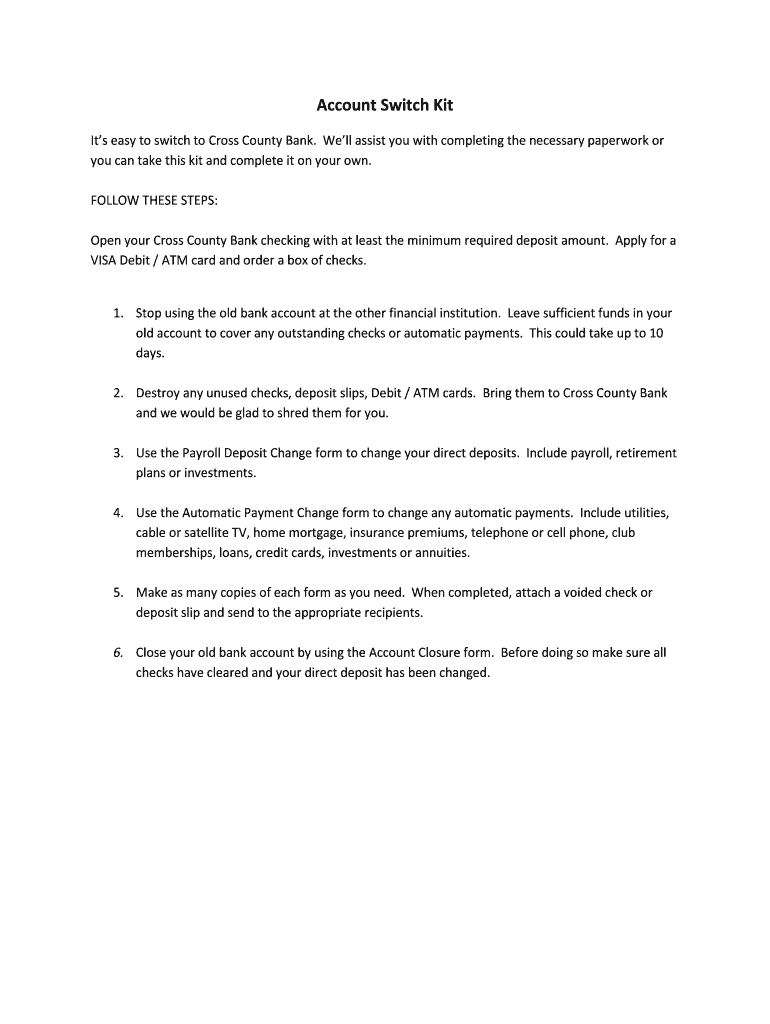
The "Account Switch Kit" is a structured guide designed to facilitate the seamless transition of banking services from one institution to another. It provides detailed step-by-step instructions intended to assist customers in navigating the complexities of changing their financial service providers. This tool ensures that all critical aspects, such as opening and closing accounts, modifying direct deposits, and updating automatic payments, are handled efficiently.
How to Use the Account Switch Kit
Using the Account Switch Kit involves several deliberate steps to ensure a smooth banking transition. Users should first carefully review the instructions provided by their new bank or financial institution, ensuring they understand each required action. The process often starts with selecting the appropriate kit tailored to the individual's or business's needs. Once selected, users must follow the guidelines to systematically update all financial connections, including payroll deposits and automatic bill payments.
Step-by-Step Process
-
Open a New Account: Begin by opening an account with the new bank or credit union, often requiring personal identification and financial information.
-
List Existing Transactions: Document all existing direct deposits and automatic payments associated with the old account to ensure nothing is missed.
-
Update Direct Deposits: Inform employers or income sources of the new banking details to redirect funds accurately.
-
Adjust Automatic Payments: Contact service providers like utilities and subscription services to update payment information.
-
Monitor Transactions: Keep track of both old and new accounts to ensure all transactions are appropriately transferred.
-
Close the Old Account: Once confirmed that all financial activities have successfully shifted, proceed to close the old bank account.
How to Obtain the Account Switch Kit
Acquiring an Account Switch Kit typically involves reaching out to the new bank or financial institution. Many banks offer these kits via their websites or as part of their customer service offerings. For convenience, individuals may download a digital version to print at home or request a paper copy at a local branch.
Steps to Complete the Account Switch Kit
Completing the Account Switch Kit requires a systematic approach to document and address each element of the banking transition. Users should refer to the checklist provided within the kit to ensure comprehensive coverage of all necessary actions. Additionally, maintaining open communication with both the old and new financial institutions can resolve potential issues promptly.
Key Elements of the Account Switch Kit
The Account Switch Kit consists of several crucial components, each designed to help facilitate the transition:
- Checklist: A comprehensive list ensuring all tasks are completed.
- Forms: Dedicated forms for notifying employers and payment providers about the account change.
- Instruction Guide: Clear instructions detailing each step in the account transition process.
- Support Contacts: Information on who to contact for assistance at both financial institutions.
Benefits of Using the Account Switch Kit
Utilizing an Account Switch Kit presents several advantages, notably simplifying the complex process of changing banks. It reduces the risk of oversight and ensures all relevant parties are informed promptly. Furthermore, these kits streamline transitions, reduce stress, and enhance customer confidence in successfully swapping banking services.
Who Typically Uses the Account Switch Kit
The Account Switch Kit is primarily used by individuals and businesses planning to change to a new banking service provider. It is particularly useful for those with numerous direct deposits and automatic payments and is favored by businesses seeking to seamlessly transfer operational banking activities without interruption.

Legal Use of the Account Switch Kit
In the United States, the legal framework governing the use of Account Switch Kits consists of various consumer protection laws ensuring data privacy and financial accuracy. Users must comply with federal and state regulations, ensuring all banking transitions are conducted transparently and securely in accordance with legal standards.