






Definition and Meaning of Domestic Partner Benefits
Domestic partner benefits refer to the various advantages offered to employees who are in a domestic partnership, similar to those available to married couples. These benefits may include health insurance, retirement plans, and leave policies. Domestic partnerships are often recognized under certain conditions where partners share a mutual household and responsibilities. The primary aim is to extend similar workplace privileges to domestic partners as those enjoyed by married individuals. This initiative addresses inclusivity and equality in the workplace, acknowledging diverse family arrangements.
Eligibility Criteria for Domestic Partner Benefits
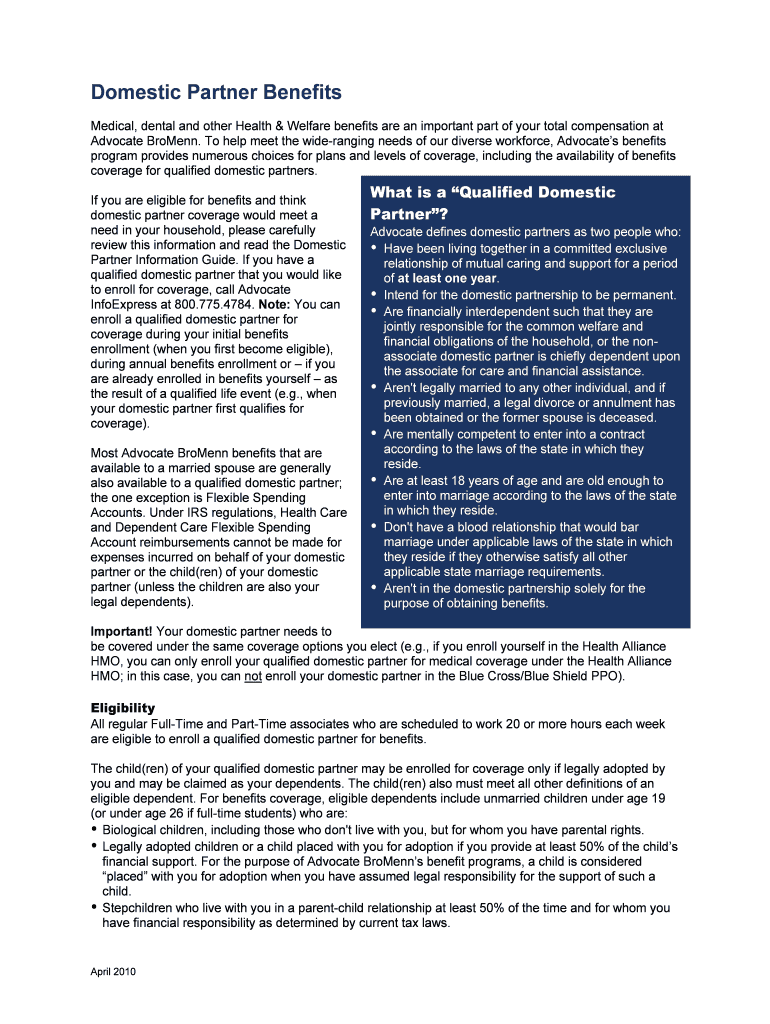
Determining who qualifies as a domestic partner is crucial when assessing eligibility for benefits. Typically, eligibility requires both partners to be of a certain age (usually 18 or older), not married to anyone else, and engaged in a committed, financially interdependent relationship. Some organizations might require proof of shared residence or joint financial commitments. Understanding these criteria helps organizations maintain fairness and transparency in administering benefits, ensuring that they are extended to genuinely qualified individuals.


How to Use Domestic Partner Benefits
Utilizing domestic partner benefits effectively begins with understanding what is available and how to access it. Employees should closely review their benefits package, noting any specific procedures for enrolling a partner. This often involves completing an enrollment form and submitting necessary documentation like proof of partnership or shared financial responsibilities. Ensuring all papers are in order streamlines the process, allowing individuals to fully take advantage of the offered benefits promptly.
Application Process and Approval Time
Applying for domestic partner benefits generally involves a straightforward procedure. Employees must fill out an enrollment form, attach relevant proofs such as a shared lease, utility bills, or affidavits affirming the relationship, and submit it to the HR department. Approval time can vary depending on the organization's policy and processing efficiency, but typically, decisions are rendered within thirty to sixty days. Prompt submission and thorough documentation help expedite the approval process, ensuring timely access to benefits.
Required Documents for Enrollment
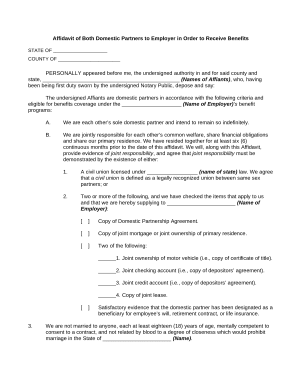
Enrollment requires specific documentation to validate the legitimacy of the domestic partnership. These documents often include copies of joint leases, shared utility bills, or affidavits signed by both partners. Some companies may require a formal declaration of partnership filed with a city or county clerk. Providing complete documentation ensures no delays in the verification process, facilitating a smooth transition to receiving benefits.
Legal Use and Implications
Understanding the legal backdrop of domestic partner benefits is crucial. This includes awareness of how benefits can impact areas like taxation. For instance, some benefits extended to domestic partners may be subject to federal taxes, unlike those given to married couples. Employers should provide clear communication regarding the tax implications and legal responsibilities that accompany receiving these benefits, ensuring informed decisions by their employees.
Important Terms Related to Domestic Partner Benefits
Familiarity with important terms is essential for comprehending the nuances of domestic partner benefits. Terms like "affidavit of domestic partnership," "interdependent relationship," and "proof of partnership" frequently appear in documentation and discussion. Understanding these terms empowers individuals to navigate the benefits landscape more efficiently and ensures clear communication when accessing and utilizing benefits.
State-Specific Rules for Domestic Partner Benefits
States may have individual regulations that affect how domestic partner benefits are administered. For instance, the definition of a domestic partnership and the proofs required can vary significantly. Employees need to acquaint themselves with their specific state guidelines, which may influence both eligibility and the range of benefits available. Organizations should provide regionally tailored information to facilitate compliance and ensure employees are informed of their rights and obligations.
IRS Guidelines and Tax Implications
The Internal Revenue Service (IRS) has specific guidelines regarding domestic partner benefits. Notably, while health benefits may be non-taxable for spouses, they can be taxable for domestic partners, leading to potential tax liability for employees. Navigating these tax implications requires careful consideration and possibly consultation with tax professionals to ensure accurate reporting and compliance with all IRS requirements. Understanding these guidelines is vital for effective financial planning and avoiding unexpected tax burdens.
Examples of Using Domestic Partner Benefits
Examples illustrate the real-world applications of domestic partner benefits, offering insight into their practical impact. Consider an employee with a long-term partner who, due to domestic partner benefits, receives health insurance coverage through the employee's job. This coverage provides the partner with medical security previously unattainable, significantly enhancing their quality of life. Such examples underscore the tangible benefits of these workplace policies and their role in fostering inclusivity and equality.