






Definition & Meaning
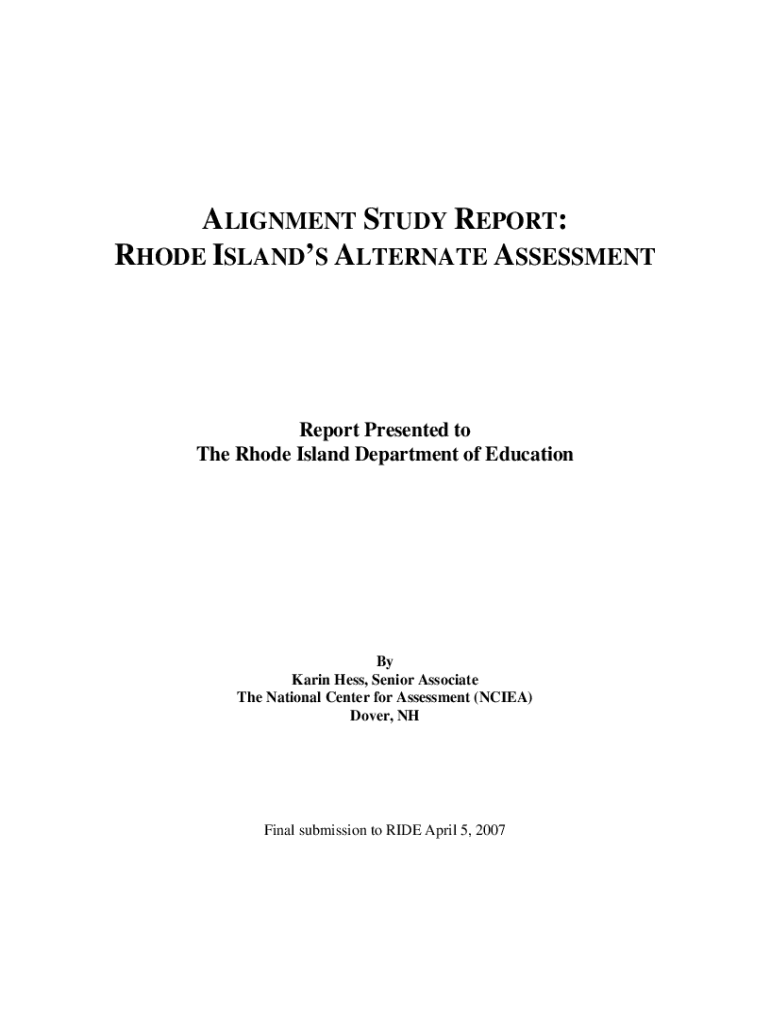
The "alignment study report - Rhode Island Department of Education - RI" explores the correlation between the state's educational content standards and its Alternate Assessment for students with significant cognitive disabilities. Conducted by the National Center for Assessment, this report assesses how well the Rhode Island content standards align with the assessments administered to these students. It involves evaluating the academic rigor and execution of alternate assessments in reading, writing, and mathematics across various grade levels, ultimately ensuring that these assessments fairly reflect state standards and student abilities.
Key Elements of the Alignment Study Report
The report comprises several critical components essential for a comprehensive understanding of the alignment process:
- Content Centrality: Examines how closely the alternate assessments match Rhode Island’s content standards.
- Performance Expectations: Analyzes if the assessments accurately measure the expected student performance levels.
- Depth of Knowledge: Evaluates whether the assessments require students to demonstrate understanding at an appropriate level.
- Flexibility and Accessibility: Highlights how the assessments accommodate diverse student needs while maintaining high standards.
- Recommendations: Provides guidance to enhance instructional practices and ensure that assessments remain equitable and effective.
How to Use the Alignment Study Report
Educators and administrators can utilize the alignment study report to:
- Identify Strengths and Weaknesses: Understand areas where content standards and assessments align well and areas needing improvement.
- Inform Curriculum Development: Adjust instructional materials and teaching strategies based on assessment outcomes.
- Enhance Professional Development: Tailor training programs for educators to better understand and implement the standards.
- Facilitate Discussions: Encourage dialogues between stakeholders on improving alignment for more effective education delivery.
Steps to Complete the Alignment Study Report
While individuals may not directly complete this report, understanding its compilation process is crucial:
- Collect Data: Gather assessments and content standards from various grade levels.
- Analyze Content: Compare the content of assessments with established standards.
- Evaluate Student Performance: Review how well students’ results reflect adherence to state standards.
- Consolidate Findings: Assemble the data into a comprehensive report detailing strengths, areas for improvement, and actionable recommendations.
Examples of Using the Alignment Study Report
Several practical scenarios demonstrate the report's application:
- Curriculum Adjustments: A school district may use the report's findings to revise curricula, ensuring that alternate assessments are accurately aligned with the expected educational outcomes.
- Policy Formulation: State education officials might refer to the report when developing or updating policies related to special education assessments.
- Teacher Training: Schools could leverage the report information to conduct workshops for educators, focusing on areas that need more alignment according to the findings.
Who Typically Uses the Alignment Study Report
The report serves a variety of educational roles within Rhode Island:
- State Education Authorities: For setting education policies and standards.
- School District Administrators: To evaluate and improve district-wide educational practices.
- Educators and Teachers: For understanding alignment and applying findings to enhance classroom instruction.
- Parents and Advocacy Groups: To ensure transparency and accountability in education for students with cognitive disabilities.


Legal Use of the Alignment Study Report
This document holds legal significance as it supports transparency and compliance with education standards for special assessment needs:
- Compliance with State Standards: The report ensures that alternate assessments are consistent with state educational mandates.
- Assessment Validity: Provides documented proof that assessments meet legal requirements, safeguarding against potential disputes regarding their fairness or application.
- Support for Equal Opportunity: Legally reinforces the state's commitment to providing equitable educational opportunities for all students, including those with cognitive disabilities.
State-Specific Rules for the Alignment Study Report
Rhode Island has specific regulations impacting how these alignment studies are conducted and applied:
- State Content Standards: Assessments must adhere to the New England Common Assessment Program Grade-Level Equivalents (NECAP GLEs) as outlined by Rhode Island.
- Inclusion Criteria: The report addresses unique state policies for including students with cognitive disabilities, emphasizing accessibility and appropriate assessment modifications.
Important Terms Related to the Alignment Study Report
Understanding key terminology aids in deciphering the report:
- Alternate Assessment: An alternative testing method for students who cannot participate in general state assessments.
- Cognitive Disabilities: Intellectual impairments impacting learning and comprehension abilities.
- NECAP GLEs: Standards defining what students should know and be able to do at each grade level in New England.
State-by-State Differences
While specific to Rhode Island, alignment studies may vary in other states, taking into account different educational standards, assessment methodologies, and policy frameworks. Each state's unique approach may influence their alignment study report's content and application.