






Definition and Purpose of the Commercial Term Lending Rent Roll
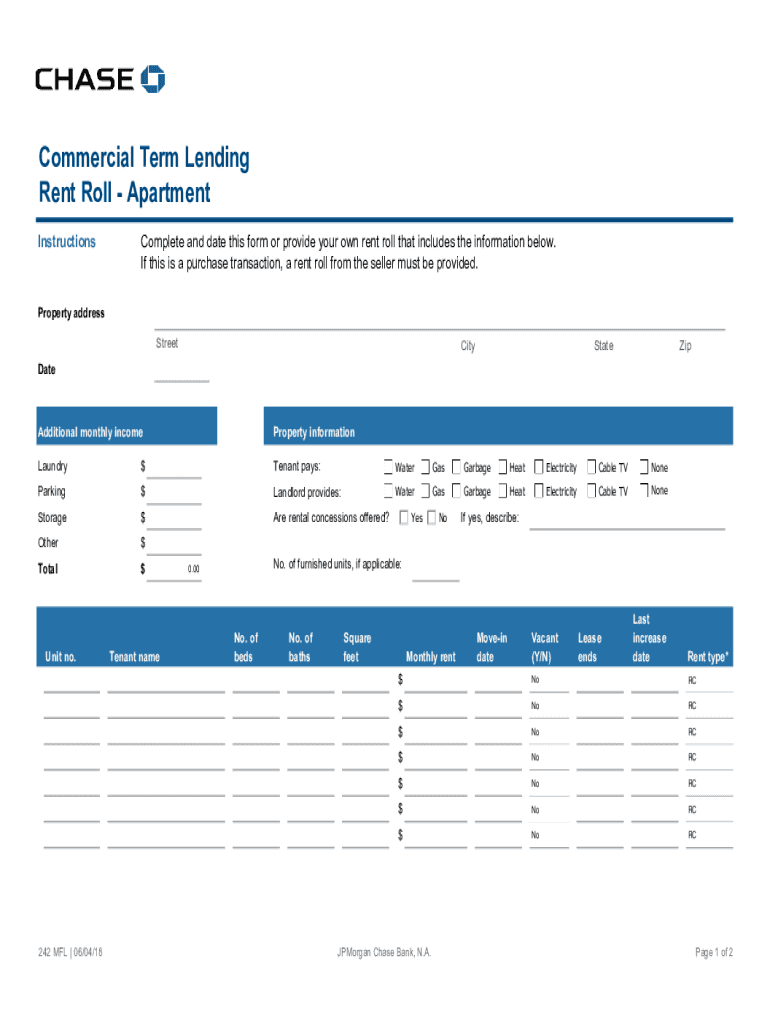
The "Commercial Term Lending Rent Roll - Apartment Apartment Rent Roll (242 MFL)" is a document used primarily in real estate, detailing key information about rental properties. These forms are crucial for landlords and property managers to keep track of tenant details, occupancy status, rental income, and property specifics. The primary aim is to present an organized overview of a property's revenue potential, which aids in making informed financial decisions.
Key Components
- Tenant Information: Includes the names of tenants, their contact information, and the lease terms they have agreed to.
- Rental Income: Documents the monthly income generated from each tenant, providing a clear picture of the property's revenue.
- Property Details: Features specifics about the units, such as size, number of bedrooms, and any unique characteristics.
- Additional Income Sources: Notes any extra revenue, such as laundry facilities or parking fees.
- Rental Concessions: Captures any discounts or incentives offered to tenants, such as a month's free rent.
How to Use the Rent Roll
Effectively using the rent roll involves understanding its components and how they contribute to property management and financial planning. This section provides a step-by-step guide to leveraging this form.
Step-by-Step Instructions
- Gather Tenant Data: Collect accurate information about each tenant, including lease dates and contact details.
- Document Rental Income: Record the monthly rent for each unit to monitor cash flow and assess financial performance.
- List Property Details: Include specific information about each unit to provide context for the rental data.
- Account for Additional Income: Note any supplementary income sources to ensure a comprehensive financial overview.
- Review for Accuracy: Regularly update the rent roll to reflect changes in tenancy or income, ensuring ongoing accuracy.
Real-World Scenario
A real estate investor uses the rent roll to evaluate a potential property investment. By reviewing the document, they can assess the property's current revenue, identify areas for increased profitability, and make informed bidding decisions.
Steps to Complete the Rent Roll
Completing the commercial term lending rent roll involves several detailed steps to ensure accuracy and completeness. Below is a detailed breakdown of these steps.
Instructions for Completion
- Input Property Address: Clearly write the full address of the property, ensuring no errors.
- Record Tenant Names: Enter each tenant's full name accurately to avoid discrepancies.
- Detail Unit Information: Document specifics such as unit number, lease start and end dates, and occupancy status.
- Calculate Monthly Rents: Carefully calculate and enter the monthly rent for each unit, including any escalations.
- Include Rental Concessions: Clearly document any concessions provided to give a full picture of rental agreements.
Practical Example
In practice, a property manager periodically updates the rent roll to reflect current leasing conditions, ensuring it is ready for review by potential investors or lenders who might request it to gauge the property’s financial health.
Important Terms Related to the Rent Roll
Understanding legal and financial terminology is crucial to effectively using a rent roll. Here are key terms associated with this form.
Glossary
- Lease Agreement: A contract between a landlord and tenant outlining terms of rental occupancy.
- Occupancy Rate: The percentage of occupied units in a property, crucial for evaluating income stability.
- Revenue Stream: Consistent flow of income from the property, primarily generated through tenant rents.
- Rent Control: Legal regulations that limit rent increases, impacting potential income projections.
- Rental Concession: Temporary adjustments to rent terms to attract or retain tenants.
Legal Use and Compliance
When handling the rent roll, abiding by legal standards and regulations is imperative.
Compliance Guidelines
- Confidentiality: Safeguard tenant information by encrypting digital files and securing hard copies.
- Accuracy: Maintain meticulous records that accurately reflect tenant agreements and rental history.
- Transparency: Provide clear documentation of any rent control or legal constraints affecting property management.
Case Study
A landlord facing a legal dispute over misunderstood rental concessions relies on accurate rent roll documentation to clarify the terms agreed upon, ultimately resolving the issue in their favor.
Key Elements to Include
When preparing the rent roll, ensure all essential elements are included for a complete overview of the property’s financial health.
Essential Elements
- Tenant and Lease Information: Crucial for tracking payments and lease duration.
- Financial Details: Comprehensive capture of all income sources and potential outgoings.
- Concessions and Controls: Include details on any legal or contractual restrictions that may impact rental value.
Example Scenario
A property owner contemplating a refinancing strategy uses meticulously kept rent rolls to substantiate income claims, aiding in securing favorable loan terms.
Digital Version vs. Paper Version
Choosing between digital and paper formats for the rent roll can significantly affect efficiency in property management.
Advantages of Digital Versions
- Accessibility: Easily accessible and editable from various devices.
- Security: Digital formats offer advanced encryption and protection features.
- Sustainability: Environmentally friendly and reduces the need for physical storage.
When Paper Versions are Useful
In scenarios where digital access is limited or not feasible, paper copies provide a tangible method of sharing information, although they may lack the efficiency and security offered by digital alternatives.
Who Typically Uses the Rent Roll
Understanding the typical users of the rent roll can enhance its application and utility.


Primary Users
- Property Managers: Utilize the form to streamline operations and keep track of tenant data and financial performance.
- Real Estate Investors: Use rent rolls to evaluate potential investments based on projected income and occupancy.
- Lenders: Often require a rent roll as part of the underwriting process when assessing loan applications for rental properties.
Use Case Example
A lender reviewing a loan application for an apartment complex demands the latest rent roll to verify revenue claims and make an informed lending decision.