01. Edit your form online
Type text, add images, blackout confidential details, add comments, highlights and more.

Type text, add images, blackout confidential details, add comments, highlights and more.

Draw your signature, type it, upload its image, or use your mobile device as a signature pad.

Send it via email, link, or fax. You can also download it, export it or print it out.
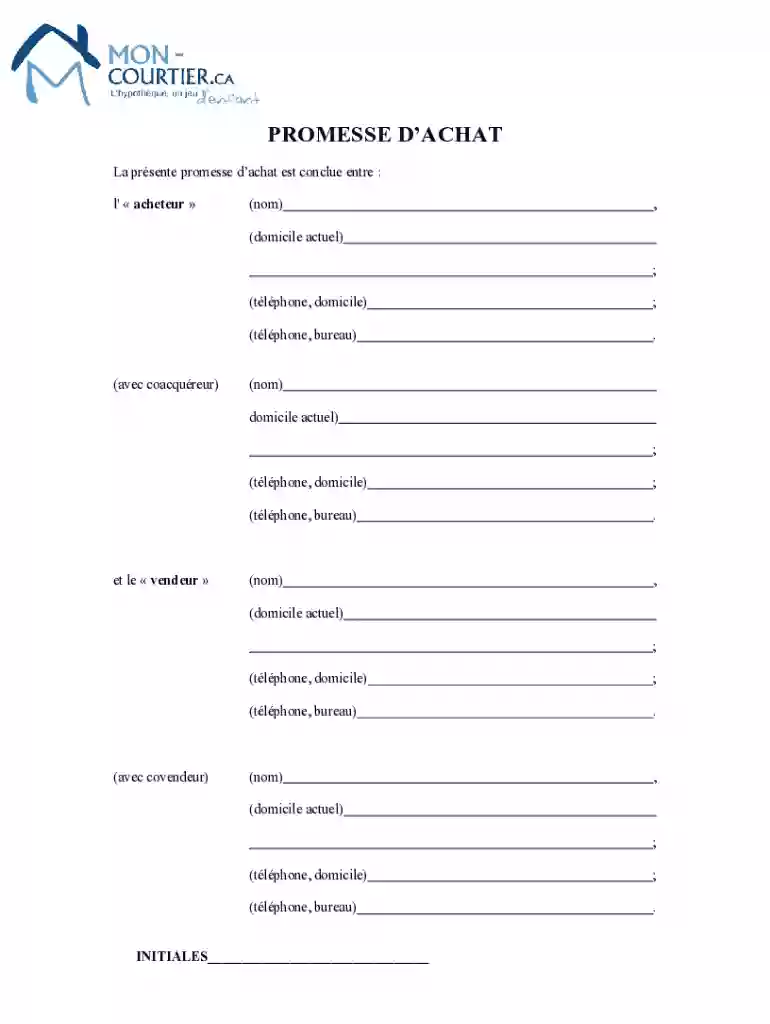
The "PROMESSE D'ACHAT" is a binding agreement between a buyer and a seller concerning the sale of real estate. It outlines each party's commitments, including the buyer's obligation to purchase and the seller's commitment to sell the property at a predetermined price and conditions. This agreement often initiates the real estate transaction process as it lays the foundation for the final contract, emphasizing essential terms like payment structures, deadlines, and conditions for completion. Understanding the nuances of the "PROMESSE D'ACHAT" is crucial for buyers and sellers to ensure they fulfill their legal obligations effectively.
Several critical components form the backbone of a "PROMESSE D'ACHAT" agreement. Key elements include:
These elements ensure clarity and alignment between the parties, reducing the chances of disputes and misunderstandings.
Completing a "PROMESSE D'ACHAT" involves several detailed steps:
Working closely with legal experts during these steps is advised to ensure all aspects are thoroughly addressed.
The legal use of a "PROMESSE D'ACHAT" encompasses several critical considerations. Primarily, it serves as a pre-contractual agreement that is legally binding upon execution. Both parties must adhere to the terms and conditions outlined, failing which might lead to legal repercussions. Specific clauses, such as penalty clauses for non-compliance or delay, can be included to safeguard interests. Legal counsel can provide guidance on these clauses to ensure they are enforceable under relevant laws. It is pertinent for parties to understand that once signed, backing out of the agreement without legal grounds could result in financial and legal consequences.
Typical users of the "PROMESSE D'ACHAT" include:
Understanding the diverse roles and interests of these parties can aid in navigating the process effectively, ensuring that all stakeholders are aligned on the agreed terms.


Examples demonstrate the practical application of a "PROMESSE D'ACHAT":
These scenarios illustrate how customized terms in the agreement cater to different market needs and investment strategies.
Understanding specific terminology is vital:
Familiarity with these terms can empower parties to negotiate more effectively and understand the implications of each clause within the agreement.
Real estate laws vary significantly across states, impacting how "PROMESSE D'ACHAT" is executed and enforced. For instance:
Staying informed about these variances helps parties comply with local requirements, ensuring that the agreement is valid and enforceable in the specific state where the property is located. Engaging legal professionals knowledgeable in state laws is advisable to navigate these differences effectively.
We've got more versions of the PROMESSE D'ACHAT form. Select the right PROMESSE D'ACHAT version from the list and start editing it straight away!
At DocHub, your data security is our priority. We follow HIPAA, SOC2, GDPR, and other standards, so you can work on your documents with confidence.