




Definition & Meaning
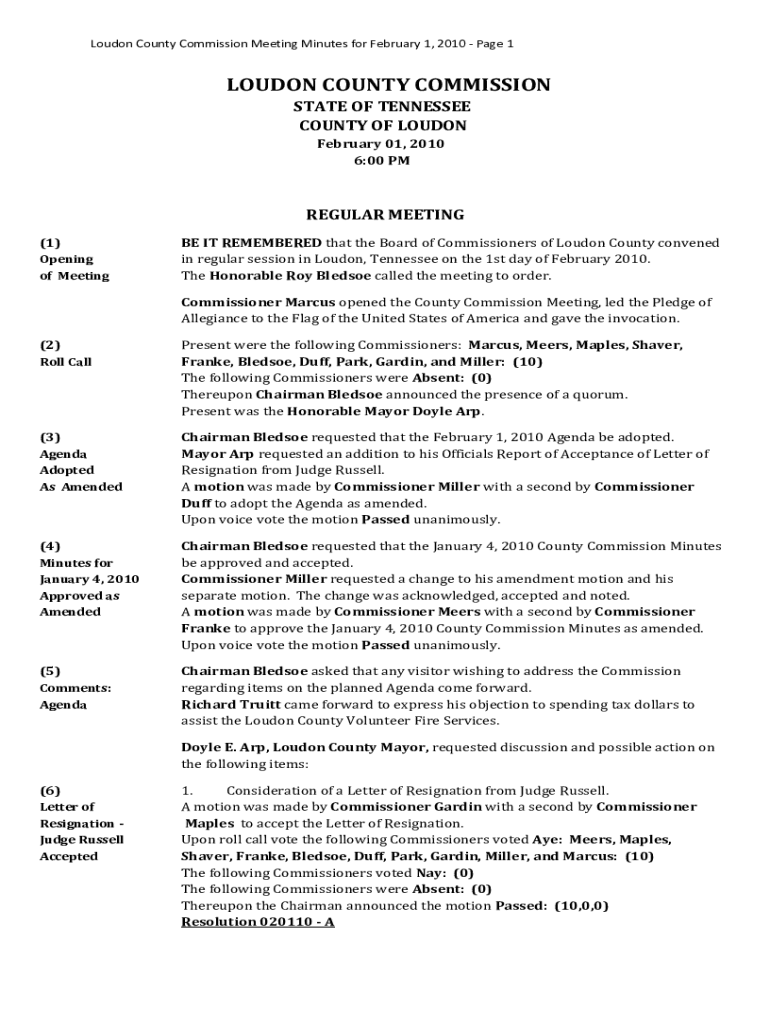
The term "in regular session in Loudon, Tennessee on the 1st day of February 2010" refers to a specific meeting that took place within the Loudon County governance framework. Regular sessions are typically defined by their adherence to a pre-set schedule outlined in governmental regulations, where official meetings occur to discuss, deliberate, and decide on a range of administrative matters and policies pertinent to the local community and governance.
Regular sessions hold distinct significance as they often form the basis for legislation, policy changes, and other governmental functions. In Loudon, Tennessee, such a session on February 1, 2010, involved discussions such as the acceptance of a resignation, appointment of a task force, and financial approvals.
Key Elements of the Regular Session
Regular sessions in Loudon County involve several standardized elements to ensure governance transparency and effectiveness.
- Agenda Adoption: Regular sessions begin with the approval of the agenda, which outlines all topics to be addressed.
- Minutes Approval: Review and approval of minutes from previous meetings, ensuring that past decisions and discussions are recorded accurately.
- Resignations and Appointments: Critical personnel changes, such as the resignation of Judge Russell and the appointment of new task forces, are considered fundamental.
- Financial Discussions: Sessions often include reviewing financial statements, audit reports, and budget adjustments to ensure fiscal responsibility.
- Public Comments: These sessions provide a platform for community members to express concerns or praise, ensuring public involvement in governance.
Steps to Complete the Regular Session
A regular session follows a predetermined sequence that ensures orderly deliberation and decision-making.
- Preparation: Officials prepare by reviewing the agenda, necessary documents, and reports related to the meeting's topics.
- Commencement: The session officially starts, often led by a head official such as the Mayor or County Chair.
- Agenda Review: The session participants review and adopt the meeting agenda to guide discussion points.
- Discussion and Decisions: Each agenda item is discussed, and decisions are made through votes or consensus.
- Public Input: Members of the public can provide input or ask questions during designated times.
- Conclusion: The session concludes after all agenda items are addressed, and follow-up actions are assigned.
Who Typically Uses the Regular Session
Regular sessions are primarily utilized by government officials, including county legislators, administrative staff, and local leaders such as mayors or commissioners. These meetings are also attended by the public and community stakeholders via open invitations, allowing citizens to witness government processes firsthand.


Important Terms Related to the Regular Session
Understanding regular session vocabulary is essential for comprehending the proceedings fully.
- Quorum: The minimum number of members required to conduct the session legally.
- Motion: A proposal put forward for debate or voting.
- Amendment: Changes or additions proposed during discussions on legislative texts.
- Resolution: A formal decision made by vote.
Legal Use of the Regular Session
Legal provisions govern regular sessions to ensure adherence to state and local statutes. They must comply with open meeting laws, which dictate that certain meetings be held publicly to foster transparency and trust in local governance.
Examples of Using the Regular Session
Regular sessions serve as a forum where various community-centered actions can take place.
- Emergency Response Coordination: Sessions can establish or amend protocols in response to emergencies, like appointing new task forces.
- Policy Implementation: Instances include enacting ordinances or legislation impacting public welfare.
- Budget Approvals: Financial oversight, such as the approval of expenditures and fund reallocations, is commonly undertaken.
State-Specific Rules for Regular Sessions
Tennessee enforces specific guidelines for conducting regular sessions, emphasizing public notices and open forum requirements in alignment with the Tennessee Open Meetings Act. This ensures transparent government operations even at the local Loudon County level.
Public Participation in Regular Sessions
In Loudon County, as well as elsewhere in Tennessee, public meetings encourage participation through comment periods, where residents can voice opinions on local issues. Public commentary is integral as it informs decision-makers about citizen perspectives and concerns.
Required Documents for Regular Sessions
Regular sessions necessitate the preparation and presentation of several documents to facilitate informed decision-making.
- Meeting Agenda: Outlines discussion topics.
- Previous Minutes: Provides records of past sessions.
- Financial Reports: Details on budgetary considerations and audits.
- Administrative Reports: Updates on ongoing projects and community needs.