




01. Edit your north carolina contingent sale addendum online
Type text, add images, blackout confidential details, add comments, highlights and more.

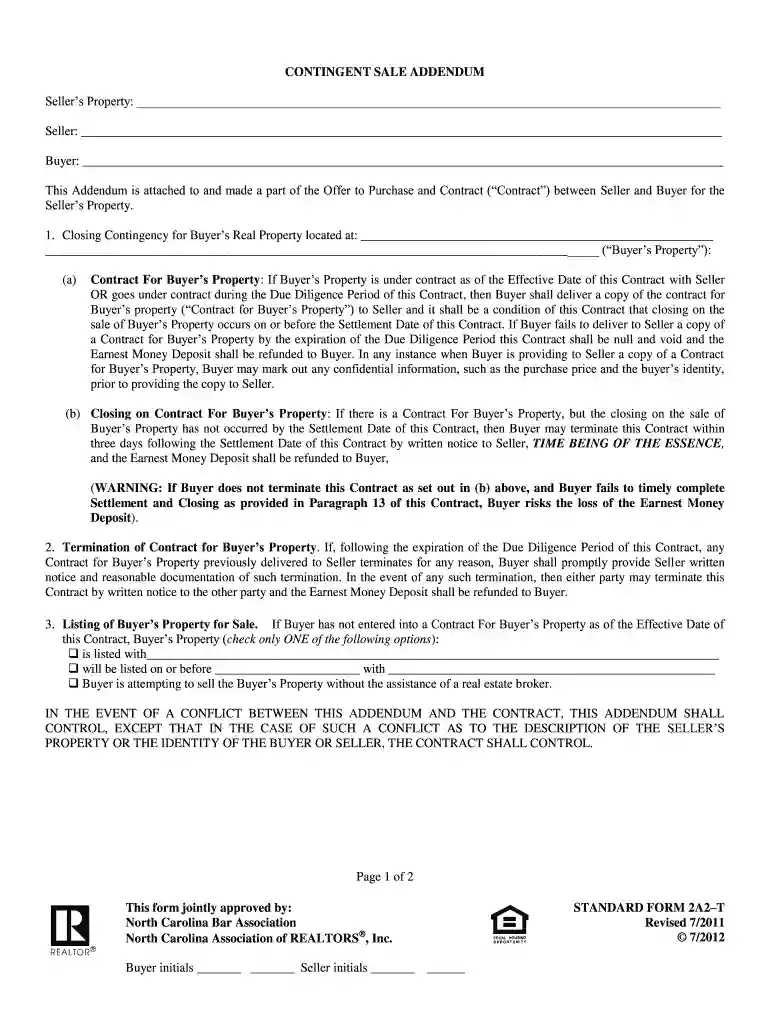
Type text, add images, blackout confidential details, add comments, highlights and more.

Draw your signature, type it, upload its image, or use your mobile device as a signature pad.

Send contingency addendum via email, link, or fax. You can also download it, export it or print it out.
The Contingent Sale Addendum NC is a legal document used in North Carolina real estate transactions. Its primary function is to set forth specific conditions under which a real estate transaction can proceed, contingent upon the sale of the buyer’s existing property. This addendum ensures that a buyer does not risk owning two homes simultaneously if their current property does not sell in time. Typically, it supplements a purchase agreement by establishing critical terms, conditions, and timelines relevant to both the buyer and seller. By incorporating this addendum, both parties gain a mutual understanding of the obligations and consequences should the buyer’s property fail to sell as planned.
To use the Contingent Sale Addendum NC effectively, buyers should:
Attach to the Purchase Contract: Ensure the addendum is clearly referenced in the main purchase contract for the property being purchased. This solidifies its role as part of the binding agreement.
Specify Sale Conditions: Detail the specific conditions that must be met for the purchase to proceed, such as a closing date for the buyer’s current property.
Set Timeframes: Clearly define the timeframes within which the buyer's current property must be under contract and sold to ensure adherence to the contingency.
Outline Contingency Outcomes: Specify what will happen if the buyer is unable to sell the existing property, including contract termination options or extensions.
By carefully completing and integrating this addendum into the main contract, both parties are aware of their responsibilities and the potential impact of unmet contingencies.
Completing the Contingent Sale Addendum NC involves several important steps:
Identify Parties: Clearly list the names of both the buyer and seller.
Detail the Property: Specify the property address and details for both the intended purchase and the property the buyer must sell.
Outline Sale Contingency: Describe the required conditions for this contingent sale, such as necessary sale price or offer acceptance deadlines.
Set Contingency Deadlines: Establish deadlines for when the buyer's current property must be sold.
Detail Consequences: Clearly state what happens if the contingency is not met, including contract nullification or modifications.
By following these structured steps, the addendum provides clarity and security for both parties involved.
The key elements of the Contingent Sale Addendum NC include:
These components ensure that buyers and sellers are on the same page about expectations and necessary actions.
In North Carolina, the legal use of the Contingent Sale Addendum is subject to certain guidelines:
Ensuring legal adherence within this framework protects both parties and supports a fair transaction process.
Understanding specific terms in the Contingent Sale Addendum NC is vital:
Knowing these terms helps both buyers and sellers navigate the conditions and implications of the addendum more effectively.
Examples of using this addendum can highlight its practical applications:
These real-world examples showcase how the addendum provides flexibility and security within property transactions.
To obtain this vital document, real estate professionals typically offer completing services:
Acquiring the addendum through proper channels ensures that it meets all necessary legal standards and is tailored to state-specific requirements.
North Carolina's specific rules for the contingent sale addendum include:
Understanding these state-specific rules is essential to ensure the addendum is legally sound and enforceable.
We've got more versions of the north carolina contingent sale addendum form. Select the right north carolina contingent sale addendum version from the list and start editing it straight away!
| Versions | Form popularity | Fillable & printable |
|---|---|---|
| 2011 | 4.9 Satisfied (381 Votes) |
At DocHub, your data security is our priority. We follow HIPAA, SOC2, GDPR, and other standards, so you can work on your documents with confidence.




NOTE: If Buyer does have to sell, Buyer and Seller should consider including a Contingent Sale Addendum (Standard Form 2A2-T) with this offer. Page 4 of 10. -DS.Read more
addendum exists. Contingent Sale Addendum the Addendum has been changed to require a buyer who waives the contingency to then close on the purchase of theRead more
Contingency language (stating that Plan B will be evaluated in the future if Plan A does not meet performance expectations) may be included in the originalRead more


