






Definition & Meaning
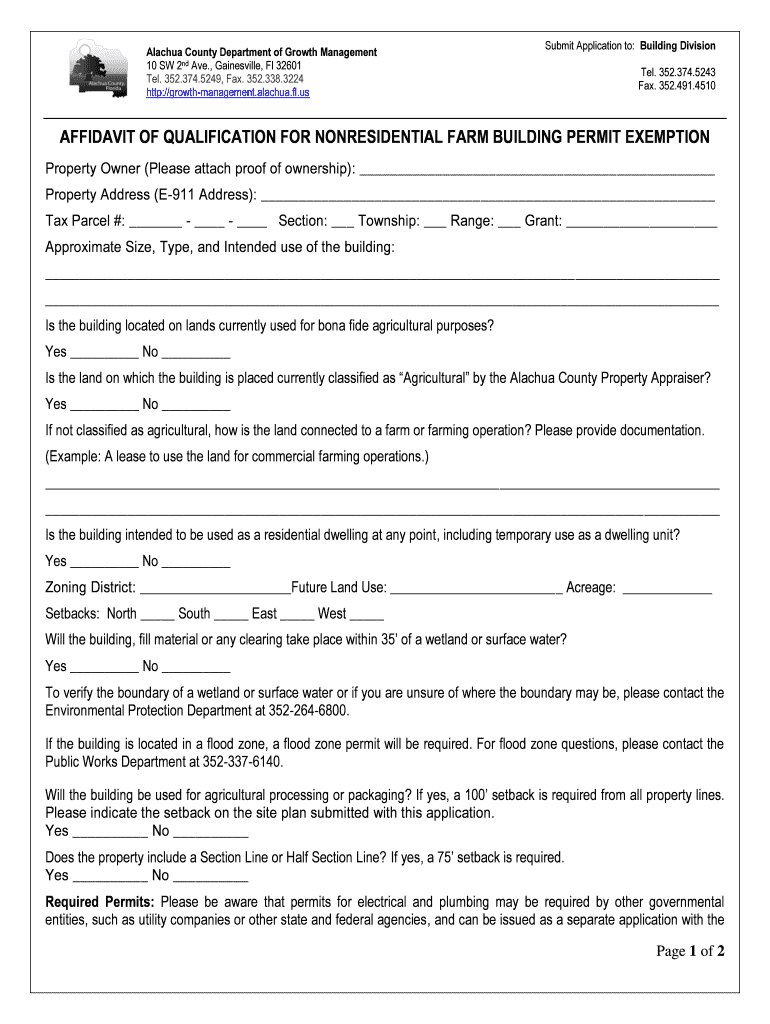
The "Non Residential Farm Building Zoning Compliance Permit" is a specific regulatory document used to ensure that farm buildings used for non-residential purposes comply with zoning requirements in their respective regions. This permit is crucial for confirming that structures intended for agricultural operations adhere to local land-use laws and regulations. It serves as a validation that the building meets specific criteria designed for agricultural activities without serving as a dwelling or residential space.
Steps to Complete the Non Residential Farm Building Zoning Compliance Permit
-
Gather Property Details: Begin by collecting information about the property where the farm building is located. This includes property size, boundaries, and current zoning classification.
-
Specify Building Use: Clearly state the intended agricultural use of the building. This involves detailing the type of farming activities that will occur and demonstrating that the building will not be used for residential purposes.
-
Complete Building Specs: Provide comprehensive specifications of the intended structure, such as dimensions, materials used, and construction methods. This helps ensure compliance with local building codes.
-
Submit Required Documentation: Attach all supporting documents, such as site plans, architectural drawings, and any previous approvals related to the property or existing structures.
-
Review and Approval: Submit the completed permit application to the local zoning authority. The reviewing body will check for compliance with zoning laws and may require further information or modifications before approval.
Key Elements of the Non Residential Farm Building Zoning Compliance Permit
-
Property Identification: Clearly list the parcel number and legal description of the property to distinguish it from others.
-
Zoning Classification: Include the current zoning classification of the land to ensure awareness of the applicable regulations.
-
Declaration of Non-Residential Use: A formal statement acknowledging that the building is intended solely for agricultural purposes and not for living accommodations.
-
Building Plans: Detailed architectural designs and a site plan showing the location of the building in relation to property boundaries and other structures.
Legal Use of the Non Residential Farm Building Zoning Compliance Permit
Obtaining this permit legally endorses the construction or modification of a farm building exclusively for non-residential agricultural purposes. It confirms adherence to local zoning laws and prevents future legal disputes over unauthorized land use. This permit becomes particularly vital when expanding operations or integrating new agricultural technologies that may alter land use laws.
State-Specific Rules for the Non Residential Farm Building Zoning Compliance Permit
Each state can impose different regulations regarding zoning compliance for farm buildings. Some may have specific allowances for certain types of agricultural activities, while others might impose restrictions based on environmental concerns or urban expansion plans. Property owners need to familiarize themselves with state-specific rules to avoid potential penalties.
Important Terms Related to the Non Residential Farm Building Zoning Compliance Permit
-
Zoning Compliance: Adherence to local land-use laws and regulations governing building constructions and modifications.
-
Agricultural Use: Usage of land for farming activities, including crop production, livestock raising, or storage of farm equipment.
-
Non-Residential Structure: Buildings intended purely for operational purposes without provisions for human habitation.
Required Documents
-
Site Plan: Indicates the precise location of the building on the property, essential for compliance verification.
-
Building Plans: Comprehensive architectural drawings outlining the design and construction materials of the proposed structure.
-
Proof of Ownership: Documentation such as a deed or land title demonstrating the property owner's legal right to develop the land.
Penalties for Non-Compliance
Failure to secure a zoning compliance permit before construction can lead to significant legal repercussions, including fines, mandatory alterations to the building, or even demolition orders. Local authorities may also restrict the future use of the property, impacting potential agricultural operations and property valuation.