






Definition & Meaning
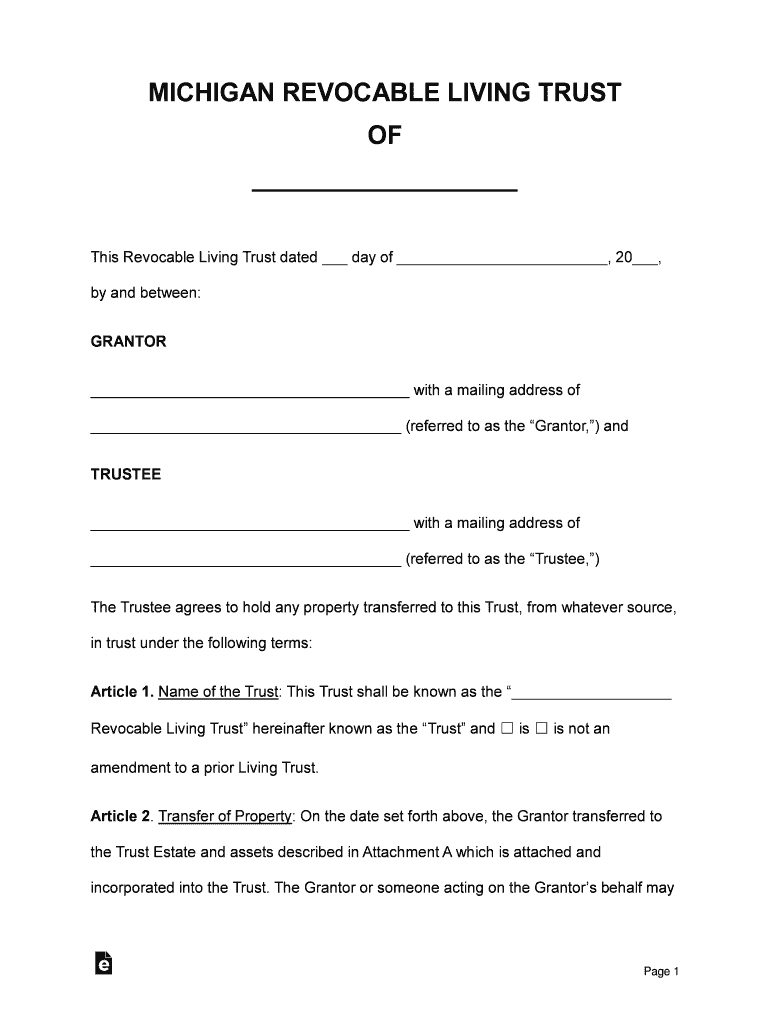
The Michigan Revocable Living Trust Form is a legal document that outlines the terms under which an individual, referred to as the Grantor, establishes a trust to manage and distribute their assets during their lifetime and after death. This document details the roles of the Grantor and Trustees, processes for transferring property, and specific instructions for asset distribution upon the Grantor's passing. The primary function of this form is to ensure a smooth transition of property ownership while avoiding the probate process, thereby saving time and preserving privacy.
Key Elements of the Michigan Revocable Living Trust Form
-
Grantor and Trustee Roles: This section defines the responsibilities of the Grantor, who initiates the trust, and the Trustee, who manages the trust according to its terms.
-
Asset Management and Distribution: The form provides detailed instructions on how assets are to be managed and distributed both during the Grantor's lifetime and after their death. It encompasses financial assets, real estate, and personal property.
-
Provisions for Incapacity: Includes clauses detailing the management of the trust in the event the Grantor becomes incapacitated.
-
Successor Trustees: The document specifies who will manage the trust if the initial Trustee is unable or unwilling to serve.
Steps to Complete the Michigan Revocable Living Trust Form
-
Gathering Information: Begin by collecting all necessary details, including the names and addresses of both the Grantor and Trustees.
-
Listing Assets: Clearly itemize the assets that will be included in the trust, such as bank accounts, investments, real estate, and valuable personal property.
-
Drafting Distribution Instructions: Draft clear and precise instructions for the distribution of assets to beneficiaries, ensuring all potential scenarios are covered.
-
Naming Successor Trustees: Select and document successor Trustees who will manage the trust if the original Trustee can no longer serve.
-
Signing and Notarizing: Ensure all signatures are obtained and that the document is notarized to make the trust legally binding.
Important Terms Related to Michigan Revocable Living Trust Form
-
Grantor: The individual creating the trust, who transfers their assets into it.
-
Trustee: The person or entity responsible for managing the trust according to its terms.
-
Beneficiary: An individual or entity that receives benefits or assets from the trust.
-
Revocable: The Grantor retains the right to alter, amend, or revoke the trust during their lifetime.
Legal Use of the Michigan Revocable Living Trust Form
The formation of this trust is in accordance with Michigan state laws, which govern the creation, administration, and eventual dissolution of trusts. The document's primary legal utility is to allow for a Plan of Distribution that circumvents the probate process. This can provide a more private and expedient settlement of the Grantor’s estate, giving peace of mind that personal affairs are in order.
Who Typically Uses the Michigan Revocable Living Trust Form
Typically, this form is utilized by individuals who want to ensure their estate is managed according to their wishes, without the delay and public nature of probate. It is especially beneficial for those with significant assets, real estate holdings, or a complex distribution plan that involves multiple beneficiaries or specific conditions.


State-specific Rules for the Michigan Revocable Living Trust Form
The form must comply with Michigan's Uniform Trust Code, which outlines the requirements for establishing a valid trust in the state. This includes stipulations about the trust agreement's execution, the roles of Trustees, and the rights of beneficiaries. It is crucial that the document be tailored to address Michigan's specific legal landscape, including any particular regulatory requirements or standard practices.
Examples of Using the Michigan Revocable Living Trust Form
-
Estate Planning: A Michigan resident with substantial assets may use this form to organize and outline the management and distribution of their estate, ensuring that selected charities, heirs, or entities receive their intended share.
-
Avoiding Probate: An individual might create a trust to avoid the public and time-consuming process of probate, thus allowing for a quicker, private settlement of their estate.
Penalties for Non-Compliance
Failure to properly execute or adhere to the terms of the Michigan Revocable Living Trust Form can result in significant legal challenges, including lawsuits from heirs or beneficiaries. Incorrect or incomplete documentation may lead to the trust being invalidated, subjecting the estate to the probate process and potentially altering the distribution of assets contrary to the Grantor’s desires.