01. Edit your form online
Type text, add images, blackout confidential details, add comments, highlights and more.

Type text, add images, blackout confidential details, add comments, highlights and more.

Draw your signature, type it, upload its image, or use your mobile device as a signature pad.

Send it via email, link, or fax. You can also download it, export it or print it out.
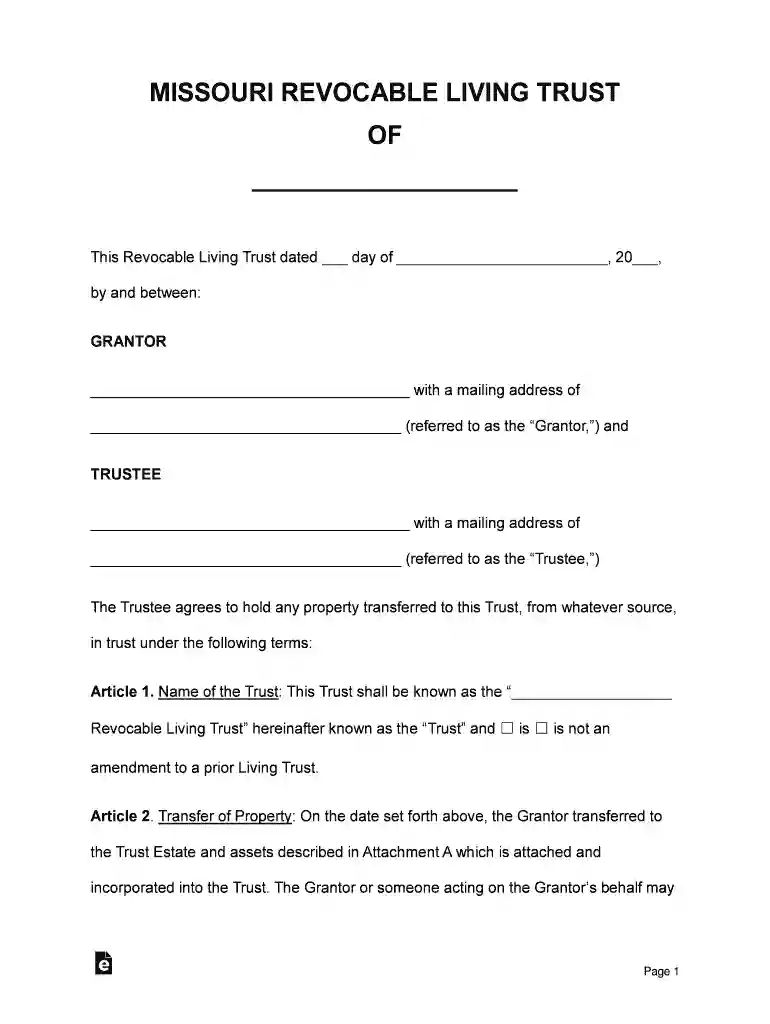
A revocable living trust is an estate planning tool commonly used in Kansas and Missouri to manage the distribution of a person’s assets both during their lifetime and after death. It primarily involves a Grantor, who creates the trust, and a Trustee, who manages the trust according to the terms set out in the trust document. The Grantor retains the ability to modify or revoke the trust at any time during their life, providing flexibility and control over their assets. This tool helps to avoid the often lengthy and costly probate process and ensures a seamless transfer of assets to beneficiaries.
Setting Up the Trust: The first step involves drafting the trust document, which outlines the assets to be included, the beneficiaries, and instructions for asset distribution.
Transferring Assets to the Trust: Grantors must legally transfer their assets into the trust. This often requires retitling property deeds, bank accounts, and other assets in the name of the trust.
Managing the Trust: The Trustee is responsible for managing the assets according to the Grantor's instructions. This includes handling investments, distributing income to beneficiaries, and maintaining accurate records.
Revoking or Amending: At any point during the Grantor's lifetime, the terms of the trust can be altered or revoked, allowing for flexibility as financial situations change.
Kansas and Missouri have unique requirements concerning estate planning and trusts. For instance, they stipulate specific language that must be included in the trust document to comply with state laws. It’s important for individuals to consult with estate planning attorneys familiar with these state-specific requirements to avoid possible legal issues.
Trusts serve multiple legal purposes in Kansas and Missouri, from protecting assets against creditors to managing estate taxes efficiently. They are used to ensure privacy in estate proceedings, as the details of a trust do not become part of public record, unlike a will. Furthermore, trusts can provide clarity and avoid family disputes by clearly defining asset distribution.
In Kansas and Missouri, revocable living trusts are popular among individuals seeking to simplify asset distribution after their death, particularly those with complex financial situations or significant assets. They are also ideal for families wishing to minimize court involvement or maintain privacy regarding their financial affairs.
While the revocable living trust is a comprehensive estate planning tool, other alternatives in estate planning may include incorporating wills, joint tenancy arrangements, or payable-on-death accounts. These can serve similar purposes with varying degrees of formality and legal involvement, depending on individual needs and circumstances.
We've got more versions of the Kansas and Missouri Estate Planning: Revocable Living Trusts form. Select the right Kansas and Missouri Estate Planning: Revocable Living Trusts version from the list and start editing it straight away!
| Versions | Form popularity | Fillable & printable |
|---|---|---|
| 2017 | 4.8 Satisfied (47 Votes) |
At DocHub, your data security is our priority. We follow HIPAA, SOC2, GDPR, and other standards, so you can work on your documents with confidence.