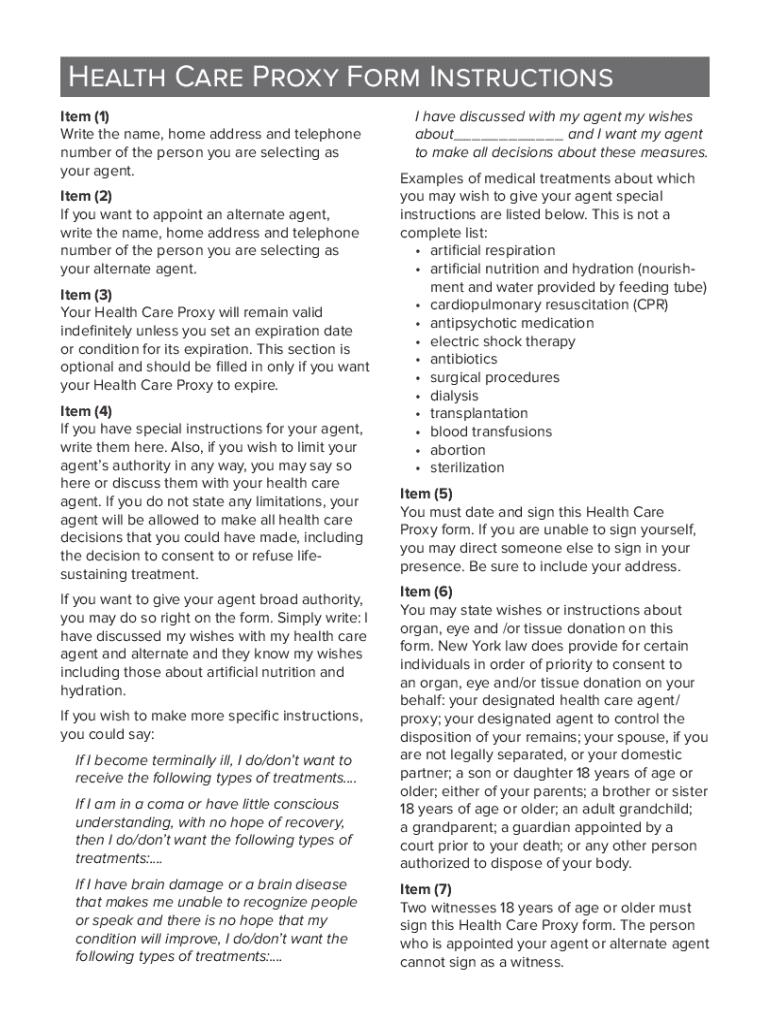







Definition & Meaning
A Health Care Proxy is a legal document that allows an individual, known as the principal, to appoint another person, known as the agent, to make medical decisions on their behalf should they become incapacitated. The proxy provides a structured framework for ensuring that personal and medical care preferences are respected, even when the principal cannot communicate them. The agent gains authority only when the principal is deemed unable to make their own medical decisions.
- Principal: The person who creates the Health Care Proxy to designate an agent.
- Agent: The trusted individual appointed to make healthcare decisions for the principal.
The concept of a Health Care Proxy is rooted in the principle of autonomy, respecting the wishes of individuals to have a say in their medical care, even in circumstances where they cannot express their consent.
How to Use the Health Care Proxy
Using the Health Care Proxy involves several essential steps. First, the principal selects an agent who is reliable and capable of handling sensitive medical decisions. It's crucial for the principal and agent to discuss various medical scenarios and preferences, ensuring the agent understands the principal's values and wishes.
- Selecting an Agent: Choose someone you trust and who understands your healthcare preferences.
- Discuss Preferences: Have detailed conversations about various medical scenarios and your wishes regarding treatments and interventions.
- Activation: The Health Care Proxy is activated when the principal is declared incapacitated by a medical professional.
The effectiveness of the Health Care Proxy hinges on clear communication between the principal and the agent, ensuring the document reflects the principal's values and future healthcare choices.
Steps to Complete the Health Care Proxy
Successfully completing the Health Care Proxy requires careful attention to detail and adherence to legal standards. Below are the typical steps involved:
- Fill Out the Form: Obtain the Health Care Proxy form from a legal or medical professional.
- Designate an Agent: Clearly name your agent and any alternate agents, if applicable.
- Specify Instructions: Provide any specific instructions related to medical treatments or interventions.
- Sign the Document: The principal must sign the document in the presence of two adult witnesses.
- Witness Acknowledgment: Witnesses need to sign, affirming the principal was of sound mind when creating the proxy.
- Distribute Copies: Share copies with your agent, alternate agents, and healthcare providers.
Ensuring all steps are followed correctly maintains the validity and enforceability of the Health Care Proxy.
Key Elements of the Health Care Proxy
Several key elements must be present in the Health Care Proxy for it to serve its intended purpose effectively:
- Identification of Parties: Clearly identify the principal and the designated agent.
- Agent Authority: Define the scope of the agent's authority, including decisions they can or cannot make.
- Effective Date: Specify when the proxy becomes effective, typically upon confirmation of the principal's incapacitation.
- Expiration Clause: Outline if and when the proxy expires, if desired.
- Revocation Terms: State under which conditions the Health Care Proxy can be revoked by the principal.
The document should be comprehensive enough to guide the agent in making medical decisions aligned with the principal’s preferences.
Legal Use of the Health Care Proxy
In the United States, the Health Care Proxy is governed by state laws. Typically, these laws ensure compliance with federal regulations, such as the Health Insurance Portability and Accountability Act (HIPAA), while allowing individuals the right to appoint an agent for medical decision-making.
- Validity: Must adhere to specific witness and notarization requirements to be legally valid.
- Recognition: Although each state might have unique stipulations, most recognize Health Care Proxies created in other states.
- Confidentiality: The agent is granted access to the principal's medical records to make informed decisions, in line with privacy regulations.
The Health Care Proxy serves as an essential tool in honoring the medical treatment preferences of individuals within a legally sanctioned framework.
Examples of Using the Health Care Proxy
Practical scenarios are instrumental in understanding the functioning of a Health Care Proxy:
- Emergency Situations: When someone is in a coma, the appointed agent decides on continuing life support based on previously stated wishes.
- Chronic Illness Management: In cases like advanced-stage dementia, an agent can make decisions about long-term care plans and treatments.
- Surgical Procedures: If complications arise during surgery rendering the principal unable to decide, the agent can authorize additional necessary procedures.
These examples demonstrate the critical role of a Health Care Proxy in navigating complex medical decisions on behalf of the principal.
Important Terms Related to Health Care Proxy
Understanding specific terminology is crucial for comprehending and executing a Health Care Proxy:
- Incapacitated: A state where an individual cannot make informed decisions due to mental or physical limitations.
- Principal: The individual creating the Health Care Proxy to appoint an agent.
- Agent: The person authorized to make healthcare decisions for the principal.
Familiarity with these terms aids in the seamless application and enforcement of the Health Care Proxy.
State-Specific Rules for the Health Care Proxy
Each state might have slightly different rules impacting the execution and recognition of a Health Care Proxy:
- Witness Requirements: Some states require witnesses to be unrelated to the principal.
- Agent Restrictions: Certain states might prohibit healthcare providers or facility employees from acting as agents.
- Form Differences: The layout and required fields of the Health Care Proxy form can vary between states.
Awareness of these state-specific rules ensures the creation of a legally compliant Health Care Proxy, preventing future disputes or complications in medical decision-making.
Who Typically Uses the Health Care Proxy
A wide array of individuals benefit from creating a Health Care Proxy, ranging from those with chronic medical conditions to healthy adults planning for unforeseen circumstances.
- Elderly Individuals: Often at risk of acute medical events, they use proxies to ensure their wishes are adhered to.
- Persons with Chronic Illnesses: Those managing long-term health conditions may require assistance with complex medical decisions over time.
- Young Adults: Proactively appointing an agent can safeguard against unexpected medical situations.
Creation of a Health Care Proxy is a prudent step for anyone wishing to ensure their healthcare preferences are respected under all circumstances.