




01. Edit your rental walkthrough checklist word doc online
Type text, add images, blackout confidential details, add comments, highlights and more.

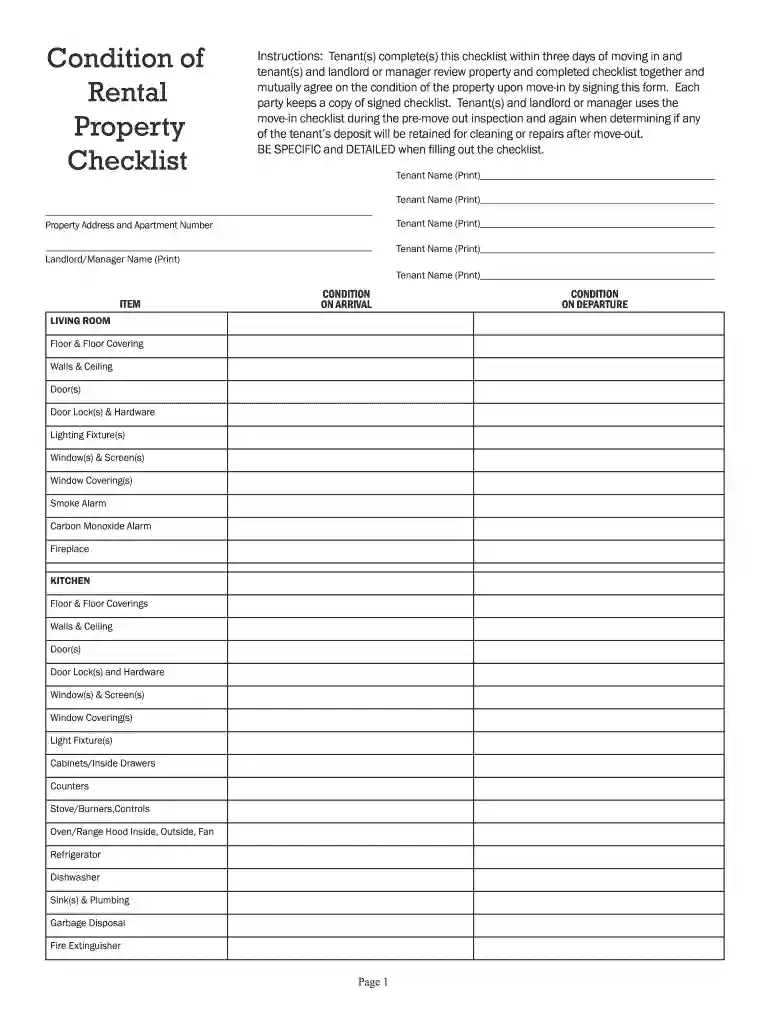
Type text, add images, blackout confidential details, add comments, highlights and more.

Draw your signature, type it, upload its image, or use your mobile device as a signature pad.

Send move in checklist via email, link, or fax. You can also download it, export it or print it out.
The rental property walkthrough checklist is a vital document designed to conduct a thorough inspection of a rental property before a tenant moves in. This checklist serves several key purposes, assuring that both the landlord and tenant have a mutual understanding of the property’s condition. The inspection typically occurs within three days of the tenant moving in, ensuring that any existing damage or issues are documented and agreed upon by both parties. This proactive approach helps in reducing disputes related to security deposits when the tenant moves out.
The checklist usually includes several important sections that cover different areas of the rental property. Generally, a thorough inspection will look at specific items in each room, ensuring no detail is overlooked.
To ensure a successful walkthrough, both parties should prepare accordingly and adhere to specific steps to facilitate the process.
When conducting the walkthrough, documenting existing damages or concerns is critical. This can prevent misunderstandings and disputes when the tenant vacates the property. Clear documentation may include:
Understanding the legal implications connected to the checklist is crucial for both landlords and tenants. The walkthrough checklist acts as a legal document that can be referenced in disputes regarding the condition of the property.
When utilizing the rental property walkthrough checklist, both landlords and tenants should be cautious of common mistakes that can lead to disputes or oversight.
To illustrate the practical application of the rental property walkthrough checklist, consider the following scenarios:
Various resources are available to assist in creating or utilizing a rental property walkthrough checklist effectively.
This detailed overview of the rental property walkthrough checklist aims to elucidate its significance and practical application in rental agreements, thereby fostering a balanced relationship between landlords and tenants.
We've got more versions of the rental walkthrough checklist word doc form. Select the right rental walkthrough checklist word doc version from the list and start editing it straight away!
At DocHub, your data security is our priority. We follow HIPAA, SOC2, GDPR, and other standards, so you can work on your documents with confidence.




BE SPECIFIC and DETAILED when filling out the checklist. Property Address and Apartment Number. Landlord/Manager Name (Print). CONDITION. ON ARRIVAL. CONDITION.Read more
property. If we do a walk-thru and see that you are taking exception- al The following checklist will get you started. Make sure to include enoughRead more


