






Definition and Purpose of Motion Forms in Illinois Courts
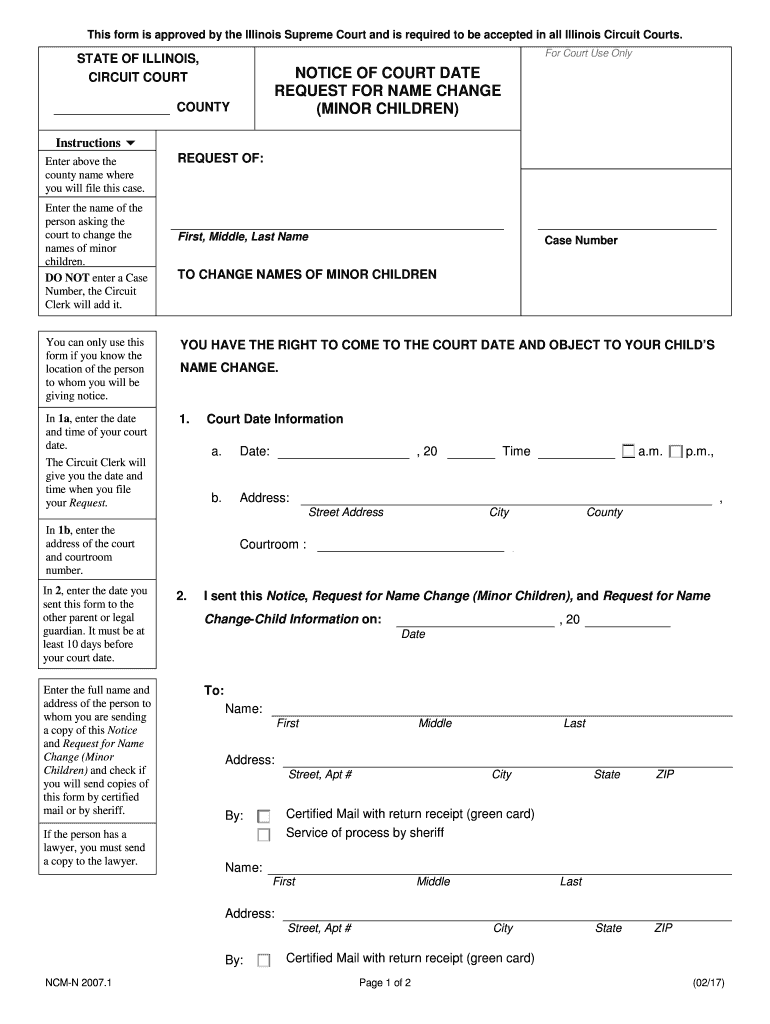
Motion forms approved by the Illinois Supreme Court are legal documents used in the Illinois Circuit Courts to request specific actions or judgments. These forms are instrumental in formalizing requests such as name changes, seeking temporary orders, or challenging court decisions. Understanding the exact nature of these forms is crucial for effective legal proceedings and to ensure all legal protocols are followed properly.
How to Use Approved Statewide Motion Forms
Utilizing these motion forms involves several crucial steps, ensuring that the intended action or request is clearly communicated to the court. Here’s a step-by-step process:
-
Identify the Correct Form: Ensure that you are using the specific motion form appropriate for your request. Each form addresses different legal actions and outcomes.
-
Complete the Form Accurately: Fill out the form with precise information, including parties involved, case numbers, and your specific request or motion details.
-
Attach Supporting Documents: Provide any necessary evidence or supporting documents to bolster your case or motion.
-
File the Form: Submit the completed form to the appropriate Illinois Circuit Court. This can often be done online, in person, or via mail, as indicated by the local court's guidelines.
-
Serve the Form to Appropriate Parties: Typically, copies of the form must be served to all parties involved in the case to inform them of your motion.
Obtaining Approved Statewide Motion Forms
These forms can be accessed through multiple avenues to ensure easy availability for legal processes in Illinois.
-
Court Websites: Most Illinois Circuit Court websites offer downloadable versions of their motion forms.
-
Clerk’s Office: For those preferring physical copies, forms can often be obtained directly from the clerk’s office at the courthouse.
-
Legal Aid Services: Some nonprofit legal aid organizations may provide these forms along with assistance in filling them out.
Steps to Complete Illinois Motion Forms
Completing an Illinois motion form correctly is key to having your motion considered by the court. Follow these steps for accuracy:
-
Basic Information: Fill in your name, case number, and the names of other involved parties at the top of the form.
-
Type of Motion: Clearly state the type of motion you are filing and the specific action you are requesting from the court.
-
Explanation and Justification: Provide a detailed explanation of the reasons for your motion, citing any legal bases or precedents that support your request.
-
Signature and Date: Sign and date the form to certify the accuracy and truthfulness of the information provided.
-
Review and Corrections: Carefully review the form to correct any errors or omissions before submission.
Common Users of Illinois Motion Forms
These forms are commonly used by a variety of individuals and organizations involved in legal proceedings in Illinois.
-
Attorneys: Legal representatives frequently use motion forms to advocate for their clients’ needs and interests.
-
Self-Represented Litigants: Individuals who choose to represent themselves in court can use these forms to file motions independently.
-
Government Agencies: In certain cases, government bodies may use motion forms in the execution of their duties within the judicial system.


Legal Use and Compliance
Legal use of the approved motion forms is governed by specific rules and procedures that need to be adhered to ensure compliance:
-
Non-Compliance Penalties: Failing to use these forms correctly or submitting false information can lead to penalties, including fines or case dismissals.
-
Legal Representation: While these forms can be filled out by individuals, consulting with an attorney is often advisable to ensure compliance with Illinois law and to effectively navigate complex legal scenarios.
Important Terms and Legal References
Understanding key terms related to Illinois motion forms can enhance comprehension and ensure the correct application:
-
Petitioner: The individual or entity filing the motion.
-
Respondent: The individual or entity to whom the motion is directed.
-
Affidavit: A written statement confirmed by oath or affirmation, used as evidence in court.
State-Specific Rules and Considerations
Illinois has specific rules that guide the use of motion forms in its Circuit Courts:
-
Statewide Standardization: The Illinois Supreme Court approves and standardizes these forms to ensure consistency across different jurisdictions.
-
State-Specific Instructions: Each form comes with specific instructions tailored to Illinois law, and failing to follow these can result in the form being rejected or dismissed.
Understanding this structured approach to handling "Approved Statewide Forms - Motion Forms - ILLINOIS COURTS" provides a foundation for interaction with the Illinois judicial system, ensuring legal actions are undertaken with clarity and compliance.